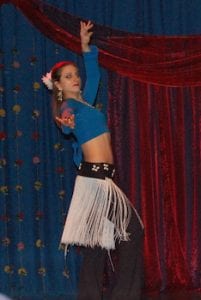
Spinal undulation is a wave-like movement that travels through the spine. It can be used in dance, yoga and mobility practice to explore how different parts of the spine move together.
Rather than thinking of it as a way to “fix” the spine or release every kind of back tension, I prefer to think of it as a movement practice that can help improve body awareness, coordination and comfort with spinal motion.
What Is Spine Undulation?
Spine undulation involves creating a smooth wave through the body by moving through flexion and extension in a controlled way. Depending on the variation, the movement may begin in the pelvis, rib cage, chest or head and then travel through the rest of the spine.
This kind of movement can help you explore areas that may feel stiff or unfamiliar and can be a useful complement to strength training, yoga, dance and mobility work.
Why Practice Spinal Waves?
The spine is designed to move in several directions, including flexion, extension, rotation and side bending. Many of us spend a lot of time in a limited number of positions, especially when sitting for long periods.
Practicing gentle spinal waves can support:
- body awareness
- coordination
- spinal mobility
- rib cage movement
- breathing awareness
- smoother transitions between positions
The goal is not to force a larger range of motion. Move within a range that feels comfortable and controlled.
Spine Undulation in Yoga and Movement
Spinal undulation can show up in many movement practices. In yoga, you may recognize a similar wave-like pattern in Cat-Cow or in transitions between Downward Dog and Upward-Facing Dog.
In dance, body waves often use coordinated movement through the chest, ribs, pelvis and spine. The exact shape may look different depending on the style, but the principle is similar: learning to move one part of the body while staying connected to the whole movement.
If you enjoy this kind of work, you may also like Yoga & Mobility Classes in Nanaimo.
How to Practice a Simple Standing Spine Undulation
Stand with your feet about hip-width apart and keep your knees soft. Begin by gently shifting the pelvis, then allow the movement to travel upward through the rib cage and chest before returning to neutral.
Try to keep the movement smooth rather than large. You may notice some parts of the spine move easily while others feel less familiar.
Go slowly and focus on control, breathing and awareness rather than trying to create a dramatic wave.
Brazilian Rotation
Brazilian rotation is another movement that can help you explore coordination between the hips and rib cage.
Stand with your feet comfortably apart. Begin by rotating the pelvis gently to one side and allow the rib cage to follow. Return to center and repeat to the other side.
Keep the movement relaxed and controlled. You do not need to force a large twist.
This kind of rotational work can be especially useful if most of your training happens in straight-ahead patterns.
A Note About Back Pain
Spinal movement can feel good for some people, but it is not appropriate for every type of back pain.
If a movement causes sharp, radiating or increasing pain, stop and choose a different option. If you have persistent or unexplained back pain, it is a good idea to seek guidance from an appropriate healthcare professional.
For more strength-based ideas, you can also read Strengthening Your Back to Support Better Posture and Reduce Back Pain.
Watch the Body Wave Tutorial
Keep your existing Body Wave / Ondulation Tutorial video here.
Brazilian Rotation Tutorial
Keep your existing Brazilian Rotation Tutorial video here.
Explore Movement, Not Perfection
Spinal undulation is less about achieving a specific shape and more about learning how your body moves. Small, controlled waves can be just as useful as larger ones.
If you would like support combining mobility, strength and movement practice, learn more about Personal Training in Nanaimo.
Brazilian Rotation tutorial