No-Bake Peanut Butter Cake

No-Bake Peanut Butter Cake

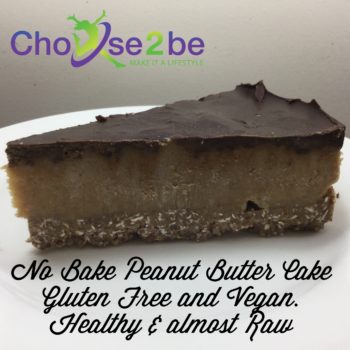
If you’re looking for a rich, easy dessert that doesn’t require an oven, this no-bake peanut butter cake is a fun one to try.

It’s made with oats, almonds, bananas, peanut butter, chocolate and a few simple pantry ingredients. It’s naturally sweet, creamy and best served chilled.

Rather than calling it a “healthy cake,” I like to think of it as a homemade dessert made with familiar ingredients that can be enjoyed as part of a balanced lifestyle.

Ingredients

For the Crust

  • 1 cup rolled oats
  • 1 tablespoon cocoa powder
  • 2 tablespoons maple syrup or honey
  • 1 cup raw almonds
  • ¼ cup almond milk

For the Filling

  • 2 cups smooth peanut butter
  • 3 large ripe bananas
  • 2 teaspoons vanilla extract
  • ¼ cup maple syrup or honey
  • ¼ cup coconut oil

For the Chocolate Topping

  • 1 cup dark chocolate
  • 2 tablespoons coconut oil

How to Make the Crust

Add the oats, cocoa powder, maple syrup or honey, almonds and almond milk to a food processor.

Process until the mixture is well combined and begins to stick together.

Transfer the mixture to a cake pan and press it down firmly and evenly to create the crust.

How to Make the Peanut Butter Filling

Add the peanut butter, bananas, vanilla, maple syrup or honey and coconut oil to a food processor.

Blend until smooth and creamy.

Pour the filling over the crust and spread it evenly with a spatula.

Make the Chocolate Topping

Melt the dark chocolate and coconut oil together over low heat, stirring until smooth.

Pour the chocolate mixture over the peanut butter filling and spread it evenly across the top.

Place the cake in the freezer for approximately 4 to 6 hours, or until firm.

Serving and Storing

Remove the cake from the freezer and allow it to soften for about 10 to 15 minutes before slicing.

Because it contains peanut butter, chocolate, coconut oil and nuts, this is a rich dessert, so smaller slices work well.

You can also top it with:

  • sliced banana
  • fresh berries
  • chopped nuts
  • a sprinkle of cocoa
  • a small drizzle of peanut butter

Store leftovers in an airtight container in the freezer.

You can also slice the cake before freezing so individual portions are easy to remove when you want one.

A Simple Homemade Treat

Dessert does not have to be “good” or “bad.”

Food can provide nutrition, enjoyment, connection and pleasure, and there is room for all of those things in a balanced way of eating.

This no-bake peanut butter cake is rich, satisfying and fun to make — especially if you love the combination of peanut butter, banana and chocolate.

More Choose2be Recipes

If you enjoy this recipe, you might also like:

Unlock Your Peak Physical Condition with Animal Flow Workout

Unlock Your Peak Physical Condition with Animal Flow Workout

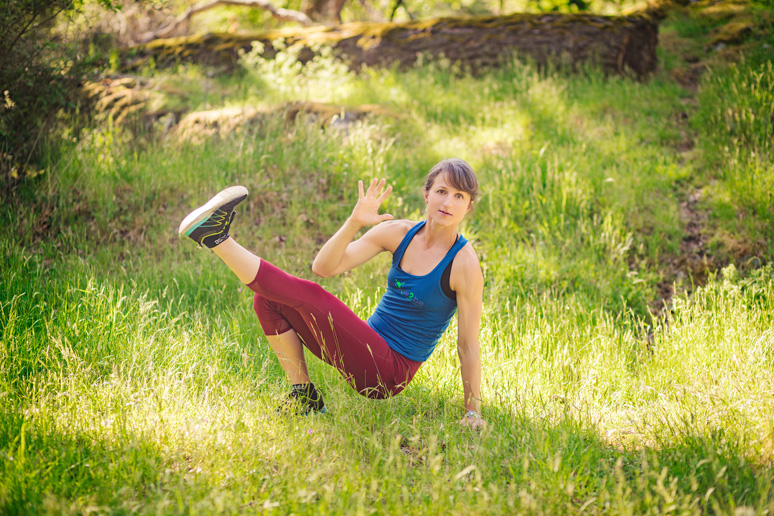
Animal flow workout, skill, neuromuscular development, ground-based movement, multi-directional movement, traveling formsAnimal Flow is a ground-based movement practice that combines bodyweight training, mobility, coordination and flowing transitions. It draws from different movement disciplines and uses animal-inspired positions and patterns to challenge the whole body in a creative way.
What makes Animal Flow interesting is that it is not just about strength. It also asks you to control your body through different directions, shift your weight, move on your hands and feet, and connect one movement to the next with coordination.

What Is Animal Flow?

Animal Flow was created as a structured bodyweight movement system using positions such as Beast, Crab and Ape, along with transitions, stretches and traveling patterns.

The practice can support:

  • mobility
  • bodyweight strength
  • coordination
  • balance
  • core control
  • shoulder and wrist stability
  • movement awareness
  • endurance

It can be adapted to different fitness levels, but some positions place significant weight through the wrists and shoulders, so it is important to progress gradually.

Wrist Mobilization

Animal Flow often includes movements where your hands are on the floor, so preparing your wrists can make the practice feel more comfortable.

Simple wrist circles, gentle weight shifts, palm lifts and controlled wrist mobility exercises can help you prepare before spending more time in quadruped positions.

If wrist mobility is something you are working on, you can also read Unlocking Wrist Mobility: Essential Exercises for Strength, Flexibility and Control.

Activations

Activations are positions used to connect the body and prepare for movement. Examples include Static Beast, Static Crab and different limb-lift variations.

These positions can challenge core control, shoulder stability and coordination before you begin more dynamic movement patterns.

Form-Specific Stretches

Animal Flow includes stretches that begin in one of the animal positions and move through a larger range of motion. Examples include Ape Reach, Beast Reach, Crab Reach and Scorpion Reach.

These movements combine mobility and active control rather than relying only on passive stretching.

Traveling Forms

Traveling forms are movements where you move across the floor using animal-inspired patterns. The basic forms include Ape, Beast and Crab.

These exercises can challenge coordination, strength and body awareness because you are moving in directions that may feel very different from walking, running or traditional gym exercises.

Switches and Transitions

Switches connect one Animal Flow position to another. Movements such as Underswitches, Side Kickthroughs, Front Kickthroughs and Scorpion variations can be practiced individually before being linked together.

This is where the practice starts to feel more fluid and playful.

Creating a Flow

Once you are familiar with several positions and transitions, you can begin linking them together into a sequence.

A flow might be choreographed and practiced repeatedly, or it might be more spontaneous. The goal is to move smoothly from one position to another while maintaining control, awareness and breathing.

This combination of movement and coordination is one of the reasons Animal Flow can feel almost like a mix of strength training, mobility work and dance.

Who Can Try Animal Flow?

Animal Flow can be adapted for many people, but it is not automatically appropriate for everyone. If you have wrist, shoulder, knee or mobility limitations, some positions may need to be modified.

You do not need to perform the most advanced movements to benefit. Starting with basic Beast, Crab, Ape and supported transitions can give you plenty to work with.

The practice can be especially enjoyable if you like bodyweight training, mobility work, yoga, dance or movement skills that feel less repetitive than traditional workouts.

How Animal Flow Fits With Other Training

Animal Flow can complement strength training, yoga, mobility work and recreational sports. It is not a replacement for every type of training, but it can add variety and challenge movement patterns that you may not use often.

If you are curious about the differences between bodyweight work and traditional resistance training, read Bodyweight Training vs. Weight Training: Which Is Better?.

If you enjoy combining mobility, strength and creative movement, you may also like Yoga & Mobility Classes in Nanaimo.

Keep It Playful

One of the best things about Animal Flow is that it encourages exploration. You are not just counting repetitions. You are learning positions, transitions and patterns, and gradually becoming more comfortable moving your body in different ways.

Start with the basics, give your wrists and shoulders time to adapt, and focus on control before speed.

If you would like personalized help with bodyweight strength, mobility and movement skills, learn more about Personal Training in Nanaimo.

Mobility vs. Flexibility: What’s the Difference and Why Does It Matter?

Mobility vs. Flexibility: What’s the Difference and Why Does It Matter?

Joint health

Mobility and flexibility are often used as if they mean the same thing, but they are different. Flexibility is the ability of muscles and other tissues to lengthen, while mobility is your ability to actively move a joint through a usable range of motion with control.

Both can be useful. The important thing is understanding what you actually need for the activities you want to do.

What Is Flexibility?

Flexibility describes how much length or passive range of motion is available in a muscle or joint position. For example, being able to relax into a hamstring stretch or move into a split requires flexibility.

Stretching can help improve tolerance to certain ranges of motion and may increase flexibility over time. But being flexible does not automatically mean you have strength or control in that range.

What Is Mobility?

Mobility is your ability to move through a range of motion actively and with control. It depends on flexibility, but also on strength, coordination, joint structure and nervous-system control.

For example, you may be able to lift your leg high with your hands helping you, but if you cannot actively lift it to the same height on your own, you have more passive flexibility than active mobility.

That is why mobility work often combines range of motion with strength.

Why Mobility Matters

Mobility can help you move more comfortably and efficiently during everyday activities, strength training, yoga and sports. It can also help you access positions such as a squat, overhead reach or lunge with more control.

I would avoid thinking of mobility as something that automatically “prevents injury.” Injury risk is influenced by many factors, including training load, strength, fatigue, technique, previous injury and the demands of the activity. Mobility is one useful part of the bigger picture.

How to Improve Mobility

Improving mobility usually works best when you combine several approaches rather than relying only on passive stretching.

1. Move Through the Range You Have

Controlled joint movements, such as shoulder circles, hip rotations, ankle mobility drills and spinal movement, can help you become more comfortable using different ranges.

2. Stretch When It Helps

Stretching can be useful when you want to increase flexibility or spend more time in a particular position. It does not have to be done only after exercise; it can be used whenever it fits your goals and feels good.

3. Strengthen the Range

Strengthening near the edges of your available range can help turn flexibility into usable mobility. Examples include split squats, deep squats, controlled leg raises, overhead strength work and loaded mobility exercises.

This is one reason I often combine mobility and strength rather than treating them as completely separate practices.

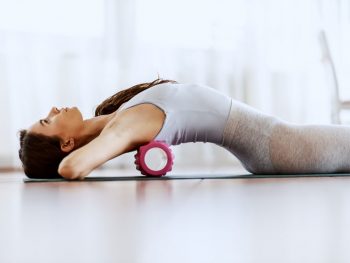
4. Use Self-Myofascial Release If You Enjoy It

Foam rollers and massage balls can temporarily change how a muscle or area feels and may help you move more comfortably before or after exercise. They are optional tools, not a requirement for improving mobility.

Common Areas People Work On

Some of the most common areas people want to improve include the hips, ankles, shoulders and upper back. The right exercises depend on what feels limited and what you want to be able to do.

For hip mobility and strength, you might enjoy Understanding and Strengthening the Psoas Muscle or Why I Don’t Just Stretch My Hips — I Strengthen Them. For spinal mobility, see Spine Undulation: A Gentle Way to Explore Spinal Mobility and Body Awareness.

Should Mobility Come Before a Workout?

Mobility exercises can work well in a warm-up when they help prepare you for the movements you are about to do. For example, ankle mobility before squats or shoulder mobility before overhead pressing can be useful.

Long passive stretching immediately before maximum-strength or explosive work may not always be ideal, but brief stretching is not something most people need to fear. The best warm-up is specific to the activity you are about to perform.

Should Flexibility Work Come After Exercise?

It can, but it does not have to. If stretching after a workout feels good and helps you relax, that is a perfectly reasonable time to do it.

You can also work on flexibility at a separate time of day. Consistency matters more than following a rigid rule about exactly when stretching must happen.

Mobility and Flexibility Work Best Together

You do not need to choose between mobility and flexibility. Flexibility gives you access to range, while mobility helps you control and use that range.

A balanced movement practice can include stretching, active mobility, strength training and regular movement in different directions.

If you want to work on mobility in a structured way, learn more about Yoga & Mobility Classes in Nanaimo or Personal Training in Nanaimo.

You can also read Elevate Your Workplace Wellness with the Strong Body, Strong Mind Workshop if you want to see how mobility, posture, strength and movement can be integrated into a broader workshop.

Mexican-Style Zucchini Lasagna

Mexican-Style Zucchini Lasagna

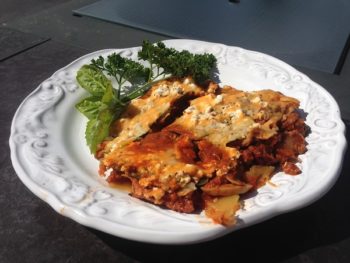
If you have an abundance of zucchini from the garden, this Mexican-style zucchini lasagna is a delicious way to use it.

Instead of traditional lasagna noodles, this version uses thin slices of zucchini layered with a tomato-based sauce, beans, cheese and your choice of ground meat or tofu.

It’s hearty, flavourful and easy to adapt depending on what you have at home.

Ingredients

  • 1 lb extra-lean ground beef or scrambled tofu
  • 3 cloves garlic, sliced or minced
  • 1 onion, chopped
  • ½ teaspoon olive oil
  • Montreal steak spice, to taste
  • Black pepper, to taste
  • 1 × 28 oz can crushed tomatoes
  • 1 can sliced mushrooms, drained
  • 1 × 18 oz can tomato sauce
  • 1 × 18 oz can kidney beans, drained and rinsed
  • Sliced jalapeño peppers, to taste
  • 2 tablespoons chopped fresh basil
  • 3 medium zucchini, sliced approximately ⅛-inch thick
  • 15 oz ricotta cheese or goat feta
  • 8 oz shredded mozzarella or old cheddar
  • ¼ cup grated Parmesan cheese
  • 1 large egg

Prepare the Sauce

Brown the ground beef in a large pot or Dutch oven until fully cooked. Drain excess fat if needed.

If you are using tofu, crumble it into the pan and cook until lightly browned.

Remove the meat or tofu temporarily, then add the olive oil, garlic and onion to the same pan. Cook until the onion becomes soft and lightly caramelized.

Return the meat or tofu to the pan.

Add the crushed tomatoes, tomato sauce, mushrooms, kidney beans, jalapeños, basil, Montreal steak spice and pepper.

Cover and simmer over low heat for about 30 to 40 minutes, stirring occasionally.

Prepare the Zucchini

Preheat your oven to 350°F (175°C).

Slice the zucchini lengthwise into approximately ⅛-inch slices.

A sharp knife works well, or you can carefully use a mandoline if you have one.

Because zucchini releases water as it cooks, you can lightly salt the slices and let them sit for 10 to 15 minutes, then pat them dry with a clean towel before assembling the lasagna. This can help reduce excess liquid in the finished dish.

Prepare the Cheese Mixture

In a medium bowl, combine:

  • ricotta or goat feta
  • Parmesan
  • egg

Mix until well combined.

Assemble the Zucchini Lasagna

Spread a thin layer of sauce across the bottom of a 9 × 12-inch baking dish.

Add a layer of zucchini slices.

Top with some of the cheese mixture, followed by shredded mozzarella or cheddar.

Continue layering:

sauce → zucchini → cheese mixture → shredded cheese

until you have used your ingredients.

Finish with sauce and a final layer of shredded cheese and Parmesan.

Cover the dish with foil.

Bake

Bake covered for approximately 45 minutes.

Remove the foil and continue baking for another 15 minutes, or until the cheese is melted and bubbling and the zucchini is tender.

Let the lasagna rest for about 10 minutes before cutting. This helps the layers hold together and allows some of the liquid to settle.

Make It Your Own

One of the things I like about this recipe is how easy it is to adapt.

You could try:

  • ground turkey or chicken instead of beef
  • tofu for a vegetarian version
  • black beans instead of kidney beans
  • extra vegetables such as peppers or spinach
  • more or less jalapeño depending on how spicy you like it
  • mozzarella, cheddar, ricotta or feta depending on what you have available

Rather than worrying about making a recipe perfectly “healthy,” I like thinking about meals in terms of variety, enjoyment and ingredients that help you feel satisfied.

Zucchini adds vegetables and texture, while the beans, meat or tofu and cheese provide protein and make this a substantial meal.

More Choose2be Recipes

If you enjoy this recipe, you might also like:

  •