
Exercising During Pregnancy: My Experience and What Current Guidelines Say
Exercise during pregnancy is surrounded by a lot of outdated advice. For most people with uncomplicated pregnancies, regular physical activity is considered safe and beneficial, and people who were active before pregnancy can often continue with appropriate modifications. Pregnancy is also a reasonable time to begin gentle activity if you were previously inactive, provided your healthcare team has not identified a reason to avoid exercise.
I have been through three very different pregnancies, and movement played a different role in each one. My experience taught me that there is no single “pregnancy workout.” The best approach is to adapt to the pregnancy you are actually having, not the one you expected to have.
My Three Pregnancies
During my first pregnancy, I was recovering from a back injury and exercised very little. I eventually had an emergency C-section after a long labour.
During my second pregnancy, I was much more active and continued teaching several yoga classes each week along with moderate gym training. I later had a vaginal birth after my previous C-section.
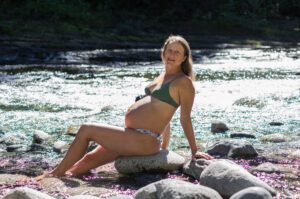
My third pregnancy happened when I was 42. I continued strength training, cardio and movement throughout the pregnancy while adjusting exercises as my body changed. I felt strong and capable, but I would not attribute the difference between my births or recoveries solely to exercise. Pregnancy and birth outcomes are influenced by many factors.
The Benefits of Exercise During Pregnancy
Current obstetric guidance supports both aerobic and strength-conditioning exercise for people with uncomplicated pregnancies. Regular activity may help reduce back pain and constipation and may lower the risk of gestational diabetes, preeclampsia and cesarean birth.
Exercise can also help maintain strength and cardiovascular fitness as your body changes. The goal is not to stay as fit or lean as possible during pregnancy. It is to support your health, function and comfort through a major physical transition.
First Trimester: Adjust to How You Feel
Fatigue, nausea and changes in energy can make the first trimester unpredictable.
Some days I could exercise normally and other days I needed much more rest. That variability is normal.
You do not automatically need to stop all abdominal training during pregnancy. Instead, core work usually needs to evolve as the abdomen changes. Exercises that feel comfortable and allow good breathing and pressure management can often continue, while others may need to be modified or removed.
Strength Training During Pregnancy
Strength training can continue during many uncomplicated pregnancies. ACOG specifically includes resistance training among appropriate forms of activity during pregnancy.
During my pregnancies I used exercises such as:
- squats
- deadlift variations
- hip thrusts and bridges
- rows and pulldowns
- leg curls
- lunges
- upper-body strength exercises
The exact load, range of motion and exercise selection should change as needed.
I especially valued strengthening my hips, legs and upper back because these muscles supported the activities I was doing every day. I would avoid promising that any specific exercise will prevent back pain or create “perfect posture.”
What About Lunges?
You may hear that lunges should automatically be avoided because of relaxin, the hormone associated with increased joint laxity during pregnancy.
That is too broad.
Some people continue lunges comfortably, while others experience pelvic, hip or pubic-symphysis discomfort and need to modify them. The exercise itself is not universally unsafe.
Choose a stable stance, reduce range if necessary and stop if you experience pain or pelvic symptoms.
Cardio During Pregnancy
Moderate aerobic activity is recommended for most uncomplicated pregnancies. ACOG suggests progressing toward roughly 20–30 minutes on most days, while using perceived exertion or the “talk test” rather than relying on rigid heart-rate limits.
During my third trimester, I used breathing and perceived effort to judge intensity.
Walking, cycling, swimming and other low-impact activities can all be useful. People who were experienced runners before pregnancy may also be able to continue running with appropriate modifications.
Myth: You Shouldn’t Start Exercising During Pregnancy
For most healthy pregnancies, being previously sedentary does not mean you must remain sedentary.
A gradual progression is recommended rather than suddenly beginning intense training. Walking and other moderate activities are good starting points.
Always discuss exercise with your prenatal healthcare provider, especially if you have medical or obstetric complications.
Myth: You Can’t Train Your Core During Pregnancy
Pregnancy does not require abandoning the abdominal muscles.
The core plays an important role in movement, breathing and load management throughout pregnancy.
What usually changes is how you train it.
As the abdomen grows, some people find that certain exercises create excessive pressure, discomfort or visible doming along the midline. Those are cues to modify the exercise rather than proof that all core work is dangerous.
Myth: You Can’t Run or Do Higher-Impact Exercise
People who regularly participated in vigorous aerobic exercise before pregnancy may often continue during an uncomplicated pregnancy.
That does not mean everyone should run.
Pelvic heaviness, leaking, pain, pressure or musculoskeletal symptoms are all reasons to modify and consider support from a pelvic-health physiotherapist or healthcare provider.
Myth: Weight Training Is Dangerous During Pregnancy
Strength training is not automatically dangerous during pregnancy.
The bigger questions are your training history, technique, pregnancy symptoms and whether your medical team has given you any restrictions.
As pregnancy progresses, balance, breathing, range of motion and comfort may change. That often means modifying exercises rather than stopping strength training entirely.
Activities That Need More Caution
Pregnancy is not the time to take unnecessary risks.
ACOG recommends avoiding activities with a high risk of falling or abdominal impact, scuba diving, hot yoga or hot Pilates, and certain other high-risk activities.
Hydration and temperature also matter, especially during longer or harder sessions.
Warning Signs to Stop Exercise
Stop exercising and contact your healthcare provider if you experience warning signs such as vaginal bleeding, dizziness or fainting, chest pain, painful regular contractions, fluid leaking from the vagina, calf pain or swelling, or unusual shortness of breath before exercising.
Pain is also a reason to stop and reassess rather than simply push through.
My Third Birth
My youngest son was born on August 27, 2022 after labour was induced on his due date.
I had a vaginal birth and felt very well afterward. My partner was able to catch our baby, and the experience felt very different from my first birth.
I am grateful for how strong I felt during that pregnancy and recovery, but I would not present my experience as evidence that exercise guarantees an easier birth. It does not.
Returning to Exercise After Birth
This is one section I would change significantly from my original article.
I personally felt ready to begin gentle core movement about a week after giving birth, but that is my story, not a recommendation for everyone.
Current guidance says that after an uncomplicated vaginal birth, some people can begin gentle exercise within days when they feel ready, while recovery after a C-section or pregnancy or birth complications requires more individualized guidance. Exercise should return gradually.
Early postpartum movement might begin with walking, breathing, pelvic-floor awareness and gentle core work rather than jumping directly back into intense training.

Pelvic Floor and Postpartum Recovery
Pregnancy and birth affect more than the abdominal muscles.
Pelvic-floor symptoms such as leaking, heaviness, pressure or pain deserve attention. A pelvic-health physiotherapist can be extremely useful during pregnancy and postpartum, especially if you want to return to running, jumping or heavier lifting.
Postpartum recovery is not a race.
Exercise During Pregnancy Is Individual
You may feel strong throughout pregnancy, or you may have months when exercise barely happens.
Neither tells you whether you are having a “good” pregnancy.
The aim is to keep adapting.
Move when movement feels supportive. Rest when you need it. Strength train if it remains comfortable. Modify when your body gives you information.
If you want individualized help with strength and movement, learn more about Personal Training in Nanaimo.
For emotional support related to difficult pregnancy or birth experiences, you can also read Navigating Traumatic Childbirth on Vancouver Island Holistic Counselling.