Agility Ladder Training: Coordination, Footwork and Conditioning
An agility ladder is a simple tool, but it can add a lot of variety to a workout. It can be used for footwork, coordination, rhythm, balance and short bouts of conditioning.
It is not only for athletes, and it does not need to be fast or complicated to be useful. The biggest benefit is often learning to move with more control in different directions.
What Is an Agility Ladder?
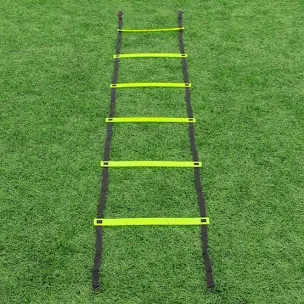
An agility ladder is a flat ladder placed on the floor or ground.
It can be used for stepping patterns that challenge:
- coordination
- foot placement
- rhythm
- balance
- change of direction
- reaction
- cardiovascular fitness
The ladder itself does not create agility. It simply gives you a structure for practicing movement patterns.
Why Agility Ladder Training Can Be Useful
Traditional strength training is excellent for building force and muscle.
Agility ladder work adds a different challenge.
You have to pay attention to where your feet are going, control your body position and sometimes change direction quickly.
That makes it a useful complement to strength training, not a replacement for it.
Coordination and Motor Learning
Agility ladder drills require your brain and body to coordinate movement in a specific pattern.
You may need to:
- step forward and backward
- move laterally
- cross one foot over the other
- change rhythm
- react to a cue
- coordinate the arms and legs
Practicing these patterns can improve skill and coordination.
I would avoid calling this “neuroplastic training” as if the ladder has a special effect on the brain. Learning any new movement skill involves the nervous system adapting.
Foot and Ankle Control
Ladder drills can challenge the feet and ankles because the body has to make frequent small adjustments.
That can be useful for developing:
- foot control
- ankle stability
- balance
- confidence with quick steps
But I would not claim that agility ladders prevent ankle or knee injuries.
They can be one part of a broader program that also includes strength, balance and progressive loading.
Knee and Hip Control
Side-to-side and diagonal patterns can also challenge the hips and knees.
The goal is not to force the knees into a “perfect” position.
Instead, focus on moving with control and keeping the exercise appropriate for your current ability.
Start slowly before adding speed.
Agility Ladder for Beginners
You do not need complicated footwork.
A beginner can start with:
- one foot in each square
- two feet in each square
- lateral stepping
- forward-backward stepping
- step-in, step-out patterns
Accuracy matters more than speed.
Once the pattern feels natural, you can move a little faster.
Agility Ladder for Older Adults
The ladder can also be useful for older adults when the drills are simplified and performed at an appropriate pace.
It can be used to practice:
- stepping accuracy
- directional changes
- balance
- confidence
- reaction
The ladder does not need to involve jumping or fast feet.
Slow, deliberate stepping can still be valuable.
Agility Ladder for Athletes
Athletes may use ladder drills as part of a warm-up or coordination session.
They can help practice:
- rhythm
- foot placement
- quick stepping
- lateral movement
- directional changes
However, ladder drills by themselves do not fully develop sport-specific agility.
True agility also involves reacting to an unpredictable stimulus, accelerating, decelerating and changing direction under real movement demands.
Ladder Drills and Conditioning
Agility ladder drills can raise the heart rate, especially when performed continuously or in intervals.
For example:
- 20–30 seconds of work
- 30–60 seconds of recovery
- repeat for several rounds
This can provide a short conditioning session.
But ladder work does not replace all other cardio.
Walking, cycling, running, swimming and other forms of aerobic training still have an important place.
Use the Ladder as a Warm-Up
The agility ladder works well in a warm-up because it can gradually increase body temperature while adding coordination.
Try:
- forward stepping
- lateral stepping
- two feet in each square
- diagonal stepping
- short controlled intervals
Keep the first few rounds easy.
Agility Ladder and Balance
Balance is not only standing on one leg.
It also includes being able to control your body while moving.
Ladder drills can challenge dynamic balance because you are constantly shifting weight from one foot to the other.
For more balance ideas, read The Importance of Balance as We Age.
Agility Ladder and Rotational Movement
You can also combine ladder work with rotational exercises.
For example:
- lateral steps into a rotation
- diagonal footwork
- step-and-turn patterns
- cross-body reaches
This adds more movement variety.
For more, read Rotational Movement Training: Strength, Coordination and Rope Flow.
Agility Ladder and Fat Loss
I would remove most of the old fat-loss section.
An agility ladder can increase energy expenditure like any physical activity, but it does not specifically support fat loss through “hormonal balance” or nervous-system effects.
Body composition is influenced by overall energy balance, activity, nutrition, sleep and many other factors.
Use the ladder because it helps you move, not because it has a special fat-burning effect.
Mental Focus and Confidence
Movement drills that require concentration can be engaging.
Some people enjoy the challenge of learning a pattern and feel more confident as their coordination improves.
That is a meaningful benefit.
I would not claim that ladder drills regulate the nervous system, reduce anxiety or build emotional resilience.
Those are broader claims than the exercise itself can support.
Who Can Use an Agility Ladder?
Many people can use one, including:
- beginners
- older adults
- recreational exercisers
- athletes
- people returning to exercise
The drill needs to match the person.
If you are recovering from an injury, have significant balance issues or are unsure about fast direction changes, start with slower patterns or get guidance.
Common Mistakes
Common issues include:
- trying to go too fast
- looking only at the feet
- making the steps unnecessarily large
- losing posture and balance
- turning every drill into a maximal-effort sprint
The ladder is most useful when movement quality stays high.
A Simple Agility Ladder Workout
Try 2–3 rounds of:
- one foot in each square
- two feet in each square
- lateral step-through
- in-in-out-out
- diagonal step pattern
Work for about 20–30 seconds per drill and rest as needed.
Keep the movements controlled.
How I Use the Agility Ladder at Choose2be
I use the agility ladder as one tool within a broader training program.
It can be combined with:
- strength training
- balance work
- mobility
- rotational exercises
- conditioning
The goal is not to make the workout flashy.
It is to give the body different movement challenges.
If you want individualized help with footwork, balance, strength and coordination, explore Personal Training in Nanaimo.
You can also read Outdoor Workout Spots in Nanaimo for more ways to build varied movement into your routine.