Core Bracing: How to Engage Your Core for Strength and Stability
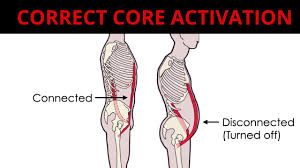
The core is more than the muscles you can see at the front of the abdomen. It includes the muscles around the trunk and pelvis that help create pressure, transfer force and support movement. Your current article already explains that bracing involves the abdominals, obliques, spinal muscles, pelvic floor and diaphragm working together.
The main thing I would change is the idea that your core should be “engaged” all the time. Bracing is useful when the task requires more trunk stiffness, especially during lifting, pushing, pulling or carrying, but you do not need to walk around constantly tightening your abdomen.
What Is Core Bracing?
Core bracing means creating enough tension around the trunk to support the movement you are doing.
It is different from simply pulling your belly button inward.
A good brace usually involves the abdomen expanding and becoming firm in multiple directions rather than flattening inward.
Think about creating pressure around the whole torso, not just tightening the front of the stomach.
The Core Works as a System
The core includes several muscle groups that coordinate together, including:
- rectus abdominis
- obliques
- transverse abdominis
- spinal extensors
- pelvic floor
- diaphragm
The amount of tension you need depends on the task.
A heavy deadlift requires more bracing than walking across the room.
Bracing and Breathing
Bracing does not always mean holding your breath.
For many exercises, you can create tension while still breathing.
During heavier lifts, some experienced lifters may briefly hold their breath to increase intra-abdominal pressure, but that is different from telling everyone never to breathe during exercise.
For most general fitness work, aim for controlled breathing and enough trunk tension to support the movement.
Do Not Suck Your Stomach In
The old cue of “pull your belly button toward your spine” can be confusing.
It tends to encourage hollowing rather than full trunk pressure.
Instead, try this:
Take a comfortable breath.
Let the ribs and abdomen expand.
Then create gentle tension around the trunk as if you were preparing for someone to bump into you.
You should feel firm, but not rigid.
When Bracing Is Useful
Bracing is especially useful during:
- deadlifts
- squats
- presses
- rows
- carries
- push-ups
- kettlebell swings
- loaded lunges
The goal is to create stability where you need it while still allowing the rest of the body to move.
Squats
Before descending into a squat, create enough trunk tension to keep the torso controlled.
You do not need to force the spine into one perfect position.
Maintain the position that feels strong and appropriate for your body and the load.
Deadlifts
Bracing is especially important during deadlifts because the trunk has to transmit force between the lower and upper body.
Before lifting, create tension around the torso and keep the load close.
For more, read Deadlift Guide: Build Strength With Better Hip-Hinge Technique.
Push-Ups
During push-ups, the core helps keep the trunk from sagging or excessively arching.
Think about maintaining a controlled line through the body.
You do not need to squeeze as hard as possible.
Use enough tension to maintain position.
Carries
Carries are one of my favourite ways to train the core without doing traditional abdominal exercises.
Examples include:
- farmer carries
- suitcase carries
- rack carries
- overhead carries
Suitcase carries are especially useful because the uneven load challenges the trunk to resist side bending.
Core Training Is More Than Planks
Planks can be useful, but they are only one option.
Good core training can include:
- dead bugs
- bird dogs
- side planks
- carries
- Pallof presses
- rotational exercises
- anti-rotation exercises
- loaded compound lifts
The core needs to manage movement in many directions.
Anti-Rotation Training
Sometimes core training means creating rotation.
Other times it means resisting it.
Exercises such as Pallof presses and suitcase carries challenge the trunk to resist unwanted rotation or side bending.
That makes them useful for building control.
Rotation Matters Too
The trunk is not designed only to stay rigid.
Rotation is part of walking, throwing, reaching and many sports.
A good program should include both controlled rotation and the ability to resist rotation.
For more, read Rotational Movement Training: Strength, Coordination and Rope Flow.
Bracing and the Pelvic Floor
The pelvic floor works with the diaphragm and abdominal wall during pressure management.
That does not mean you need to actively squeeze the pelvic floor during every exercise.
Too much gripping can be just as problematic as too little.
For more, read Pelvic Floor Health: Why Strengthening Isn’t Always the Answer.
Bracing and Posture
A strong core can help support movement, but it does not automatically fix posture.
Posture changes depending on what you are doing.
You do not need to maintain a rigid upright position all day.
A better goal is to have enough strength and control to move comfortably through different positions.
Bracing Does Not Prevent Every Injury
Core strength and trunk control are useful, but they do not guarantee injury prevention.
Injury risk is influenced by many factors, including:
- training load
- fatigue
- previous injury
- recovery
- technique
- overall capacity
A better goal is to build a trunk that can tolerate the demands you place on it.
Core Training and Back Pain
Core training can be useful for some people with back pain, but there is no single “correct” core exercise for everyone.
Some people respond well to strengthening.
Others need more movement, mobility or gradual exposure to activity.
If pain is persistent, worsening or accompanied by neurological symptoms, get assessed by an appropriate healthcare professional.
How Much Core Training Do You Need?
You do not need a separate 30-minute ab workout every day.
A few focused exercises two or three times per week can be enough, especially if your program already includes squats, deadlifts, carries and presses.
Quality matters more than endlessly accumulating repetitions.
A Simple Core Routine
Try 2–3 rounds of:
- 8–10 dead bugs per side
- 20–30 seconds side plank per side
- 8–12 Pallof presses per side
- 20–40 metres of suitcase carries per side
Move with control and rest as needed.
Core Strength Should Support Movement
The goal of core training is not to keep the abdomen tense all day.
It is to create the right amount of stiffness when you need it and relax when you do not.
That balance is more useful than constantly “engaging” the core.
If you want individualized help with bracing, strength and movement, explore Personal Training in Nanaimo or Group Fitness Classes in Nanaimo.