Indian Club Training: History, Benefits and a Beginner Routine
Indian clubs are a traditional training tool used for rhythmic swinging patterns that challenge coordination, shoulder movement, grip and upper-body control.
They are light compared with most strength-training equipment, but the long lever and continuous motion can make them surprisingly demanding. Indian clubs are especially useful for people who enjoy skill-based movement and want a different way to train the shoulders and upper body.
What Are Indian Clubs?
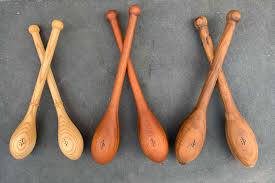
Indian clubs are weighted clubs, traditionally made from wood, that are swung through circular and looping patterns.
Modern clubs come in different sizes and weights. Lighter clubs are commonly used for coordination, mobility and skill practice, while heavier club variations can be used for more demanding strength work.
Beginners usually do better starting light and learning the movement patterns before increasing load.
A Brief History of Indian Clubs
Club-swinging traditions have roots in South Asia and the Middle East, where wrestlers and soldiers used heavier club-like implements as part of physical training.
In India, traditional tools such as the jori and mudgar have long been associated with wrestling and strength culture.
During the 19th century, lighter forms of club swinging became popular in Britain, Europe and North America and were incorporated into military training, physical education and gymnasium programs.
Modern Indian club training is generally lighter and more movement-focused than traditional heavy-club training.
Why Train With Indian Clubs?
Indian clubs offer a different challenge than dumbbells or machines.
The swinging patterns require timing, coordination and control as the club moves around the body.
They can be useful for:
- shoulder movement
- grip and forearm endurance
- coordination
- rhythm
- upper-body mobility
- body awareness
- learning rotational movement
They can also simply be fun.
Shoulder Mobility and Control
Indian clubs move the shoulders through circular patterns that are difficult to reproduce with many traditional exercises.
That can be useful for practicing comfortable overhead and rotational movement.
I would avoid claiming that Indian clubs lubricate joints, prevent shoulder pain or automatically improve shoulder health.
They are a movement tool, not a treatment.
Grip and Wrist Training
Holding and controlling the club requires the hands, wrists and forearms to work continuously.
Because the weight sits farther away from the hand than it would with a dumbbell, even a light club can create noticeable leverage.
This can make club training useful for grip endurance and wrist control.
Coordination and Rhythm
One of the biggest benefits of Indian club work is coordination.
You have to control:
- the direction of the swing
- timing
- speed
- hand position
- shoulder movement
- sometimes both arms at once
As the patterns become more complex, the exercise becomes as much about motor learning as muscular effort.
Core and Full-Body Movement
More advanced patterns can include rotation, stepping or pivoting.
That brings in the trunk, hips and legs.
The core is not necessarily being “activated” in a special way; it is simply contributing to whole-body control as you move.
Indian Clubs vs. Heavy Club Training
These are not exactly the same.
Light Indian clubs are usually used for:
- coordination
- flow
- shoulder movement
- endurance
- skill
Heavier clubs or maces place much greater demands on strength and leverage.
If you are new to club training, do not assume you need a heavy implement to make it effective.
Beginner Indian Club Routine
If you are just starting, use very light clubs and keep the movements slow.
The goal is to learn the pattern rather than create fatigue.
1. Single-Arm Circle
Hold one club and practice a smooth circular path around the shoulder.
Keep the grip relaxed enough that the movement can flow.
Start with 5–10 repetitions each direction.
2. Front Pendulum
Let the club swing gently forward and back in front of the body.
Avoid forcing the range.
Use this to learn how the club responds to momentum.
3. Casting Pattern
From an upright position, guide the club around the shoulder and back to the starting position.
Move slowly at first.
The goal is smoothness rather than speed.
4. Inward Circle
Swing the club inward toward the midline and around the shoulder.
Keep the movement controlled.
Practice one side before trying both arms together.
5. Outward Circle
Reverse the direction so the club travels outward.
Notice whether one direction feels easier than the other.
That is normal.
6. Alternating Mills
Once you are comfortable with basic circles, begin alternating the arms in a rhythmic pattern.
Keep the clubs light.
This is where coordination becomes more challenging.
7. Add a Gentle Pivot
More advanced patterns can include a small foot pivot or torso rotation.
Let the movement come from the whole body rather than twisting only through the shoulder.
Keep this slow until the timing feels natural.
How Heavy Should Indian Clubs Be?
Lighter is usually better when you are learning.
A club that feels almost too light when you first pick it up can become challenging after several minutes of continuous swinging.
There is no universal starting weight.
Choose a load that allows you to:
- maintain control
- keep the shoulders relaxed
- move smoothly
- stop the club safely
- complete the pattern without straining
Do Not Chase Fatigue
Indian club training does not need to feel exhausting.
Skill quality matters more than burning out your shoulders.
Stop the set if:
- your grip is failing
- the club starts pulling you out of position
- your movement becomes jerky
- you lose control of the swing
Rest, reset and continue later.
Indian Clubs and Rehabilitation
I would be careful with the old claim that Indian clubs are widely used for rehabilitation or that they restore joint function.
Some rehabilitation professionals may use club-style movements, but that does not make Indian clubs appropriate for every shoulder, elbow or wrist problem.
If you have persistent pain or are recovering from an injury, get appropriate assessment before adding swinging exercises.
Can Indian Clubs Prevent Injury?
No exercise can guarantee injury prevention.
Indian clubs can help build movement options, coordination and tolerance to certain shoulder positions.
That can be valuable, but injury risk is influenced by many factors.
Flow and Mindfulness
Because club patterns are rhythmic and repetitive, some people find them enjoyable and absorbing.
That can make training feel almost meditative.
But I would present that as a personal experience rather than claiming Indian clubs create a specific neurological “flow state.”
How Often Should You Practice?
You do not need to practice every day.
A few short sessions each week can be enough to learn the movements and improve coordination.
Start with 5–10 minutes and build gradually.
Quality matters more than duration.
Who Might Enjoy Indian Club Training?
Indian clubs may appeal to:
- people who enjoy movement skills
- martial artists
- dancers
- climbers
- strength trainees
- yoga practitioners
- circus and flow-arts enthusiasts
- anyone looking for a more playful upper-body training tool
They can complement traditional strength training rather than replace it.
Indian Clubs and Circus Arts
There is a natural crossover between club training and circus or flow-based movement because both involve rhythm, timing and coordination.
If you enjoy playful skill development, you may also like Circus Arts in Nanaimo.
For another skill-based strength exercise, read Turkish Get-Up: A Full-Body Exercise for Strength, Mobility and Control.
If you want help integrating Indian clubs, mobility or unconventional strength tools into your training, explore Personal Training in Nanaimo.