-
High-Intensity Interval Training, or HIIT, is a time-efficient way to challenge your cardiovascular fitness and muscular endurance. HIIT usually alternates short periods of harder effort with easier recovery or rest, which makes it useful when you want a focused workout but do not have much time.
HIIT can support fitness and conditioning, but it does not need to be done at an all-out intensity every time. The best workout is one you can perform with good control and recover from appropriately.
1. AMRAP HIIT Workout
AMRAP means “as many rounds as possible” within a set amount of time. The goal is not to rush with poor form, but to move steadily and complete as much quality work as you can.
Circuit 1 — 10 minutes
- Mountain climbers
- Reverse lunges
- Squat jumps or bodyweight squats
- Plank jacks or step-out plank jacks
- V-hold or dead bug variation
Perform a manageable number of repetitions for each exercise, then continue cycling through the circuit for 10 minutes.
Rest for 1–2 minutes.
Circuit 2 — 10 minutes
- Single-leg deadlifts
- Bodyweight squats
- Forearm plank
- Y-T-I shoulder raises
- Butt kickers
Again, move at a pace that challenges you without sacrificing technique.
2. Kettlebell HIIT Workout
This workout combines strength and conditioning. Use a kettlebell weight that allows you to move with control, especially on swings and overhead movements.
Complete 10–15 repetitions of each exercise, or use a timed interval such as 30 seconds of work followed by 20–30 seconds of rest.
- Burpees or step-back burpees
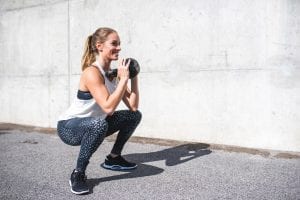
- Kettlebell goblet squat
- Kettlebell overhead press
- Two-handed kettlebell swing
- Lateral skater or Heisman steps
Repeat for 3–4 rounds.
If you are new to kettlebell swings, learn the hip hinge first before adding speed.
3. Rowing Machine HIIT Workout
A rowing machine can be a great way to combine cardiovascular training with full-body strength work.
Circuit 1
- Row 150 metres
- Dumbbell shoulder press × 10–12
- Row 150 metres
- Push-ups for 20–30 seconds
- Row 200 metres
Rest as needed and repeat for 3 rounds.
Circuit 2
- Row 100 metres
- Mountain climbers for 30 seconds
- Romanian deadlift × 10–12
- Bodyweight squats or squat jumps × 10–15
- Burpees or step-back burpees × 5–10
Repeat for 3 rounds.
4. Tabata-Style Workout
Traditional Tabata uses 20 seconds of work followed by 10 seconds of rest for eight rounds, which adds up to four minutes.
You can use one exercise for all eight rounds or alternate between two movements. Examples include:
- squats
- mountain climbers
- cycling
- rowing
- jumping jacks
- push-ups
- kettlebell swings
You do not have to work at absolute maximum intensity. Choose a pace you can maintain safely through the full interval.
5. Bodyweight HIIT Workout
This workout requires no equipment and can be done at home.
Perform each exercise for 30 seconds, followed by about 15 seconds of rest:
- jumping jacks or step jacks
- high knees or marching high knees
- mountain climbers
- push-ups
- plank jacks or step-out planks
Rest for 1 minute at the end of the circuit and repeat for 3–4 rounds.
Warm Up First
A short warm-up can help prepare your body for faster and more demanding movement. Spend about 5 minutes gradually increasing your intensity with movements such as marching, easy squats, arm circles, hip hinges, lunges or light cardio.
You do not need to stretch extensively before HIIT. Dynamic movement that prepares you for the exercises you are about to do is usually more useful.
How Often Should You Do HIIT?
HIIT is demanding, so more is not always better. For many people, one or two HIIT sessions per week can be plenty, especially if you are also strength training, walking, hiking, cycling or doing other forms of exercise.
Recovery matters. If every workout leaves you exhausted for several days, your intensity or volume may be too high.
HIIT and Strength Training
HIIT can improve conditioning, but it should not replace strength training if building or maintaining muscle is one of your goals. A balanced program can include both.
You can read 10 Benefits of Strength Training or Bodyweight Training vs. Weight Training for more ideas on building a complete fitness routine.
If you prefer working out with others, explore Group Fitness Classes in Nanaimo. If you want a program tailored to your goals and fitness level, learn more about Personal Training in Nanaimo.
Keep HIIT Challenging, Not Punishing
A good HIIT workout should feel challenging, but it does not need to leave you completely depleted. Modify jumping movements when needed, use longer rest periods if your form starts to break down, and choose exercises that suit your current fitness level.
Consistency matters more than pushing to exhaustion.