Back pain is common and can have many different causes. While strength training is not a cure for every type of back pain, building strength in the muscles that support your spine, shoulders, hips and core can be an important part of improving how you move and feel.
In this post, I’m sharing some of the exercises that helped me personally become stronger, improve my posture and feel more confident in my body.
My Journey With Back Pain
As someone who has experienced recurring back pain over many years, I know how frustrating it can be. My history includes several falls and accidents, including a serious car accident at 19, another collision that caused significant whiplash, and later being hit by a truck while biking.
Over the years, I explored many different approaches and worked with a variety of practitioners. One of the biggest shifts for me came when I began focusing more consistently on strength and movement. Becoming stronger helped me feel more supported, improve my posture and better manage how my body responded to everyday activity.
How I Improved My Posture and Reduced Back Pain
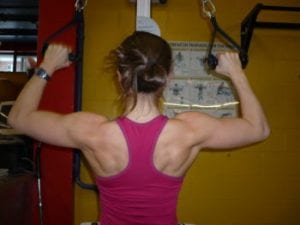
When I became a fitness professional, I began paying much more attention to strengthening the muscles that support posture and movement. Back training became an important part of that process.
Exercises such as rows, pulldowns and deadlift variations helped me develop strength through my upper back, hips and posterior chain. Over time, I felt more capable and resilient in my body.
Everyone’s situation is different, especially when pain or injury is involved, so exercises should be adapted to your ability and symptoms.
Favorite Ways to Strengthen Your Back
1. Lat Pulldown
The lat pulldown is a great exercise that targets your back muscles. This exercise helps to strengthen your lats, which are the largest muscles in your back. To perform this exercise, sit on the lat pulldown machine and grasp the bar with an overhand grip that is slightly wider than shoulder-width apart. Pull the bar down towards your chest, making sure to engage your back muscles. Slowly release the bar back up to the starting position and repeat.
2. Seated Cable Row
The seated cable row is another effective exercise that targets your back muscles. This exercise works to strengthen your rhomboids and middle traps, which are the muscles that help to pull your shoulder blades back and down. To perform this exercise, sit at the cable row machine and grasp the handles with both hands. Sit with your knees slightly bent and your feet flat on the ground. Pull the handles towards your chest, making sure to engage your back muscles. Slowly release the handles back to the starting position and repeat.
The deadlift is a compound exercise that targets your back, as well as your glutes and hamstrings. This exercise is great for improving your overall strength and posture. To perform this exercise, stand with your feet hip-width apart and grasp the bar with an overhand grip that is slightly wider than shoulder-width apart. Maintaining a comfortable, controlled spinal position, hinge forward at the hips and lower the bar towards the ground. Once the bar reaches your mid-shins, drive your hips forward and stand up straight, making sure to engage your back muscles. Slowly release the bar back to the starting position and repeat.
Strengthening your back can be an important part of building a stronger, more capable body. Exercises such as pulldowns, rows and deadlift variations can support posture, upper-body strength and everyday movement when they are performed with appropriate technique and progression.
If you are experiencing persistent, severe or unexplained back pain, it’s important to seek guidance from an appropriate healthcare professional before beginning or changing an exercise program.
If you would like support building strength, mobility and confidence through personalized exercise, you can learn more about my Personal Training in Nanaimo services.
Stress, breathing patterns and the nervous system can also influence how we experience tension in the body. For a counselling-informed perspective, you can read Breathwork, the Nervous System, and Epigenetic Trauma on Vancouver Island Holistic Counselling.