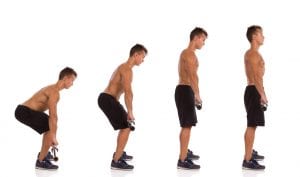
The deadlift is one of the most useful strength exercises because it trains a movement we use in everyday life: picking something up from the floor.
It works the hips, legs, back, core and grip, but the goal is not simply to lift the heaviest weight possible. Good deadlifting is about learning how to create tension, hinge through the hips and move a load with control.
What Muscles Does the Deadlift Work?
Deadlifts are a compound exercise, which means several muscle groups contribute at the same time.
Depending on the variation, they can challenge:
- glutes
- hamstrings
- quadriceps
- spinal erectors
- upper back
- core
- forearms and grip
They are especially useful for developing the posterior chain: the muscles along the back of the body.
Why Deadlifts Are Useful
Deadlifts can help build:
- overall strength
- hip-hinge control
- grip strength
- confidence lifting objects from the floor
- lower-body and posterior-chain strength
They can also transfer well to everyday tasks such as lifting boxes, groceries or equipment.
Deadlifts and Posture
Deadlifts can strengthen the muscles that help support the trunk and hips, but they do not automatically “fix posture.”
Posture is dynamic and influenced by many factors.
A better goal is to build enough strength and control that you can move and lift comfortably in different positions.
Deadlifts and Back Health
A well-chosen deadlift variation can be appropriate for many people, including some people with a history of back pain.
But deadlifts are not a treatment for every back problem, and they do not guarantee that pain or injury will be prevented.
If you have persistent or significant back pain, work with an appropriate healthcare or rehabilitation professional.
You can also read Strengthening Your Back to Support Better Posture and Reduce Back Pain for a broader approach to back strength.
Learn the Hip Hinge First
Before adding heavy load, practice the hip hinge.
Stand with the feet in a comfortable position.
Push the hips back while keeping the spine relatively neutral and the knees softly bent.
Think of closing a car door with your hips.
You should feel the hamstrings load as the hips move backward.
Basic Deadlift Setup
A conventional deadlift setup may look slightly different from person to person, but a few general principles are useful:
- place the feet in a comfortable stance
- position the load close to the body
- bend the knees enough to reach the weight
- create tension through the trunk
- keep the shoulders organized
- push through the floor as you stand
Do not obsess over forcing everyone into the same exact position.
Body proportions matter.
Keep the Load Close
Whether you are using a barbell, dumbbells or kettlebells, keeping the load close to the body usually makes the movement more efficient.
With a barbell deadlift, the bar typically travels close to the legs.
If the weight drifts far forward, it increases the demand on the back.
Brace Before You Lift
Before lifting, take a breath and create tension through the trunk.
Think of the abdomen becoming firm in all directions rather than simply “sucking in.”
Then maintain that tension as you begin the lift.
You can learn more in Engaging Your Core: Bracing for Strength, Stability and Performance.
Stand Up, Don’t Lean Back
At the top of the deadlift, stand tall and finish by extending the hips.
You do not need to lean backward or aggressively squeeze the glutes.
Think:
hips through, ribs stacked, stand tall.
Lower With Control
To lower the weight, reverse the movement.
Push the hips back first, keep the load close and then bend the knees as needed to return the weight to the floor.
Avoid simply dropping into a squat unless the variation calls for it.
Start With a Variation That Fits You
You do not have to begin with a barbell from the floor.
Useful options include:
- kettlebell deadlift
- dumbbell deadlift
- elevated deadlift
- Romanian deadlift
- trap-bar deadlift
- sumo deadlift
An elevated kettlebell or dumbbell deadlift is often a good starting point because it reduces the range of motion.
Romanian Deadlift
The Romanian deadlift, or RDL, starts from standing.
Push the hips back while keeping the knees softly bent and lower the weight only as far as you can maintain control.
The goal is to feel tension through the hamstrings and glutes, not to reach the floor.
RDLs are especially useful for learning the hip hinge.
How Heavy Should You Lift?
Start with a load that allows you to learn the movement well.
You should be able to maintain control and repeat the technique consistently.
As you improve, gradually increase resistance.
You do not need to max out.
Do You Need a Spotter?
Deadlifts usually do not require a traditional spotter in the way a heavy bench press might.
Instead, make sure you have enough space, use appropriate equipment and know how to safely set the weight down if a rep does not feel right.
If you are learning the lift, coaching or supervision can be more useful than a spotter.
Deadlifts and Calorie Burning
Deadlifts use a lot of muscle and can be demanding, but I would not choose them primarily because they “burn fat” or supposedly keep metabolism elevated for hours.
Their biggest value is strength.
If body composition is one of your goals, strength training can be part of a broader plan that includes nutrition, recovery and overall activity.
Deadlifts and Glute Strength
Deadlifts can be excellent for building the glutes and hamstrings.
If glute development is a goal, you may also benefit from hip thrusts, step-ups, split squats and other lower-body movements.
You can read How to Build Stronger, More Developed Glutes for more.
Progress Gradually
A good deadlift is not about chasing a number.
Progress can mean:
- better technique
- more confidence
- more range of motion
- more repetitions
- better control
- eventually lifting more weight
If you want individualized help learning the hip hinge or progressing your deadlift, explore Personal Training in Nanaimo.