
Long periods of sitting are common in modern life, especially for people who work at a desk, drive often or spend a lot of time on screens.
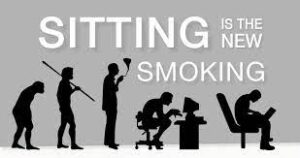
Sitting itself is not the enemy, and the phrase “sitting is the new smoking” is too dramatic. Smoking and sedentary behaviour are very different health risks. A better message is that spending too much of the day inactive can affect health, especially when overall movement and exercise are low.
What Does Sedentary Mean?
Sedentary behaviour generally means waking activities that use very little energy while sitting, reclining or lying down.
Examples include:
- working at a desk
- driving
- watching television
- scrolling on a phone
- gaming
- long periods of sitting during travel
The concern is not that sitting for an hour is harmful by itself.
It is the accumulation of long periods of inactivity across the day.
Sitting and Posture
Sitting does not automatically cause “bad posture.”
There is also no single perfect posture you need to hold all day.
The bigger issue is staying in one position for too long.
If you sit for hours without changing position, you may feel stiff or uncomfortable simply because your body has not had much movement.
Instead of trying to sit perfectly upright all day, change positions often.
You can read How to Check Your Posture: A Simple Guide to Better Alignment for more.
Sitting and Muscle Strength
Sitting does not instantly make muscles weak.
But if most of your day is inactive and you are not strength training or moving regularly, you may gradually lose strength and physical capacity.
That is especially important as we age.
Strength training, walking, stairs, carrying, hiking and other regular movement help maintain muscle and function.
Sitting and Joint Stiffness
Many people notice that hips, knees or the lower back feel stiff after sitting for a long time.
That does not mean the joints are being damaged.
Often, movement simply makes them feel better.
Standing up, walking, changing position or doing a few mobility exercises may help reduce that feeling of stiffness.
Sedentary Time and Overall Health
Higher levels of sedentary behaviour are associated with poorer health outcomes, particularly when physical activity is also low.
Regular movement and exercise can help support:
- cardiovascular health
- blood-sugar regulation
- physical function
- strength
- endurance
- overall well-being
This is another reason not to think of exercise as something that only happens during a one-hour workout.
What you do during the rest of the day matters too.
Can Exercise Make Up for Sitting?
Exercise helps a lot.
Someone who sits for work but also regularly walks, strength trains and meets physical-activity recommendations is in a very different position from someone who is both highly sedentary and inactive.
That said, even active people may benefit from breaking up very long periods of sitting.
You do not need to panic about your desk job.
Just build more movement into the day.
Movement Breaks
A movement break does not need to become a workout.
Every 30–60 minutes, if practical, try:
- standing up
- walking for a minute or two
- doing a few squats
- climbing a flight of stairs
- rolling the shoulders
- moving the hips
- stretching the calves
- walking while taking a phone call
The exact exercise matters less than changing position and moving.
Set Up Your Workspace for Variety
Ergonomics can help make work more comfortable, but no chair or desk setup can replace movement.
Instead of searching for the one perfect position, give yourself options.
You might alternate between:
- sitting
- standing
- walking during calls
- working at a different surface
- changing chair position
A standing desk can be useful, but standing still all day is not the goal either.
Variety is.
Walk More Without Making It Complicated
Walking is one of the simplest ways to reduce sedentary time.
You can:
- park farther away
- take a short walk at lunch
- walk after dinner
- take stairs when practical
- walk while talking on the phone
- add a short loop before or after work
In Nanaimo, outdoor movement is easy to combine with daily life.
You can explore Outdoor Workout Spots in Nanaimo for ideas.
Strength Training Matters Too
Breaking up sitting is useful, but it is not a substitute for strength training.
Resistance exercise helps maintain:
- muscle
- bone-loading capacity
- balance
- functional strength
- confidence with everyday tasks
Even two or three strength sessions per week can make a meaningful difference.
For more, read 10 Benefits of Strength Training.
Mobility for Desk Workers
If sitting leaves you feeling stiff, try a few simple movements:
- hip flexor stretch
- thoracic rotation
- ankle mobility
- bodyweight squats
- shoulder circles
- cat-cow
- 90-90 hip rotations
You do not need a 30-minute stretching routine.
A few minutes of movement can be enough to reset how you feel.
What About Mental Health?
Physical activity can support mood and stress management, but I would avoid saying that sitting itself directly causes anxiety or depression.
Mental health is influenced by many factors.
The useful message is that movement can be one supportive part of a broader approach to well-being.
The Goal Is Not to Avoid Sitting
Sitting is a normal part of life.
Rest is important.
The goal is not to become afraid of chairs.
A better goal is to avoid letting one position dominate your entire day.
Sit when you need to.
Stand when you want to.
Walk often.
Strength train.
Move in ways you enjoy.
Build More Movement Into Your Day
You do not need a dramatic lifestyle overhaul.
Start with something small:
- one short walk
- one movement break each hour
- two strength sessions each week
- a few mobility exercises after work
Those small changes can accumulate.
If you want help building a realistic movement routine around your schedule, explore Personal Training in Nanaimo or Group Fitness Classes in Nanaimo.