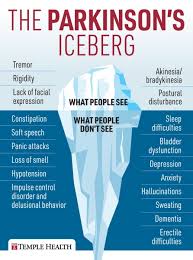
 Parkinson’s disease is a progressive neurological condition that can affect movement, balance, coordination, speech, sleep, mood and cognition. Exercise is now considered an important part of Parkinson’s management because it can help people maintain strength, mobility, balance and overall function. Current Parkinson’s Foundation and ACSM recommendations support regular aerobic, strength, flexibility, and balance/agility training for people with Parkinson’s.
What exercise cannot currently be said to do with certainty is slow the disease itself. Research suggests exercise may influence neuroplasticity and some markers of disease progression, but the evidence is not strong enough to
promise that exercise changes the underlying course of Parkinson’s.
Understanding Parkinson’s Disease
Parkinson’s disease affects dopamine-producing neurons in the brain. Dopamine plays an important role in movement, motivation and many other functions.
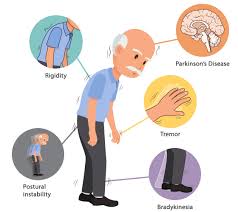
Common movement-related symptoms can include:
- tremor
- slowness of movement
- stiffness
- changes in posture
- balance difficulties
- changes in walking
- freezing of gait
Parkinson’s can also include non-motor symptoms such as fatigue, sleep disturbance, depression, anxiety, constipation and cognitive changes.
Every person’s experience is different, so exercise should be individualized.
Why Exercise Matters
Regular exercise can help people with Parkinson’s maintain or improve physical capacity.
Depending on the person and stage of disease, exercise may support:
- walking and mobility
- strength
- balance
- cardiovascular fitness
- flexibility
- coordination
- confidence with daily activities
- quality of life
The goal is not to “exercise away” Parkinson’s.
The goal is to maintain as much function and independence as possible.
Exercise and Neuroplasticity
Neuroplasticity refers to the nervous system’s ability to adapt in response to practice and experience.
This is one reason Parkinson’s-specific exercise programs often emphasize large, intentional movements, repetition, challenge and progressive practice.
Exercise may support beneficial changes in the nervous system, but I would avoid saying that it simply “rewires the brain” or replaces lost dopamine pathways.
The science is promising, but still evolving.
Aerobic Exercise
Aerobic training helps build cardiovascular fitness and endurance.
Options may include:
- brisk walking
- treadmill walking
- cycling
- stationary bike
- swimming
- rowing
- hiking
- dance
The updated Parkinson’s exercise recommendations continue to encourage roughly 150 minutes of moderate-to-vigorous exercise per week, adapted to the individual.
That does not mean every person should immediately aim for 150 minutes.
Start from where you are and build gradually.
Strength Training
Strength training is important because Parkinson’s can affect posture, walking speed, getting up from chairs and other daily movements.
Useful exercises may include:
- squats or sit-to-stands
- step-ups
- deadlift variations
- rows
- presses
- calf raises
- carries
- hip strengthening
- trunk exercises
The Parkinson’s Foundation recommends strength work several times per week as part of a broader program.
The exact exercises should match the person’s balance, mobility, symptoms and experience.
Balance, Agility and Multitasking
Balance and agility training are especially relevant because Parkinson’s can affect turning, stepping and reacting to changes in the environment.
Examples include:
- multidirectional stepping
- weight shifting
- obstacle courses
- turning practice
- agility drills
- dance
- tai chi
- boxing
- yoga
The current guidelines specifically include balance, agility and multitasking work several times per week, with appropriate safety support when needed.
Large-Amplitude Movement
Many Parkinson’s-specific programs use deliberately large movements.
That might mean:
- big steps
- large arm swings
- reaching
- exaggerated posture changes
- deliberate turning
- rhythmic stepping
For some people, Parkinson’s gradually makes movements smaller and slower.
Practising larger movements can help reinforce the intention to move with more amplitude.
Walking and Gait Training
Walking can become more difficult as Parkinson’s progresses.
Useful strategies may include:
- concentrating on larger steps
- using rhythmic music
- counting steps
- visual floor markers
- walking poles
- treadmill training
- practising turns
- changing direction intentionally
Auditory and visual cues can sometimes make movement easier.
Boxing
Non-contact boxing has become popular in Parkinson’s programs because it combines:
- footwork
- coordination
- reaction time
- aerobic conditioning
- trunk rotation
- cognitive challenge
It can be a very useful form of exercise for some people.
It should still be adapted for balance and safety.
Cycling
Cycling can be especially useful for people who have difficulty walking but can still pedal smoothly.
Stationary bikes also reduce some of the balance demands involved in outdoor cycling.
Resistance and cadence can be adjusted to the person’s abilities.
Dance
Dance combines rhythm, coordination, balance, memory and social interaction.
Styles such as tango and other partnered or rhythmic dance have been studied in people with Parkinson’s.
More importantly, dance can simply be enjoyable.
Enjoyment matters because people are much more likely to continue an activity they like.
Yoga and Mobility
Yoga can support mobility, balance, breathing awareness and strength.
However, poses should be adapted when balance is limited.
Chair-supported yoga, wall support and slower transitions may be more appropriate than complex balance poses.
For more general mobility ideas, see Mobility vs. Stability: How They Work Together.
Flexibility
Stretching can help maintain comfortable range of motion, especially when stiffness is present.
Current recommendations include flexibility work at least a few days each week, with daily mobility being useful for some people.
Stretching should feel controlled rather than aggressive.
Exercise During “On” Periods
Medication timing can make a big difference.
The Parkinson’s Foundation recommends exercising during “on” periods when medication is working well whenever possible.
This can improve movement quality and make training safer and more productive.
When Supervision Matters
Some people with Parkinson’s can exercise independently.
Others benefit from supervision because of:
- freezing
- falls
- dizziness
- significant balance problems
- cognitive changes
- advanced symptoms
If you are not safe exercising alone, train with someone.
A physiotherapist with Parkinson’s experience can also provide a full functional assessment and individualized recommendations.
Parkinson’s-Specific Training
I have completed Parkinson Wellness Recovery training, which focuses on Parkinson’s-specific exercise and movement strategies.
One important detail I would verify before publishing the exact credential wording is whether your PWR! certification is currently active, because PWR! now uses recertification requirements for maintaining certification status.
So for now, I would use wording such as:
“I have completed Parkinson Wellness Recovery training and have experience working with clients living with Parkinson’s disease.”
That is safer than saying “Certified Parkinson Wellness Recovery” unless we confirm your current status.
Exercise Is Part of the Team
Exercise can be powerful, but it is only one part of Parkinson’s care.
Depending on symptoms, people may also benefit from:
- neurologists
- physiotherapists
- occupational therapists
- speech-language pathologists
- dietitians
- counsellors
- other healthcare professionals
Good fitness coaching should complement medical and rehabilitation care rather than replace it.
Build From Where You Are
A good Parkinson’s exercise program should be challenging enough to create adaptation but appropriate enough to be safe.
Progress can mean:
- taking larger steps
- getting out of a chair more easily
- walking farther
- improving balance
- lifting more confidently
- maintaining endurance
- feeling more capable in daily life
Those are meaningful outcomes.
How Choose2be Can Help
I work one-on-one with clients in Nanaimo to build individualized programs around strength, mobility, balance and endurance.
For someone living with Parkinson’s, that may include:
- strength training
- gait and stepping drills
- balance work
- cardiovascular conditioning
- mobility
- coordination
- hiking preparation
- progressive functional training
If you want individualized support, learn more about Personal Training in Nanaimo.
You can also read The Importance of Balance as We Age, which includes more balance-training ideas.