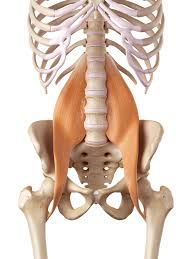
The psoas is an important hip-flexor muscle that connects the lower spine to the femur. It plays a role in hip flexion, trunk control and movement between the spine, pelvis and legs.
It is often blamed for everything from back pain to poor posture and stress, but the psoas is not a “problem muscle” that always needs to be stretched or released. Like most muscles, it can benefit from a mix of strength, mobility and varied movement.
What Is the Psoas?
The psoas major originates along the lumbar spine and attaches to the upper femur at the lesser trochanter.
Together with the iliacus, it forms the iliopsoas, one of the main hip-flexor groups.
Its main jobs include:
- flexing the hip
- helping control the pelvis and lumbar spine
- contributing to trunk stability
- assisting with movements such as walking, running and climbing stairs
Is the Psoas a Core Muscle?
The psoas is often grouped into discussions about the “deep core” because of where it attaches and how it interacts with the pelvis and spine.
That does not mean it functions like the transverse abdominis or pelvic floor.
It is better to think of it as a hip flexor with an important relationship to trunk and pelvic control.
The Psoas and Breathing
The psoas sits close to the diaphragm and surrounding connective tissues, but I would avoid saying it directly controls breathing or stress.
Breathing, trunk pressure and movement all interact, but the psoas is not a breathing muscle.
If you notice tension around the front of the hips while breathing or moving, that may reflect posture, position, guarding or workload rather than a “tight psoas” causing the problem.
Signs the Psoas May Need Attention
It is difficult to diagnose a “tight” or “weak” psoas from symptoms alone.
Possible signs that the hip flexors may need more strength or mobility include:
- difficulty lifting the knee
- discomfort in the front of the hip
- stiffness after long periods of sitting
- reduced hip extension
- difficulty with running or climbing
- poor control during leg raises
These symptoms can have many causes, so avoid assuming the psoas is always responsible.
Does Sitting Make the Psoas Tight?
Long periods of sitting keep the hips flexed.
That can make the front of the hips feel stiff when you stand up, but sitting does not automatically create a permanently shortened psoas.
The bigger issue is often lack of movement variety.
If you sit a lot, standing, walking and moving the hips regularly may be more useful than aggressively stretching one muscle.
The Psoas and Low Back Pain
The psoas can contribute to spinal and pelvic mechanics, but it is too simplistic to say that a tight or weak psoas causes lower back pain.
Back pain is influenced by many factors, including:
- workload
- strength
- previous injury
- sleep
- stress
- activity level
- sensitivity
- movement habits
If back pain persists, it is better to get an appropriate assessment rather than trying to “release the psoas” repeatedly.
The Psoas and Posture
A strong psoas does not automatically create perfect posture, and a tight psoas does not automatically cause anterior pelvic tilt.
Posture is influenced by the entire body and changes throughout the day.
Rather than trying to hold the pelvis in one ideal position, focus on having enough strength and mobility to move comfortably through different positions.
Stress and the Psoas
The psoas is often described online as the “muscle of the soul” or as a place where trauma and stress are stored.
I would not use those claims.
Stress can absolutely influence muscle tension and movement, but there is no strong basis for treating the psoas as a special emotional-storage muscle.
That kind of language can make normal tightness feel more mysterious than it needs to be.
Strengthening the Psoas
The psoas responds to progressive resistance like other muscles.
Useful exercises include:
- standing knee raises
- seated leg lifts
- resisted marching
- hanging knee raises
- step-ups
- uphill walking
- banded hip flexion
The key is control and gradual progression.
Standing Knee Raise
Stand tall and lift one knee toward hip height.
Pause briefly, then lower with control.
Use a wall or support if balance is a challenge.
To progress, add a resistance band around the foot.
Seated Single-Leg Raise
Sit with one leg extended.
Lift the heel away from the floor without leaning back excessively.
Keep the movement small if needed.
This is a simple way to challenge hip flexion strength.
Seated Compression Lift
Sit with the legs extended and hands beside the hips.
Press into the floor and try to lift one or both heels.
This can be demanding.
Start with one leg at a time or bend the knees slightly if needed.
Resisted Marching
Loop a resistance band around the feet or anchor it low.
Lift one knee while maintaining trunk control.
This is a practical progression because resistance can be increased gradually.
Step-Ups
Step-ups train the hip flexors along with the glutes and quadriceps.
They also have a strong carryover to stairs and hiking.
Choose a step height that allows you to stay controlled.
Stretching the Front of the Hip
A half-kneeling hip-flexor stretch can be useful if the front of the hip feels stiff.
Instead of pushing the hips forward aggressively, gently tuck the pelvis and shift forward until you feel a mild stretch.
The goal is not to force the deepest possible range.
Hold for 20–30 seconds if it feels comfortable.
Stretching Is Not Always the Answer
If you keep stretching the hip flexors and they still feel tight, you may need strength rather than more stretching.
A muscle can feel tight because it is working hard or lacks confidence in a position.
That is one reason strengthening through range can be more useful than passive stretching alone.
You can read Why I Don’t Just Stretch My Hips — I Strengthen Them for more.
Train the Whole Hip
The psoas is only one part of hip function.
A well-rounded program should also train:
- glutes
- hamstrings
- adductors
- abductors
- quadriceps
- calves
- trunk muscles
That balance is more useful than trying to isolate one muscle as the source of every issue.
When to Get Professional Help
Consider seeing a physiotherapist or other appropriate healthcare professional if you have:
- persistent groin pain
- sharp or catching pain
- significant weakness
- numbness or tingling
- pain that does not improve
- symptoms after a traumatic injury
Those are not situations to solve with stretching alone.
Build Strength and Mobility Together
The psoas is important, but it does not need to be feared or constantly released.
A better approach is to:
- move regularly
- strengthen hip flexion
- train the hips in several directions
- improve mobility gradually
- avoid forcing stretches
- build overall lower-body strength
For more, read Mobility vs. Flexibility: What’s the Difference and Why Does It Matter? and Mobility vs. Stability: How They Work Together.
If you want individualized help with hip strength and mobility, explore Personal Training in Nanaimo or Yoga & Mobility Classes in Nanaimo.