

Aerobic vs. Anaerobic Exercise: What’s the Difference?

Aerobic vs. Anaerobic Exercise: What’s the Difference?

Aerobic, anaerobic, energy system, oxygen, aerobic training, anaerobic training

Aerobic and anaerobic exercise are two different ways the body produces energy during movement. Both matter, and most workouts actually use a combination of the two rather than switching cleanly from one system to the other.

Understanding the difference can help you build a more balanced fitness routine.

What Is Aerobic Exercise?

Aerobic exercise relies heavily on oxygen-dependent energy production and is usually associated with longer-duration, lower-to-moderate intensity activity.

Examples include:

  • brisk walking
  • steady cycling
  • swimming
  • hiking
  • easy jogging
  • longer cardio sessions

During aerobic exercise, your heart and breathing rates increase, but the effort is usually sustainable for several minutes or longer.

What Is Anaerobic Exercise?

Anaerobic exercise involves higher-intensity efforts where the body needs energy faster than the aerobic system can supply it.

Examples include:

  • sprinting
  • heavy strength training
  • jumping
  • short hill climbs
  • kettlebell intervals
  • high-intensity circuits

These efforts are usually shorter because fatigue builds more quickly.

The Two Systems Work Together

It is more accurate to think of aerobic and anaerobic metabolism as overlapping systems rather than two completely separate modes.

Even during a sprint, the aerobic system contributes some energy. During a longer run or bike ride, anaerobic pathways still contribute during hills, accelerations and harder efforts.

The difference is mostly about which system is doing more of the work at a given intensity.

Benefits of Aerobic Training

Aerobic exercise can help improve:

  • cardiovascular endurance
  • stamina
  • work capacity
  • blood-pressure regulation
  • recovery between harder efforts
  • overall health and fitness

It can also be a useful way to build a base for hiking, sports and everyday activity.

Benefits of Anaerobic Training

Higher-intensity and strength-based exercise can help improve:

  • muscular strength
  • power
  • speed
  • bone-loading stimulus
  • ability to perform short, demanding efforts
  • overall athletic capacity

Strength training is especially important for maintaining muscle as we age.

You can read 10 Benefits of Strength Training for more.

Do You Need Both?

For most people, yes.

A balanced routine often includes:

  • some lower-to-moderate intensity cardio
  • some strength training
  • occasional higher-intensity intervals
  • mobility and recovery work

You do not need to train every system hard every day.

Interval Training Uses Both Systems

Interval training alternates harder efforts with recovery periods.

For example:

  • 30 seconds hard, 60 seconds easy
  • 1 minute fast, 2 minutes easy
  • short hill efforts followed by walking recovery

Because the harder intervals rely more heavily on anaerobic energy while the recovery periods depend more on aerobic metabolism, interval training can challenge both systems.

If you want ideas, see 5 HIIT Workouts Under 20 Minutes and HIIT Workouts: A Time-Efficient Way to Build Fitness.

Strength Training Is Not Just Anaerobic Cardio

One common mistake is putting all “hard” exercise into the same category.

Heavy strength training and HIIT are not interchangeable.

Strength training often requires longer rest periods so you can maintain technique and produce force. HIIT is usually more about conditioning and repeated high-effort bouts.

Both can be useful, but they train different qualities.

How Hard Should You Train?

Intensity should match your goals and current fitness level.

You do not need to push every session to exhaustion.

A good program usually includes easier days, harder days and enough recovery between demanding workouts.

If every session leaves you depleted, sore or unable to perform well the next time, you may be doing too much.

A Simple Weekly Balance

A practical week might include:

  • 2–3 strength sessions
  • 2–4 lower-intensity cardio sessions
  • 1–2 short interval sessions
  • walking, mobility or yoga as recovery

That is only an example. The best plan depends on your goals, schedule and recovery.

Listen to Your Body, but Use More Than Feelings

Body awareness is useful, but progress is easier to understand when you also track things like:

  • workout duration
  • resistance used
  • repetitions
  • pace
  • heart-rate response
  • energy and recovery

This gives you more information than relying only on whether a workout felt hard.

Build a Balanced Fitness Routine

Aerobic and anaerobic exercise both have value.

You do not need to choose one over the other.

Combining cardio, strength and occasional higher-intensity work can help you build endurance, strength and overall fitness more effectively than focusing on only one type of training.

If you want help building a program around your goals, learn more about Personal Training in Nanaimo or Group Fitness Classes in Nanaimo.
 

Flying Pigeon Yoga Sequence for Strength, Balance and Hip Mobility

Flying Pigeon Yoga Sequence for Strength, Balance and Hip Mobility

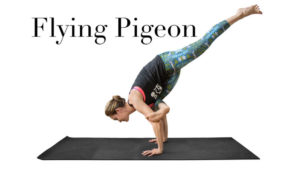
Flying Pigeon, or Eka Pada Galavasana, is an advanced arm balance that combines hip mobility, core strength, shoulder stability, balance and confidence with weight-bearing through the hands.

This sequence is designed to gradually prepare the body for the pose rather than jumping straight into it. The goal is not to force the final shape, but to build the pieces that make it possible.

Begin With a Reclining Figure Four

Start on your back with the knees bent.

Cross one ankle over the opposite thigh and keep the foot flexed.

Stay here or draw the legs toward you for a deeper hip stretch.

Repeat on the other side.

Move Into Downward-Facing Dog

Come to hands and knees, then lift the hips into Downward-Facing Dog.

Take a few breaths and notice the shoulders, hamstrings and calves.

Walk forward and slowly come to standing.

Side Stretch and Chair Pose

Reach the arms overhead and take a gentle side bend in each direction.

Then lower into Chair Pose.

From Chair, sit all the way down with control.

Boat and Hollow-Body Work

Move into Boat Pose and then Half Boat.

You can add a small side-to-side Hollow Body rock if it feels controlled.

This section helps prepare the trunk for the compression and balance needed later.

Chair Figure Four

Stand and return to Chair Pose.

Cross one ankle over the opposite thigh to create a standing Figure Four.

Sit back only as far as you can while keeping the standing foot grounded.

This is an important preparation for Flying Pigeon because it begins to combine hip opening with balance.

Flow 1: Hip Mobility and Strength

From Downward-Facing Dog:

  • lift one leg
  • step into Crescent Lunge
  • transition into a standing Figure Four or glute stretch
  • return to Crescent Lunge
  • open into Warrior II
  • move into Reverse Warrior
  • transition into Side Angle

From Side Angle, experiment with bringing the knee toward the upper arm or triceps.

This begins to connect lower-body mobility with arm-balance positioning.

Repeat on the other side.

Crow Pose Preparation

Come into a squat and place the hands on the floor.

Practice Crow Pose or a modified Crow with one foot down.

Crow helps build familiarity with shifting the chest forward and supporting weight through the hands.

You can read Crow Pose Progressions: Build Strength, Balance and Confidence for more preparation ideas.

Flying Pigeon Preparation

Return to Chair Pose and cross one ankle over the opposite thigh.

Keep the lifted foot flexed.

Fold forward and place the hands on the floor.

Bring the shin toward the upper arms.

Shift your weight forward gradually.

At first, simply practice making the back foot lighter.

You do not need to lift it.

Flying Pigeon

Once the balance feels stable:

  1. keep the front foot flexed
  2. bend the elbows slightly
  3. shift the chest forward
  4. lift the back foot
  5. gradually extend the back leg if control allows

The pose should feel strong and supported, not forced.

If the knee or hip feels pinched, come out and return to the Figure Four preparation.

Half Moon and Side Plank

After the arm-balance work, move into standing balance.

From Warrior II, transition into Half Moon.

Use a block under the lower hand if needed.

You can then move into Side Plank, keeping the bottom knee down or stacking the legs.

These poses reinforce lateral strength and balance without repeating the exact same arm-balance demand.

Bridge or Wheel

Finish the active part of the practice with Bridge Pose.

If Wheel is already part of your regular practice and feels appropriate, you can use it as an optional progression.

Do not treat Wheel as something you need to “earn.”

Bridge is a complete backbend on its own.

Lotus Pose: Optional, Not Required

Lotus Pose is often associated with meditation in traditional yoga, but it requires significant hip mobility and is not appropriate for every body.

You can sit cross-legged, kneel, use Half Lotus or choose any comfortable meditation position.

There is no need to force the knees or hips into Lotus.

Finish With Meditation

Take a few minutes to sit or lie quietly.

Notice the breath, the hips, the shoulders and the hands after the stronger work.

If mantra is part of your practice, you can include one at the end.

The purpose is not to create a special spiritual state, but simply to give the practice a clear and intentional ending.

Flying Pigeon Is a Progression, Not a Test

You do not need to achieve the full pose for the practice to be successful.

Building stronger wrists, improving hip mobility, feeling steadier in Crow or becoming more comfortable shifting your weight forward are all meaningful forms of progress.

If you want to explore arm balances, strength and mobility in person, learn more about Yoga & Mobility Classes in Nanaimo or Personal Training in Nanaimo.