Mobility and flexibility are often used as if they mean the same thing, but they are different. Flexibility is the ability of muscles and other tissues to lengthen, while mobility is your ability to actively move a joint through a usable range of motion with control.
Both can be useful. The important thing is understanding what you actually need for the activities you want to do.
What Is Flexibility?
Flexibility describes how much length or passive range of motion is available in a muscle or joint position. For example, being able to relax into a hamstring stretch or move into a split requires flexibility.
Stretching can help improve tolerance to certain ranges of motion and may increase flexibility over time. But being flexible does not automatically mean you have strength or control in that range.
What Is Mobility?
Mobility is your ability to move through a range of motion actively and with control. It depends on flexibility, but also on strength, coordination, joint structure and nervous-system control.
For example, you may be able to lift your leg high with your hands helping you, but if you cannot actively lift it to the same height on your own, you have more passive flexibility than active mobility.
That is why mobility work often combines range of motion with strength.
Why Mobility Matters
Mobility can help you move more comfortably and efficiently during everyday activities, strength training, yoga and sports. It can also help you access positions such as a squat, overhead reach or lunge with more control.
I would avoid thinking of mobility as something that automatically “prevents injury.” Injury risk is influenced by many factors, including training load, strength, fatigue, technique, previous injury and the demands of the activity. Mobility is one useful part of the bigger picture.
How to Improve Mobility
Improving mobility usually works best when you combine several approaches rather than relying only on passive stretching.
1. Move Through the Range You Have
Controlled joint movements, such as shoulder circles, hip rotations, ankle mobility drills and spinal movement, can help you become more comfortable using different ranges.
2. Stretch When It Helps
Stretching can be useful when you want to increase flexibility or spend more time in a particular position. It does not have to be done only after exercise; it can be used whenever it fits your goals and feels good.
3. Strengthen the Range
Strengthening near the edges of your available range can help turn flexibility into usable mobility. Examples include split squats, deep squats, controlled leg raises, overhead strength work and loaded mobility exercises.
This is one reason I often combine mobility and strength rather than treating them as completely separate practices.
4. Use Self-Myofascial Release If You Enjoy It
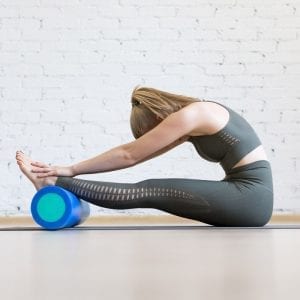
Foam rollers and massage balls can temporarily change how a muscle or area feels and may help you move more comfortably before or after exercise. They are optional tools, not a requirement for improving mobility.
Common Areas People Work On
Some of the most common areas people want to improve include the hips, ankles, shoulders and upper back. The right exercises depend on what feels limited and what you want to be able to do.
For hip mobility and strength, you might enjoy Understanding and Strengthening the Psoas Muscle or Why I Don’t Just Stretch My Hips — I Strengthen Them. For spinal mobility, see Spine Undulation: A Gentle Way to Explore Spinal Mobility and Body Awareness.
Should Mobility Come Before a Workout?
Mobility exercises can work well in a warm-up when they help prepare you for the movements you are about to do. For example, ankle mobility before squats or shoulder mobility before overhead pressing can be useful.
Long passive stretching immediately before maximum-strength or explosive work may not always be ideal, but brief stretching is not something most people need to fear. The best warm-up is specific to the activity you are about to perform.
Should Flexibility Work Come After Exercise?
It can, but it does not have to. If stretching after a workout feels good and helps you relax, that is a perfectly reasonable time to do it.
You can also work on flexibility at a separate time of day. Consistency matters more than following a rigid rule about exactly when stretching must happen.
Mobility and Flexibility Work Best Together
You do not need to choose between mobility and flexibility. Flexibility gives you access to range, while mobility helps you control and use that range.
A balanced movement practice can include stretching, active mobility, strength training and regular movement in different directions.
If you want to work on mobility in a structured way, learn more about Yoga & Mobility Classes in Nanaimo or Personal Training in Nanaimo.
You can also read Elevate Your Workplace Wellness with the Strong Body, Strong Mind Workshop if you want to see how mobility, posture, strength and movement can be integrated into a broader workshop.