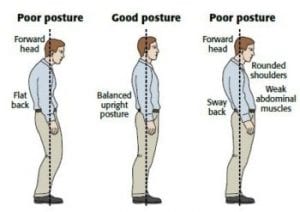
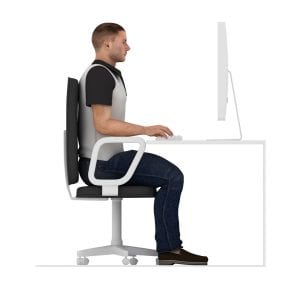
Posture is not about holding yourself in one “perfect” position all day. Your body is designed to move, and healthy posture is more about having options, changing positions regularly and using enough strength and mobility to feel comfortable in different positions.
That said, a simple posture check can help you notice where you tend to hold tension, how your weight is distributed and whether certain areas are doing more work than they need to.
Start From the Ground Up
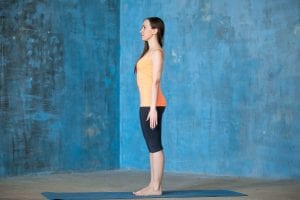
Stand with your feet about hip-width apart and notice how your weight is distributed. Try to feel contact through three points of each foot: the base of the big toe, the base of the little toe and the heel.
You can gently shift your weight forward, backward and side to side, then come back to a place that feels balanced. The goal is not to freeze yourself into position; it is to notice where your body feels most supported.
Check Your Knees
Notice whether your knees are locked or whether you can keep them comfortably relaxed. You do not need to force a bend, but avoiding unnecessary tension can make standing feel more natural.
As you squat, walk or move, allow your knees to track in a direction that feels comfortable and coordinated with your feet rather than trying to hold them in one rigid “perfect” line.
Find a Comfortable Pelvis Position
Your pelvis does not need to be permanently tucked or held in one exact neutral position. Instead, gently explore tipping the pelvis forward and backward, then settle somewhere in the middle that feels comfortable.
Notice whether you are gripping your glutes, bracing your abdomen excessively or pushing your ribs forward. Let your breathing stay relaxed and allow your rib cage to expand in different directions.
Let Your Rib Cage and Shoulders Relax
Rather than constantly pulling your shoulders “back and down,” allow them to rest naturally.
You can roll the shoulders forward, up, back and down a few times to explore the available movement, then let them settle. A comfortable posture should not feel like you are holding a military stance.
Strength through the upper back, shoulders and trunk can support posture without requiring constant tension.
If you want to build more strength in this area, you can also read Strengthening Your Back to Support Better Posture and Reduce Back Pain.

Check Your Head and Neck
Many of us spend a lot of time looking down at phones or screens, so it is common to notice the head drifting forward.
Instead of forcing your chin hard backward, think about gently lengthening through the back of your neck and bringing your head into a position that feels more balanced over your shoulders.
Small adjustments are usually enough. If you feel tension increasing, back off.
Posture Is Dynamic
One of the most important things to remember is that there is no single posture you need to maintain all day.
Even a “good” posture can become uncomfortable if you stay in it for too long. Changing positions, standing up, walking, stretching, strengthening and moving in different directions are often more useful than constantly trying to hold yourself perfectly.
A practical posture check might simply ask:
- Am I comfortable?
- Am I holding unnecessary tension?
- Am I breathing normally?
- Have I been in this position too long?
- Would changing position or moving help?
Strength and Mobility Matter
Posture is influenced by many things, including habits, work setup, strength, mobility, fatigue, pain and even mood.
Exercises such as rows, carries, squats, deadlift variations, mobility work and core training can all help you become more comfortable and adaptable in different positions.
For more ideas, you may also like Spine Undulation: A Gentle Way to Explore Spinal Mobility and Body Awareness or Yoga & Mobility Classes in Nanaimo.
If you would like personalized help with strength, mobility and movement habits, learn more about Personal Training in Nanaimo.
Focus on Comfort, Not Perfection
A useful posture is one you can move in and out of comfortably.
Rather than trying to create one ideal alignment, focus on building strength, mobility and awareness so your body can adapt to different positions throughout the day.