This yoga class combines Classical Sun Salutations, standing poses, balance, longer-held floor poses and breath awareness. It was originally created as part of a series of lesson plans for yoga teacher training, with each class gradually building on the one before it.
The intention is not to force flexibility or create the “perfect” pose. It is to use movement, breath and attention together in a way that feels steady and grounded.
Begin With Tree Pose
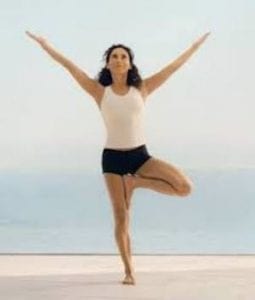
Start in Tree Pose, or Vrksasana.
Stand tall on one leg and place the other foot somewhere comfortable, such as the ankle, calf or inner thigh. Avoid pressing directly into the knee.
Use the pose as an opportunity to notice your balance and breathing.
If balance feels difficult, keep one hand on a wall or chair.
Add Deep Belly Breathing
Before moving into the flow, take a few slower breaths and notice the lower ribs and belly expanding as you inhale.
Let the exhale soften naturally.
The goal is not to force a huge breath. It is simply to slow down and bring more attention to the way you are breathing.
Classical Sun Salutation
Move into a simple Classical Sun Salutation at a comfortable pace.
You might include:
- Mountain Pose
- Forward Fold
- Half Lift
- Low Lunge
- Plank or knees-down variation
- Cobra
- Downward-Facing Dog
- Low Lunge on the second side
- Forward Fold
- return to standing
Repeat several rounds if it feels good.
Add Lunge Variations
Once the basic pattern feels familiar, add variations such as:
- low lunge with arms reaching up
- gentle lunge twist
- prayer twist if appropriate
- transition from Low Lunge to Half Split
Move slowly enough that you can keep the breath steady.
Warrior I and Warrior II
From the lunge, transition into Warrior I and then Warrior II.
Use these poses to explore strength through the legs and stability through the feet.
Rather than trying to force a particular stance, adjust the width and length of the position until it feels stable.
Chest Expansion
From standing, interlace the hands behind the back if comfortable and gently open the chest.
Keep the shoulders relaxed and avoid pulling aggressively.
You can combine this with a wide-legged stance or simply stay upright.
Wide-Leg Forward Fold
Step the feet wide and move into Prasarita Padottanasana, or Wide-Leg Forward Fold.
Keep a soft bend in the knees if that feels better.
You can place the hands on the floor, yoga blocks or thighs depending on your mobility.
Longer-Held Floor Poses
The second half of the class can slow down into longer-held floor shapes.
These are Yin-inspired rather than strict traditional Yin Yoga, since some of the poses are more active than a classic Yin sequence.
Malasana
Come into a comfortable squat.
Use blocks, a wall or support under the heels if needed.
Butterfly
Sit with the soles of the feet together and let the knees open comfortably.
You can remain upright or fold forward gently.
Bridge Pose
Lie on your back with knees bent and feet on the floor.
Lift the hips into Bridge Pose and hold for a few breaths.
For a more restorative variation, place a yoga block under the pelvis and allow the body to relax.
Reclining Figure Four
Cross one ankle over the opposite thigh.
Stay here or draw the legs gently toward you.
This should feel like a comfortable stretch through the hip, not a sharp pull.
Reclining Spinal Twist
Lie on your back and allow the knees to fall gently to one side.
Keep the twist comfortable and avoid forcing the knees toward the floor.
Repeat on the other side.
Rest and Notice
After the final poses, spend a few minutes resting in Savasana or another comfortable position.
Notice the breath, the points of contact with the floor and how your body feels after moving.
There is nothing you need to change.
Mantra and Closing
If mantra is part of your practice, you might close with Om Shanti Om, traditionally associated with peace.
You can also end simply with a few quiet breaths.
The closing does not need to be elaborate. The purpose is to give the nervous system and attention a chance to settle before returning to the rest of the day.
Use the Sequence as a Framework
This sequence can be adapted to many different levels.
Beginners can use more support, shorter holds and fewer repetitions. More experienced students can explore longer balances, deeper lunges or additional transitions.
The most important part is keeping the breath steady and choosing versions of the poses that suit the person practicing them.
If you want to explore breath-led movement in person, learn more about Yoga & Mobility Classes in Nanaimo.
You may also enjoy Ujjayi Breath: How to Practice It in Yoga and Yoga Breathwork: Ujjayi, Nadi Shodhana & More.