Juicing: The Benefits, Myths, and Tips for a Healthier Lifestyle

Juicing: The Benefits, Myths, and Tips for a Healthier Lifestyle
Juicing: The Benefits, Myths, and Tips for a Healthier Lifestyle

 Juicing, fresh juice, green star juicer, juicerville, good life juice

Juicing can be a convenient way to include more fruits and vegetables in your routine, especially if you enjoy fresh juice and find it easier to drink produce than to eat larger amounts of it.

At the same time, juice is not a replacement for whole fruits and vegetables. Whole foods provide fiber, texture and greater fullness, so juicing is best viewed as one option within a balanced way of eating rather than a health cure or detox strategy.

Potential Benefits of Juicing

1. A Convenient Way to Consume Produce

Fresh juice can provide vitamins, minerals and plant compounds from fruits and vegetables in an easy-to-drink form.

If you struggle to include produce in your day, juice can sometimes help increase variety.

2. Hydration

Because juice contains a high percentage of water, it contributes to fluid intake.

That said, water should still be your main source of hydration.

3. Variety

Juicing can encourage you to experiment with vegetables and fruits you might not otherwise use regularly.

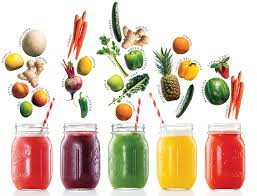
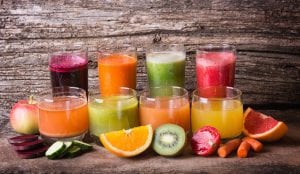
For example, you might combine cucumber, celery, leafy greens, carrots, citrus or ginger in different ways.

4. Enjoyment

Nutrition does not need to be complicated.

If you genuinely enjoy fresh juice, it can be part of a healthy lifestyle alongside whole foods, regular meals and movement.

Common Myths About Juicing

Juicing “Detoxes” Your Body

Your body already has systems that process and eliminate waste, including your liver, kidneys, lungs and digestive system.

You do not need a juice cleanse to “remove toxins.”

Juice can be nutritious, but it does not replace the body’s natural detoxification processes.

Juicing Is a Quick Fix for Weight Loss

Juicing is not a magic solution for weight loss.

Liquid calories can also be easy to consume quickly, and juice is usually less filling than eating the same fruits and vegetables whole.

If body composition or weight change is one of your goals, your overall eating pattern, activity level, sleep, stress and habits matter much more than any single food or drink.

Juicing Keeps All the Fiber

Traditional juicing removes much of the insoluble fiber because the pulp is separated from the liquid.

Some soluble fiber may remain, but juice generally contains much less fiber than the whole fruit or vegetable.

If fiber is one of your priorities, smoothies or whole produce may be a better choice.

Tips for Making Juice at Home

Use More Vegetables Than Fruit

Fruit can add sweetness, but using mostly vegetables can help keep the total sugar content lower.

You might try combinations such as:

  • cucumber, celery, lemon and ginger
  • carrot, orange and ginger
  • spinach, cucumber, apple and lemon
  • beet, carrot and citrus

Keep Portions Reasonable

Juice can contain the equivalent of several pieces of fruit in a relatively small glass.

You do not need a very large serving to enjoy it.

Drink It Fresh

Fresh juice is best stored cold and consumed relatively soon after making it.

Clean Your Juicer Thoroughly

Juicers have many small parts where food residue can collect, so cleaning the equipment promptly after use is important.

You Do Not Need Everything to Be Organic

If organic produce fits your budget and preferences, that is completely fine.

But you do not need to avoid conventional fruits and vegetables. Eating a variety of produce is generally more important than whether every item is organic.

Juice, Smoothies or Whole Foods?

They each have a place.

Whole fruits and vegetables provide the most fiber and usually offer more fullness.

Smoothies retain most of the fiber because the entire fruit or vegetable is blended.

Juice removes much of the fiber but can be an enjoyable and convenient way to consume a variety of produce.

You do not need to choose only one.

Keep the Bigger Picture in Mind

A healthy lifestyle is built from the overall pattern of what you do consistently.

That can include:

  • eating a variety of whole foods
  • including fruits and vegetables regularly
  • getting enough protein and fiber
  • drinking enough water
  • staying physically active
  • strength training
  • getting adequate sleep
  • finding habits that are realistic for your life

Juicing can fit into that picture if you enjoy it, but it does not need to become a rule, cleanse or complicated health practice.

If you would like support developing realistic habits around movement, nutrition and everyday health, learn more about Health & Lifestyle Coaching.

A Note About Local Juicing Businesses

The original version of this article recommended specific Nanaimo businesses for juice and juicing equipment. Because local businesses can close, move or change ownership over time, I would remove those recommendations unless you personally know they are still current and still want to endorse them.

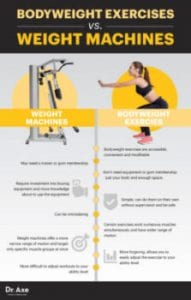
Bodyweight Training vs. Weight Training: Which Is Better?

Bodyweight Training vs. Weight Training: Which Is Better?

picture of bodyweight exercises versus weigh machines lot of writing on the poster

Bodyweight training and weight training are both effective ways to build strength, improve fitness and support long-term health. The better choice depends on your goals, experience, available equipment and what you actually enjoy doing consistently. For most people, the strongest approach is not choosing one or the other, but understanding how each can fit into a balanced routine.

Bodyweight Training

Bodyweight training uses your own body as resistance. Common exercises include squats, lunges, push-ups, pull-ups, planks, step-ups and many calisthenics movements. One of its biggest advantages is convenience: you can train almost anywhere without needing much equipment, which makes it useful for home workouts, travel or days when you cannot get to a gym.

Bodyweight exercises can also be adapted to different levels. A push-up might begin against a wall or bench and gradually progress toward the floor. Squats can be performed to a chair before progressing to deeper or single-leg variations. As your strength improves, you can make exercises harder by changing leverage, range of motion, tempo or stability.

Bodyweight training is not automatically easier than weight training. Some movements, such as pull-ups, dips, pistol squats and advanced push-up variations, can be very demanding. The key is choosing a version that matches your current ability.

Weight Training

Weight training uses external resistance such as dumbbells, kettlebells, barbells, cables or machines. One of its main advantages is that resistance can be adjusted very precisely, which makes it easier to progressively challenge the body over time.

This can be especially useful when your goals include building strength or muscle. For example, if a bodyweight squat becomes easy, adding dumbbells or a barbell allows you to continue increasing the challenge without needing to switch immediately to a much more complex exercise.

Weight training can also be very accessible for beginners. Machines, cables and light dumbbells can sometimes make an exercise easier to scale than a bodyweight version. For example, an assisted pull-up or lat pulldown may be more appropriate than asking someone to perform a full bodyweight pull-up before they are ready.

Is Bodyweight Training Better for Beginners?

Not necessarily. A beginner can start successfully with either method. What matters is selecting exercises that are appropriate for their current strength, mobility and confidence.

For some people, a chair squat, wall push-up and bodyweight bridge may be an excellent starting point. For someone else, a leg press, cable row and light dumbbell press may actually feel more manageable because the resistance and range of motion can be adjusted easily.

If you are returning from an injury or dealing with pain or significant movement limitations, the exercise should be adapted to you rather than assuming that bodyweight training is automatically the safest option.

Which Is Better for Building Strength and Muscle?

Both can build strength and muscle when they provide enough challenge and progress over time. External weights often make progression simpler because you can gradually increase resistance in small amounts, but advanced bodyweight exercises can also create a very high level of resistance.

The most important principle is progressive overload: gradually asking your muscles to do more over time. That might mean lifting a little more weight, completing more repetitions, improving your range of motion, slowing the movement down or progressing to a more challenging exercise variation.

What About Mobility and Functional Movement?

Both types of training can support mobility and functional movement when exercises are performed through appropriate ranges of motion. Neither method automatically improves flexibility more than the other. A well-designed program can combine strength and mobility regardless of whether you are using your body weight, dumbbells, machines or other equipment.

Movements such as squats, lunges, carries, pushes, pulls and hip hinges can all be trained in different ways depending on your goals and abilities. If you are interested in how the hips and core contribute to movement, you can also read Understanding and Strengthening the Psoas Muscle: Key to Mobility and Core Stability.

The Best Approach: Use Both

For many people, combining bodyweight and external resistance gives the most variety and flexibility. You might use bodyweight exercises for warm-ups, mobility work, push-ups, planks or travel workouts, while using dumbbells, kettlebells or machines for exercises where you want more precise resistance.

A balanced strength program could include a mix of squats, rows, presses, lunges, carries, pull-ups or pulldowns, deadlift variations and core exercises. The exact combination matters less than choosing movements you can perform well and progress over time.

If you would like help building a program that fits your goals, equipment and current ability, learn more about Personal Training in Nanaimo. You can also explore Group Fitness Classes in Nanaimo if you enjoy strength training in a group environment.

Choose the Training You Can Sustain

There is no universal winner between bodyweight training and weight training. Both can help you become stronger, fitter and more capable. The best method is the one that matches your goals, gives you an appropriate challenge and is realistic enough to keep doing consistently.

Why I Created Choose2be: Health, Fitness & Movement in Nanaimo

Why I Created Choose2be: Health, Fitness & Movement in Nanaimo

Choose2be began from a simple idea: movement can help us feel stronger, more capable and more connected to ourselves.

I created Choose2be to share my experience in fitness, yoga, movement and healthy living with people in Nanaimo and across Vancouver Island. Over the years, the way I teach has evolved, but the heart of Choose2be has stayed the same — helping people build strength, mobility, confidence and sustainable habits in a way that feels realistic and enjoyable.

Why I Created Choose2be Nanaimo

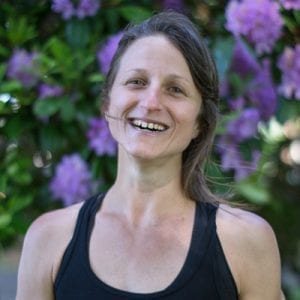
Veronique Rioux, smiling with purple flowers in background

Movement has played an important role in my own life. Through difficult periods, injuries and major life transitions, exercise has often helped me reconnect with my body, improve my mood and feel more grounded.

That experience became part of the reason I created Choose2be. I wanted to help other people discover forms of movement they enjoy and build a stronger relationship with their bodies — without needing to be perfect or follow an extreme fitness routine.

Choose2be Happy Right Now

Health is not only about workouts or nutrition. It also includes how we relate to ourselves.

Instead of waiting until your body, fitness level or life feels “perfect,” try noticing what is already working. Appreciating what your body can do today can make it easier to care for it and continue moving forward.

Small changes, consistency and self-respect tend to create more lasting progress than criticism or all-or-nothing thinking.

Choose2be Strong and Healthy


Building a healthy lifestyle takes time. There is no single workout, diet or quick fix that works for everyone.

Movement is one of the foundations I return to again and again. Walking, hiking, strength training, yoga, dance, mobility work and many other activities can all help build strength, fitness and confidence.

Start where you are. Choose movement you enjoy, build gradually and focus on creating habits you can realistically maintain. Check out my post The Importance of Adductor Strength and Hip Mobility: Unlocking Your Inner Power

My Commitment to You


My commitment is to meet you where you are and help you build strength, mobility and confidence in a realistic way.

I believe good fitness coaching should be supportive, practical and honest. You do not need an extreme routine or a perfect lifestyle. Small, consistent changes can make a meaningful difference over time.

Through Choose2be, I offer personal training, group fitness, yoga, mobility, health coaching and movement education in Nanaimo.

Check out my post about Transpersonal counselling: My Unique Approach to Therapy and Counselling on Vancouver Island