Yin-Yang Yoga Sequence: Balance, Breath and Grounding
This yoga lesson was originally created as the first class in a series of Yoga Teacher Training lesson plans. The idea was to begin simply, with breath, foundational poses and a balance between more active and more restful movement.
The sequence combines standing poses, a Classical Sun Salutation and slower floor work. It can be adapted for beginners or used as a framework for teachers creating their own classes.
Begin With the Breath
Start lying on your back in a comfortable constructive rest position, with the knees bent and feet on the floor.
Place one hand on the chest and one on the abdomen. Let the breath become slower and notice the lower ribs and belly gently expanding as you inhale.
You can silently repeat:
“I am breathing in.”
“I am breathing out.”
The goal is not to force a deep breath, but simply to notice it.
Child’s Pose
Move into Child’s Pose and allow the body to settle.
Use support under the head or hips if needed.
Take a few comfortable breaths and notice the contact between your body and the floor.
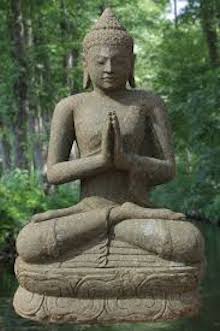
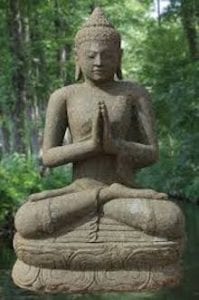
Anjali Mudra
Come to sitting or standing and bring the palms together at the heart.
Anjali Mudra is traditionally used as a gesture of greeting, respect or intention.
Rather than assigning one fixed meaning to it, you can use the gesture as a moment to pause and decide what you want to bring into your practice.
Mountain Pose
Stand in Tadasana, or Mountain Pose.
Feel the feet on the ground and allow the spine to lengthen naturally.
The goal is not rigid stillness. Let yourself make small adjustments as needed.
Use Mountain Pose to establish a stable starting point before beginning the more active part of the practice.
Classical Sun Salutation
Move through a simple Classical Sun Salutation.
You might include:
- Mountain Pose
- Forward Fold
- Half Lift
- Low Lunge
- Plank
- Cobra
- Downward-Facing Dog
- Low Lunge on the second side
- Forward Fold
- return to standing
Move slowly enough that you can continue breathing comfortably.
Repeat several times if it feels good.
Explore the Yang Side
The more active portion of the class can include standing movement, Plank and flowing transitions.
This is the “yang” side of the practice: effort, strength, heat and movement.
That does not mean pushing to exhaustion.
Try to find a level of effort that still allows you to breathe and stay aware of what you are doing.
Transition Into Slower Floor Work
Once the body is warm, gradually slow the pace.
This shift gives the practice a different quality: less movement, longer pauses and more attention to sensation.
Low Squat
Come into Malasana or a supported squat.
Use blocks, a wall or support under the heels if needed.
Stay for a few breaths without forcing the hips lower.
Bridge Pose
Lie on your back with the knees bent and feet on the floor.
Lift into Bridge Pose.
You can practice an active Bridge or place a block under the pelvis for a more supported variation.
Reclining Figure Four
Cross one ankle over the opposite thigh.
Stay here or draw the legs toward the chest.
Keep the stretch comfortable rather than pulling aggressively.
Repeat on the other side.
Reclining Spinal Twist
Bring both knees toward the chest and allow them to fall gently to one side.
Keep the twist easy enough that you can breathe comfortably.
Repeat on the other side.
Yin and Yang as a Practice Idea
In yoga, the language of yin and yang can be a useful metaphor for balancing different qualities.
A practice might include both:
- effort and ease
- movement and stillness
- strength and softness
- attention outward and attention inward
You do not need to achieve a perfect state of “balance.” The value is simply noticing what you may need more or less of on a particular day.
The Meaning of Om
Om is a traditional sacred sound used in several Indian spiritual traditions, including Hinduism and yoga.
It can be chanted at the beginning or end of practice as a way to bring the group together and create a moment of focused attention.
Traditional teachings give Om rich philosophical and spiritual meanings, but claims that the physical universe is literally made of a particular sound frequency should be understood as spiritual or metaphorical teachings rather than scientific fact.
If chanting is not meaningful to you, you can simply sit quietly or focus on the breath instead.
Closing With Namaste
Namaste is a traditional Sanskrit greeting commonly translated in a simple sense as an expression of respect or acknowledgement.
You may choose to close the practice with Namaste, another short phrase, or simply a moment of silence.
The important part is creating a clear ending to the practice rather than trying to assign one universal spiritual interpretation.
A Foundation for Future Yoga Practice
This first lesson is intentionally simple.
Breath, foundational poses, Sun Salutations and slower floor work create a base that can later support more challenging balances, transitions and sequences.
If you want to explore yoga and movement with me, learn more about Yoga & Mobility Classes in Nanaimo.
You may also enjoy Classical Sun Salutations and Yin-Inspired Yoga Sequence and Yoga Breathwork: Ujjayi, Nadi Shodhana & More.