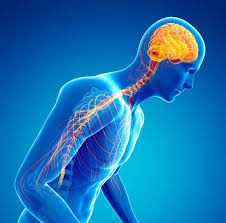
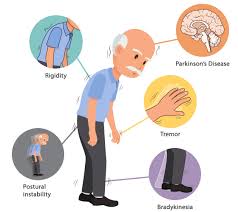
Parkinson’s disease is a progressive neurological condition that can affect movement, balance, coordination, speech, sleep, mood and cognition. Exercise is now considered an important part of Parkinson’s management because it can help people maintain strength, mobility, balance and overall function. Current Parkinson’s Foundation and ACSM recommendations support regular aerobic, strength, flexibility, and balance/agility training for people with Parkinson’s.
What exercise cannot currently be said to do with certainty is slow the disease itself. Research suggests exercise may influence neuroplasticity and some markers of disease progression, but the evidence is not strong enough to
promise that exercise changes the underlying course of Parkinson’s.
Understanding Parkinson’s Disease
Parkinson’s disease affects dopamine-producing neurons in the brain. Dopamine plays an important role in movement, motivation and many other functions.
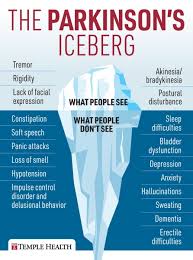
Common movement-related symptoms can include:
tremor
slowness of movement
stiffness
changes in posture
balance difficulties
changes in walking
freezing of gait
Parkinson’s can also include non-motor symptoms such as fatigue, sleep disturbance, depression, anxiety, constipation and cognitive changes.
Every person’s experience is different, so exercise should be individualized.
Why Exercise Matters
Regular exercise can help people with Parkinson’s maintain or improve physical capacity.
Depending on the person and stage of disease, exercise may support:
walking and mobility
strength
balance
cardiovascular fitness
flexibility
coordination
confidence with daily activities
quality of life
The goal is not to “exercise away” Parkinson’s.
The goal is to maintain as much function and independence as possible.
Exercise and Neuroplasticity
Neuroplasticity refers to the nervous system’s ability to adapt in response to practice and experience.
This is one reason Parkinson’s-specific exercise programs often emphasize large, intentional movements, repetition, challenge and progressive practice.
Exercise may support beneficial changes in the nervous system, but I would avoid saying that it simply “rewires the brain” or replaces lost dopamine pathways.
The science is promising, but still evolving.
Aerobic Exercise
Aerobic training helps build cardiovascular fitness and endurance.
Options may include:
brisk walking
treadmill walking
cycling
stationary bike
swimming
rowing
hiking
dance
The updated Parkinson’s exercise recommendations continue to encourage roughly 150 minutes of moderate-to-vigorous exercise per week, adapted to the individual.
That does not mean every person should immediately aim for 150 minutes.
Start from where you are and build gradually.
Strength Training
Strength training is important because Parkinson’s can affect posture, walking speed, getting up from chairs and other daily movements.
Useful exercises may include:
squats or sit-to-stands
step-ups
deadlift variations
rows
presses
calf raises
carries
hip strengthening
trunk exercises
The Parkinson’s Foundation recommends strength work several times per week as part of a broader program.
The exact exercises should match the person’s balance, mobility, symptoms and experience.
Balance, Agility and Multitasking
Balance and agility training are especially relevant because Parkinson’s can affect turning, stepping and reacting to changes in the environment.
Examples include:
multidirectional stepping
weight shifting
obstacle courses
turning practice
agility drills
dance
tai chi
boxing
yoga
The current guidelines specifically include balance, agility and multitasking work several times per week, with appropriate safety support when needed.
Large-Amplitude Movement
Many Parkinson’s-specific programs use deliberately large movements.
That might mean:
big steps
large arm swings
reaching
exaggerated posture changes
deliberate turning
rhythmic stepping
For some people, Parkinson’s gradually makes movements smaller and slower.
Practising larger movements can help reinforce the intention to move with more amplitude.
Walking and Gait Training
Walking can become more difficult as Parkinson’s progresses.
Useful strategies may include:
concentrating on larger steps
using rhythmic music
counting steps
visual floor markers
walking poles
treadmill training
practising turns
changing direction intentionally
Auditory and visual cues can sometimes make movement easier.
Boxing
Non-contact boxing has become popular in Parkinson’s programs because it combines:
footwork
coordination
reaction time
aerobic conditioning
trunk rotation
cognitive challenge
It can be a very useful form of exercise for some people.
It should still be adapted for balance and safety.
Cycling
Cycling can be especially useful for people who have difficulty walking but can still pedal smoothly.
Stationary bikes also reduce some of the balance demands involved in outdoor cycling.
Resistance and cadence can be adjusted to the person’s abilities.
Dance
Dance combines rhythm, coordination, balance, memory and social interaction.
Styles such as tango and other partnered or rhythmic dance have been studied in people with Parkinson’s.
More importantly, dance can simply be enjoyable.
Enjoyment matters because people are much more likely to continue an activity they like.
Yoga and Mobility
Yoga can support mobility, balance, breathing awareness and strength.
However, poses should be adapted when balance is limited.
Chair-supported yoga, wall support and slower transitions may be more appropriate than complex balance poses.
Stretching can help maintain comfortable range of motion, especially when stiffness is present.
Current recommendations include flexibility work at least a few days each week, with daily mobility being useful for some people.
Stretching should feel controlled rather than aggressive.
Exercise During “On” Periods
Medication timing can make a big difference.
The Parkinson’s Foundation recommends exercising during “on” periods when medication is working well whenever possible.
This can improve movement quality and make training safer and more productive.
When Supervision Matters
Some people with Parkinson’s can exercise independently.
Others benefit from supervision because of:
freezing
falls
dizziness
significant balance problems
cognitive changes
advanced symptoms
If you are not safe exercising alone, train with someone.
A physiotherapist with Parkinson’s experience can also provide a full functional assessment and individualized recommendations.
Parkinson’s-Specific Training
I have completed Parkinson Wellness Recovery training, which focuses on Parkinson’s-specific exercise and movement strategies.
One important detail I would verify before publishing the exact credential wording is whether your PWR! certification is currently active, because PWR! now uses recertification requirements for maintaining certification status.
So for now, I would use wording such as:
“I have completed Parkinson Wellness Recovery training and have experience working with clients living with Parkinson’s disease.”
That is safer than saying “Certified Parkinson Wellness Recovery” unless we confirm your current status.
Exercise Is Part of the Team
Exercise can be powerful, but it is only one part of Parkinson’s care.
Depending on symptoms, people may also benefit from:
neurologists
physiotherapists
occupational therapists
speech-language pathologists
dietitians
counsellors
other healthcare professionals
Good fitness coaching should complement medical and rehabilitation care rather than replace it.
Build From Where You Are
A good Parkinson’s exercise program should be challenging enough to create adaptation but appropriate enough to be safe.
Progress can mean:
taking larger steps
getting out of a chair more easily
walking farther
improving balance
lifting more confidently
maintaining endurance
feeling more capable in daily life
Those are meaningful outcomes.
How Choose2be Can Help
I work one-on-one with clients in Nanaimo to build individualized programs around strength, mobility, balance and endurance.
For someone living with Parkinson’s, that may include:
Rotational movement is part of everyday life. Walking, reaching, turning, throwing, dancing and many sports all involve some degree of rotation through the hips, trunk and shoulders.
Traditional strength training often emphasizes squats, hinges, presses and pulls, which are extremely valuable. Rotational training adds another layer by helping you practice movement across multiple planes and improve coordination through twisting, turning and cross-body patterns.
What Is Rotational Movement?
Rotational movement refers to movement around an axis.
Examples include:
turning through the trunk
rotating through the hips
reaching across the body
throwing
swinging
changing direction
walking with natural arm and pelvic rotation
The goal is not to force more rotation everywhere.
It is to build enough mobility, strength and control for the activities you want to do.
Why Rotation Matters
The body does not only move forward and backward.
Most real-life movement combines:
sagittal plane movement — forward and backward
frontal plane movement — side to side
transverse plane movement — rotation
A balanced program can include all three.
That may help improve movement variety, coordination and confidence.
Rotation and Walking
Walking naturally includes rotation through the pelvis, trunk and shoulders.
The amount varies from person to person and changes with speed, stride length and mobility.
Rotational exercises can be useful when they help you explore movement through the trunk and hips, but they are not required to “fix” gait.
What Is Torsion?
In training, torsion usually refers to twisting forces through the body.
You can think of it as controlled loading through rotational patterns.
Examples include:
rotational lunges
cable or band rotations
landmine presses
medicine-ball throws
rope flow
cross-body carries
The important part is control.
Rotation should be trained progressively, just like any other movement.
Rotational Strength
Rotational strength is useful in activities where force has to move between the lower and upper body.
Examples include:
golf
tennis
baseball
martial arts
dance
paddling
throwing sports
It can also be useful for everyday tasks such as reaching, lifting and turning.
Rope Flow
Rope flow uses a rope to practice rhythm, timing, coordination and continuous movement.
It can involve:
underhand patterns
overhand patterns
cross-body movements
direction changes
circular movements
footwork
The goal is not speed.
It is to build smoother coordination and explore movement through the shoulders, trunk and hips.
What Rope Flow Can Train
Rope flow can be a useful way to work on:
coordination
rhythm
timing
shoulder movement
trunk rotation
cross-body movement
body awareness
I would avoid calling it a neurological reset or claiming that it “rewires” the body.
It is better described as a coordination-based movement practice.
Rotational Training and the Core
The core does not only flex and extend.
It also helps resist or control rotation.
Useful rotational and anti-rotational exercises include:
Pallof presses
suitcase carries
half-kneeling cable rotations
landmine presses
chops and lifts
medicine-ball throws
cross-body carries
Some exercises create rotation.
Others teach the body to resist it.
Both can be useful.
Rotation and Mobility
Rotational training can help you explore range of motion through the hips, thoracic spine and shoulders.
Kettlebells are versatile strength-training tools that can be used for everything from squats and presses to swings, carries and Turkish Get-Ups.
What makes them different is the shape. The handle sits away from the centre of the mass, which changes how the weight moves and makes some exercises—especially swings, cleans and snatches—feel very different from using a dumbbell.
What Makes Kettlebells Different?
A dumbbell places the weight more evenly around the hand.
A kettlebell hangs below and away from the hand.
That design makes kettlebells especially useful for:
swinging movements
ballistic training
carries
cleans
presses
squats
rotational and coordination-based exercises
That does not make kettlebells automatically better than dumbbells or barbells.
They are simply another tool.
Kettlebells Can Train Strength and Conditioning
Depending on the exercise and how you program it, kettlebells can be used for:
strength
muscular endurance
power
cardiovascular conditioning
grip strength
coordination
mobility
A heavy kettlebell squat is a strength exercise.
A series of fast swings can be conditioning.
A Turkish Get-Up is more skill- and control-focused.
The tool is versatile because the training effect changes depending on how you use it.
Full-Body Training
Many kettlebell exercises involve several joints at once.
For example, a kettlebell clean uses the hips, legs, trunk, grip and upper body.
I would avoid saying kettlebells are superior because “traditional weight training isolates muscles.” Barbells and dumbbells are also commonly used for full-body compound exercises such as squats, deadlifts, rows and presses.
Grip Strength
Kettlebells can challenge the hands and forearms because of the handle shape and the way the weight moves.
Swings, carries and cleans can all place substantial demand on grip endurance.
That can be particularly useful if grip strength is one of your training goals.
Core Training
The core works during many kettlebell movements to control the trunk while force moves through the body.
Single-arm exercises can be especially useful because the uneven load asks the trunk to resist rotation or side bending.
Examples include:
suitcase carries
single-arm presses
rack carries
windmills
Turkish Get-Ups
You do not have to constantly squeeze your core as hard as possible. The amount of tension should match the task.
Kettlebells and Cardiovascular Fitness
Some kettlebell workouts can raise the heart rate significantly.
Swings, cleans, snatches and circuits can create a strong conditioning effect when performed for repeated sets with limited rest.
But kettlebell training does not automatically replace walking, running, cycling or other dedicated cardiovascular exercise.
It depends on how the workout is structured.
Kettlebells and Mobility
Certain kettlebell exercises can challenge strength through larger ranges of motion.
That can support mobility when the movement is appropriate for the person.
Examples include:
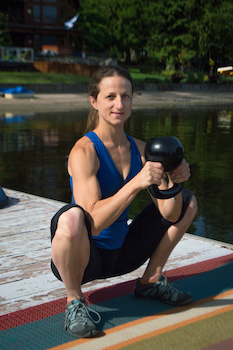
goblet squats
windmills
Turkish Get-Ups
overhead carries
lunges
Mobility adaptations come from how you train, not simply from owning a kettlebell.
1. Kettlebell Swing
The swing is one of the most recognizable kettlebell exercises.
It is primarily a hip-hinge movement.
The hips create the force and the arms guide the kettlebell rather than lifting it like a front raise.
To perform it:
Place the kettlebell slightly in front of you.
Hinge at the hips and grip the handle.
Hike the kettlebell between the legs.
Drive through the hips to bring the body upright.
Allow the kettlebell to float forward.
Let it return naturally into the next hinge.
The movement should feel powerful through the hips.
Common Swing Mistakes
Common issues include:
squatting instead of hinging
lifting primarily with the arms
leaning backward at the top
allowing the kettlebell to pull the shoulders forward
choosing a weight that is too heavy to control
A kettlebell swing is a skill.
It is worth learning carefully.
2. Kettlebell Clean
The clean brings the kettlebell into the rack position.
It requires timing because the kettlebell needs to travel around the hand rather than crashing onto the forearm.
Start light.
Practice keeping the weight close to the body and guiding it smoothly into the rack.
The goal is not to yank the kettlebell upward.
3. Kettlebell Clean and Press
Once you can clean the kettlebell comfortably, you can add an overhead press.
This combines:
hip power
grip
shoulder strength
trunk control
coordination
The press can be strict or, in some variations, assisted with the legs.
4. Kettlebell Jerk
The jerk is a more advanced overhead movement.
It uses the legs to help drive the kettlebell overhead and requires good timing.
Because it is more technical, it is better learned after you are comfortable with the rack position and basic pressing.
5. Turkish Get-Up
The Turkish Get-Up combines several movement transitions while holding a weight overhead.
The windmill is a controlled hip-hinge and rotational exercise often performed with a kettlebell overhead.
It requires:
shoulder control
hip mobility
trunk strength
coordination
Start with no weight or a very light load.
The goal is controlled range, not reaching the floor.
7. Goblet Squat
The goblet squat is one of the simplest ways to begin using a kettlebell.
Hold the kettlebell close to the chest and squat to a comfortable depth.
It can be useful for learning squat mechanics and building leg strength.
It is also easy to scale by changing the load or depth.
8. Kettlebell Carries
Carries are simple and extremely useful.
Options include:
farmer carries
suitcase carries
rack carries
overhead carries
They can train grip, trunk control, posture under load and walking strength.
Are Kettlebells Good for Beginners?
Yes, but exercise selection matters.
A beginner does not need to start with swings or snatches.
Simple movements such as:
deadlifts
goblet squats
carries
rows
presses
can be a better starting point.
Once those feel comfortable, more technical exercises can be added.
Kettlebells Are Not Automatically Safer
Kettlebells can be used safely, but technique, load and progression matter.
If someone has a current injury, the right exercise depends on the individual and may require guidance from a physiotherapist or other healthcare professional.
Kettlebells vs. Dumbbells
Both are useful.
Kettlebells are especially good for:
swings
cleans
snatches
carries
flowing combinations
Dumbbells may feel easier for:
pressing
rowing
isolated strength work
progressive loading in smaller increments
There is no need to choose only one.
Kettlebells vs. Barbells
Barbells make it easier to progressively load certain lifts very heavily.
They are particularly useful for:
squats
deadlifts
bench press
rows
Olympic lifting
Kettlebells offer more freedom for unilateral and swinging exercises.
A balanced program can use both.
How Often Should You Train With Kettlebells?
That depends on your overall program.
Two or three sessions per week can work well for many people, but kettlebells can also be incorporated into other strength workouts.
The important thing is to manage total training volume and recovery.
Start With Technique, Then Add Load
Kettlebells reward good timing and control.
Start with a weight you can manage comfortably.
Learn the basic patterns.
Then increase the challenge gradually.
Heavier is not automatically better.
Kettlebells Are a Tool, Not a Training System
Kettlebells can be excellent for strength, conditioning, coordination and skill.
But they are not magical, and they do not replace every other type of resistance training.
Nordic curls are a demanding bodyweight exercise that train the hamstrings while they lengthen under tension. They are especially useful for developing eccentric hamstring strength, which matters for running, sprinting, deceleration and many athletic movements.
They are also much harder than they look. Most people do not need to perform a full unassisted Nordic curl to benefit from the exercise.
What Is a Nordic Curl?
A Nordic curl, also called a Nordic hamstring curl, begins in a kneeling position with the ankles secured.
From there, you slowly lower your body forward while trying to keep a relatively straight line from the knees through the torso.
The hamstrings work hard to control the descent.
If you cannot lower all the way under control, you can catch yourself with your hands, use assistance or work within a smaller range.
Why Nordic Curls Are Different
The main challenge is eccentric strength.
An eccentric contraction happens when a muscle is producing force while lengthening.
For the hamstrings, that happens during the lowering phase of the Nordic curl.
This type of training can be useful because the hamstrings need to tolerate high forces during activities such as sprinting, running and changing direction.
Hamstring Strength
Nordic curls can create a very high demand on the hamstrings without requiring a barbell or large amount of external weight.
That makes them useful for people who want to strengthen the posterior thigh with minimal equipment.
But they are not the only good hamstring exercise.
Deadlifts, Romanian deadlifts, hamstring curls, bridges and sprinting drills can also play important roles depending on your goals.
Nordic Curls and Hamstring Injury Risk
Nordic hamstring exercises have been studied extensively in sports settings and are commonly included in hamstring-strengthening and injury-reduction programs.
I would avoid saying they “prevent injuries” or that they reduce injuries by one exact percentage for everyone.
The research is stronger when Nordic curls are used as part of a broader training program that includes appropriate strength, sprint exposure, load management and sport-specific preparation.
They can be a valuable tool, but not a guarantee.
Athletic Performance
Strong hamstrings contribute to sprinting, running, deceleration and powerful hip extension.
Nordic curls may support those qualities by increasing hamstring strength, but they are not a complete athletic-performance program.
Athletes still need:
sport practice
sprinting
jumping
strength training
change-of-direction work
recovery
Think of Nordic curls as one piece of the bigger picture.
Knee and Hip Support
The hamstrings cross both the hip and knee joints.
They contribute to knee flexion and hip extension and help control movement around both joints.
Strengthening the hamstrings can therefore be useful within a balanced lower-body program.
I would avoid claiming that Nordic curls directly correct muscular imbalances, eliminate joint pain or stabilize every knee.
How to Perform a Nordic Curl
Kneel on a padded surface with your ankles securely anchored.
Keep the torso relatively straight and gently brace through the trunk.
Slowly lean forward from the knees.
Control the descent for as long as you can.
When you can no longer maintain control, place your hands down to catch yourself.
Push lightly through the hands to return, or reset back into the starting position.
Start With a Small Range
You do not need to lower all the way to the floor.
A short controlled descent is still useful.
As your strength improves, gradually increase how far you can lower before using your hands.
This is usually a better progression than forcing yourself through a full repetition too early.
Assisted Nordic Curls
Assistance makes the exercise much more accessible.
Useful options include:
a resistance band around the torso
a suspension trainer
hands on a raised box or bench
a partner providing support
reducing the lowering range
Assistance is not cheating.
It allows you to practice the movement with better control.
Eccentric-Only Nordic Curls
This is one of the simplest progressions.
Lower yourself as slowly as possible.
Catch yourself with your hands.
Then reset to the top.
You do not need to pull yourself all the way back up with the hamstrings at first.
Band-Assisted Nordic Curls
Attach a resistance band securely behind and above you.
Place it around the chest or torso.
The band provides more assistance as you move farther forward.
This can help you train through a greater range while still controlling the movement.
Full Nordic Curl
A full Nordic curl involves lowering and returning without significant assistance.
This requires a high level of hamstring strength.
It is an advanced goal, not a requirement for effective training.
Loaded Nordic Curls
Once bodyweight Nordics become easy through a controlled range, external load can be added.
But most people will benefit more from improving range, control and consistency before adding extra weight.
How Many Reps?
Nordic curls create a lot of muscular demand, so you do not need high repetitions.
A simple starting point could be:
1–2 sessions per week
2–3 sets
3–6 controlled repetitions
Adjust based on your training history and how your hamstrings recover.
Expect some soreness when you first introduce them.
Do Nordic Curls Belong in a Warm-Up?
Usually not as a hard exercise.
Because they can be fatiguing, Nordic curls generally make more sense as part of the strength portion of a workout rather than as an intense warm-up drill.
A very easy assisted version could be used for preparation, but hard Nordic sets are still strength training.
Who Can Benefit From Nordic Curls?
They may be useful for:
runners
sprinters
soccer players
rugby players
hockey players
field and court athletes
people wanting stronger hamstrings
They can also work for general strength training if the exercise fits your goals and current ability.
Who Should Be Cautious?
Nordic curls may not be the best starting point if you have:
an acute hamstring injury
significant knee pain while kneeling
recent lower-body surgery
severe hamstring pain
difficulty controlling the movement
If you are returning from injury, rehabilitation should be individualized.
Nordic Curls Are Not Rehabilitation by Themselves
I would remove the old wording suggesting Nordic curls are appropriate for “rehabilitation clients” in general.
They are sometimes used in rehabilitation, but timing and dosage matter.
A physiotherapist or other qualified clinician should guide rehabilitation when pain or injury is involved.
Combine Nordic Curls With Other Hamstring Exercises
The hamstrings perform more than one job.
Nordic curls emphasize knee-flexion strength.
Exercises such as Romanian deadlifts and hip hinges challenge the hamstrings more through hip extension.
A well-rounded program might include both.
For example:
Romanian deadlifts
Nordic curls
bridges or hip thrusts
single-leg deadlifts
hamstring curls
That gives the hamstrings a broader training stimulus.
Progress Slowly
Nordic curls are a high-demand exercise.
You do not need to chase soreness or push to failure.
Focus on:
control
gradual increases in range
quality repetitions
enough recovery
That is more useful than trying to force a full rep as quickly as possible.
Strong Hamstrings Are Built Over Time
Nordic curls are an excellent exercise for developing eccentric hamstring strength, but they are not the only answer.
Use them as part of a balanced lower-body program that also trains the hips, knees, calves and trunk.
Aging is part of life, but staying strong, mobile and active can make a meaningful difference in how we move through it.
For me, “aging gracefully” is not about looking younger or trying to stop the aging process. It is about maintaining the strength, confidence and physical capacity to keep doing the things that matter to you.
What Does Aging Well Really Mean?
Aging well can mean:
staying strong enough for daily life
maintaining mobility
getting up and down from the floor
carrying groceries
climbing stairs
walking and hiking
keeping your balance
staying independent
continuing activities you enjoy
That is where strength training and mobility work can be especially valuable.
Why Strength Training Matters as We Age
Muscle mass and strength tend to decline with age, especially when we are inactive.
That process is often referred to as sarcopenia.
Strength training can help preserve and build muscle, improve physical function and support independence.
You do not need to lift extremely heavy weights to benefit.
The important thing is to challenge the muscles progressively over time.
Strength Supports Everyday Life
Strength is useful because everyday life requires it.
You need strength to:
stand up from a chair
carry bags
climb stairs
get off the floor
lift objects
garden
travel
play with children or grandchildren
Training for those capacities can make everyday movement feel easier.
Strength Training and Bone Health
Resistance training can also support bone health.
Bones respond to loading, which is one reason strength training is often recommended as part of an active lifestyle as we age.
The exact program should match the individual, especially if osteoporosis or fracture risk is a concern.
Strength and Balance
Strength and balance are closely connected.
Your legs and hips need enough strength to control movement and respond when you lose your balance.
That is why I like combining resistance training with exercises such as:
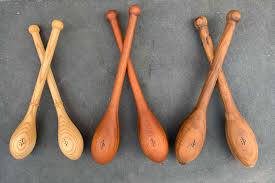
Indian clubs are a traditional training tool used for rhythmic swinging patterns that challenge coordination, shoulder movement, grip and upper-body control.
They are light compared with most strength-training equipment, but the long lever and continuous motion can make them surprisingly demanding. Indian clubs are especially useful for people who enjoy skill-based movement and want a different way to train the shoulders and upper body.
What Are Indian Clubs?
Indian clubs are weighted clubs, traditionally made from wood, that are swung through circular and looping patterns.
Modern clubs come in different sizes and weights. Lighter clubs are commonly used for coordination, mobility and skill practice, while heavier club variations can be used for more demanding strength work.
Beginners usually do better starting light and learning the movement patterns before increasing load.
A Brief History of Indian Clubs
Club-swinging traditions have roots in South Asia and the Middle East, where wrestlers and soldiers used heavier club-like implements as part of physical training.
In India, traditional tools such as the jori and mudgar have long been associated with wrestling and strength culture.
During the 19th century, lighter forms of club swinging became popular in Britain, Europe and North America and were incorporated into military training, physical education and gymnasium programs.
Modern Indian club training is generally lighter and more movement-focused than traditional heavy-club training.
Why Train With Indian Clubs?
Indian clubs offer a different challenge than dumbbells or machines.
The swinging patterns require timing, coordination and control as the club moves around the body.
They can be useful for:
shoulder movement
grip and forearm endurance
coordination
rhythm
upper-body mobility
body awareness
learning rotational movement
They can also simply be fun.
Shoulder Mobility and Control
Indian clubs move the shoulders through circular patterns that are difficult to reproduce with many traditional exercises.
That can be useful for practicing comfortable overhead and rotational movement.
I would avoid claiming that Indian clubs lubricate joints, prevent shoulder pain or automatically improve shoulder health.
They are a movement tool, not a treatment.
Grip and Wrist Training
Holding and controlling the club requires the hands, wrists and forearms to work continuously.
Because the weight sits farther away from the hand than it would with a dumbbell, even a light club can create noticeable leverage.
This can make club training useful for grip endurance and wrist control.
Coordination and Rhythm
One of the biggest benefits of Indian club work is coordination.
You have to control:
the direction of the swing
timing
speed
hand position
shoulder movement
sometimes both arms at once
As the patterns become more complex, the exercise becomes as much about motor learning as muscular effort.
Core and Full-Body Movement
More advanced patterns can include rotation, stepping or pivoting.
That brings in the trunk, hips and legs.
The core is not necessarily being “activated” in a special way; it is simply contributing to whole-body control as you move.
Indian Clubs vs. Heavy Club Training
These are not exactly the same.
Light Indian clubs are usually used for:
coordination
flow
shoulder movement
endurance
skill
Heavier clubs or maces place much greater demands on strength and leverage.
If you are new to club training, do not assume you need a heavy implement to make it effective.
Beginner Indian Club Routine
If you are just starting, use very light clubs and keep the movements slow.
The goal is to learn the pattern rather than create fatigue.
1. Single-Arm Circle
Hold one club and practice a smooth circular path around the shoulder.
Keep the grip relaxed enough that the movement can flow.
Start with 5–10 repetitions each direction.
2. Front Pendulum
Let the club swing gently forward and back in front of the body.
Avoid forcing the range.
Use this to learn how the club responds to momentum.
3. Casting Pattern
From an upright position, guide the club around the shoulder and back to the starting position.
Move slowly at first.
The goal is smoothness rather than speed.
4. Inward Circle
Swing the club inward toward the midline and around the shoulder.
Keep the movement controlled.
Practice one side before trying both arms together.
5. Outward Circle
Reverse the direction so the club travels outward.
Notice whether one direction feels easier than the other.
That is normal.
6. Alternating Mills
Once you are comfortable with basic circles, begin alternating the arms in a rhythmic pattern.
Keep the clubs light.
This is where coordination becomes more challenging.
7. Add a Gentle Pivot
More advanced patterns can include a small foot pivot or torso rotation.
Let the movement come from the whole body rather than twisting only through the shoulder.
Keep this slow until the timing feels natural.
How Heavy Should Indian Clubs Be?
Lighter is usually better when you are learning.
A club that feels almost too light when you first pick it up can become challenging after several minutes of continuous swinging.
There is no universal starting weight.
Choose a load that allows you to:
maintain control
keep the shoulders relaxed
move smoothly
stop the club safely
complete the pattern without straining
Do Not Chase Fatigue
Indian club training does not need to feel exhausting.
Skill quality matters more than burning out your shoulders.
Stop the set if:
your grip is failing
the club starts pulling you out of position
your movement becomes jerky
you lose control of the swing
Rest, reset and continue later.
Indian Clubs and Rehabilitation
I would be careful with the old claim that Indian clubs are widely used for rehabilitation or that they restore joint function.
Some rehabilitation professionals may use club-style movements, but that does not make Indian clubs appropriate for every shoulder, elbow or wrist problem.
If you have persistent pain or are recovering from an injury, get appropriate assessment before adding swinging exercises.
Can Indian Clubs Prevent Injury?
No exercise can guarantee injury prevention.
Indian clubs can help build movement options, coordination and tolerance to certain shoulder positions.
That can be valuable, but injury risk is influenced by many factors.
Flow and Mindfulness
Because club patterns are rhythmic and repetitive, some people find them enjoyable and absorbing.
That can make training feel almost meditative.
But I would present that as a personal experience rather than claiming Indian clubs create a specific neurological “flow state.”
How Often Should You Practice?
You do not need to practice every day.
A few short sessions each week can be enough to learn the movements and improve coordination.
Start with 5–10 minutes and build gradually.
Quality matters more than duration.
Who Might Enjoy Indian Club Training?
Indian clubs may appeal to:
people who enjoy movement skills
martial artists
dancers
climbers
strength trainees
yoga practitioners
circus and flow-arts enthusiasts
anyone looking for a more playful upper-body training tool
They can complement traditional strength training rather than replace it.
Indian Clubs and Circus Arts
There is a natural crossover between club training and circus or flow-based movement because both involve rhythm, timing and coordination.

 Parkinson’s disease is a progressive neurological condition that can affect movement, balance, coordination, speech, sleep, mood and cognition. Exercise is now considered an important part of Parkinson’s management because it can help people maintain strength, mobility, balance and overall function. Current Parkinson’s Foundation and ACSM recommendations support regular aerobic, strength, flexibility, and balance/agility training for people with Parkinson’s.
 Kettlebells are versatile strength-training tools that can be used for everything from squats and presses to swings, carries and Turkish Get-Ups.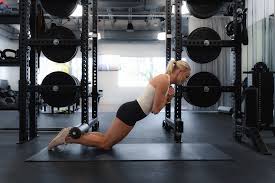

 Aging is part of life, but staying strong, mobile and active can make a meaningful difference in how we move through it.