
Exercising During Pregnancy: My Experience and What Current Guidelines Say

Exercising During Pregnancy: My Experience and What Current Guidelines Say

Pregnancy, prenatal fitness, pregnancy workouts, pregnancy health, pregnancy exercises, pregnancy fitness, prenatal health, prenatal exercises, prenatal workouts

Exercise during pregnancy is surrounded by a lot of outdated advice. For most people with uncomplicated pregnancies, regular physical activity is considered safe and beneficial, and people who were active before pregnancy can often continue with appropriate modifications. Pregnancy is also a reasonable time to begin gentle activity if you were previously inactive, provided your healthcare team has not identified a reason to avoid exercise.

I have been through three very different pregnancies, and movement played a different role in each one. My experience taught me that there is no single “pregnancy workout.” The best approach is to adapt to the pregnancy you are actually having, not the one you expected to have.

My Three Pregnancies

During my first pregnancy, I was recovering from a back injury and exercised very little. I eventually had an emergency C-section after a long labour.

During my second pregnancy, I was much more active and continued teaching several yoga classes each week along with moderate gym training. I later had a vaginal birth after my previous C-section.

My third pregnancy happened when I was 42. I continued strength training, cardio and movement throughout the pregnancy while adjusting exercises as my body changed. I felt strong and capable, but I would not attribute the difference between my births or recoveries solely to exercise. Pregnancy and birth outcomes are influenced by many factors.

The Benefits of Exercise During Pregnancy

Current obstetric guidance supports both aerobic and strength-conditioning exercise for people with uncomplicated pregnancies. Regular activity may help reduce back pain and constipation and may lower the risk of gestational diabetes, preeclampsia and cesarean birth.

Exercise can also help maintain strength and cardiovascular fitness as your body changes. The goal is not to stay as fit or lean as possible during pregnancy. It is to support your health, function and comfort through a major physical transition.

First Trimester: Adjust to How You Feel

Fatigue, nausea and changes in energy can make the first trimester unpredictable.

Some days I could exercise normally and other days I needed much more rest. That variability is normal.

You do not automatically need to stop all abdominal training during pregnancy. Instead, core work usually needs to evolve as the abdomen changes. Exercises that feel comfortable and allow good breathing and pressure management can often continue, while others may need to be modified or removed.

Strength Training During Pregnancy

Strength training can continue during many uncomplicated pregnancies. ACOG specifically includes resistance training among appropriate forms of activity during pregnancy.

During my pregnancies I used exercises such as:

  • squats
  • deadlift variations
  • hip thrusts and bridges
  • rows and pulldowns
  • leg curls
  • lunges
  • upper-body strength exercises

The exact load, range of motion and exercise selection should change as needed.

I especially valued strengthening my hips, legs and upper back because these muscles supported the activities I was doing every day. I would avoid promising that any specific exercise will prevent back pain or create “perfect posture.”

What About Lunges?

You may hear that lunges should automatically be avoided because of relaxin, the hormone associated with increased joint laxity during pregnancy.

That is too broad.

Some people continue lunges comfortably, while others experience pelvic, hip or pubic-symphysis discomfort and need to modify them. The exercise itself is not universally unsafe.

Choose a stable stance, reduce range if necessary and stop if you experience pain or pelvic symptoms.

Cardio During Pregnancy

Moderate aerobic activity is recommended for most uncomplicated pregnancies. ACOG suggests progressing toward roughly 20–30 minutes on most days, while using perceived exertion or the “talk test” rather than relying on rigid heart-rate limits.

During my third trimester, I used breathing and perceived effort to judge intensity.

Walking, cycling, swimming and other low-impact activities can all be useful. People who were experienced runners before pregnancy may also be able to continue running with appropriate modifications.

Myth: You Shouldn’t Start Exercising During Pregnancy

For most healthy pregnancies, being previously sedentary does not mean you must remain sedentary.

A gradual progression is recommended rather than suddenly beginning intense training. Walking and other moderate activities are good starting points.

Always discuss exercise with your prenatal healthcare provider, especially if you have medical or obstetric complications.

Myth: You Can’t Train Your Core During Pregnancy

Pregnancy does not require abandoning the abdominal muscles.

The core plays an important role in movement, breathing and load management throughout pregnancy.

What usually changes is how you train it.

As the abdomen grows, some people find that certain exercises create excessive pressure, discomfort or visible doming along the midline. Those are cues to modify the exercise rather than proof that all core work is dangerous.

Myth: You Can’t Run or Do Higher-Impact Exercise

People who regularly participated in vigorous aerobic exercise before pregnancy may often continue during an uncomplicated pregnancy.

That does not mean everyone should run.

Pelvic heaviness, leaking, pain, pressure or musculoskeletal symptoms are all reasons to modify and consider support from a pelvic-health physiotherapist or healthcare provider.

Myth: Weight Training Is Dangerous During Pregnancy

Strength training is not automatically dangerous during pregnancy.

The bigger questions are your training history, technique, pregnancy symptoms and whether your medical team has given you any restrictions.

As pregnancy progresses, balance, breathing, range of motion and comfort may change. That often means modifying exercises rather than stopping strength training entirely.

Activities That Need More Caution

Pregnancy is not the time to take unnecessary risks.

ACOG recommends avoiding activities with a high risk of falling or abdominal impact, scuba diving, hot yoga or hot Pilates, and certain other high-risk activities.

Hydration and temperature also matter, especially during longer or harder sessions.

Warning Signs to Stop Exercise

Stop exercising and contact your healthcare provider if you experience warning signs such as vaginal bleeding, dizziness or fainting, chest pain, painful regular contractions, fluid leaking from the vagina, calf pain or swelling, or unusual shortness of breath before exercising.

Pain is also a reason to stop and reassess rather than simply push through.

My Third Birth

My youngest son was born on August 27, 2022 after labour was induced on his due date.

I had a vaginal birth and felt very well afterward. My partner was able to catch our baby, and the experience felt very different from my first birth.

I am grateful for how strong I felt during that pregnancy and recovery, but I would not present my experience as evidence that exercise guarantees an easier birth. It does not.

Returning to Exercise After Birth

This is one section I would change significantly from my original article.

I personally felt ready to begin gentle core movement about a week after giving birth, but that is my story, not a recommendation for everyone.

Current guidance says that after an uncomplicated vaginal birth, some people can begin gentle exercise within days when they feel ready, while recovery after a C-section or pregnancy or birth complications requires more individualized guidance. Exercise should return gradually.

Early postpartum movement might begin with walking, breathing, pelvic-floor awareness and gentle core work rather than jumping directly back into intense training.

Pregnancy, prenatal fitness, pregnancy workouts, pregnancy health, pregnancy exercises, pregnancy fitness, prenatal health, prenatal exercises, prenatal workouts

Pelvic Floor and Postpartum Recovery

Pregnancy and birth affect more than the abdominal muscles.

Pelvic-floor symptoms such as leaking, heaviness, pressure or pain deserve attention. A pelvic-health physiotherapist can be extremely useful during pregnancy and postpartum, especially if you want to return to running, jumping or heavier lifting.

Postpartum recovery is not a race.

Exercise During Pregnancy Is Individual

You may feel strong throughout pregnancy, or you may have months when exercise barely happens.

Neither tells you whether you are having a “good” pregnancy.

The aim is to keep adapting.

Move when movement feels supportive. Rest when you need it. Strength train if it remains comfortable. Modify when your body gives you information.

If you want individualized help with strength and movement, learn more about Personal Training in Nanaimo.

For emotional support related to difficult pregnancy or birth experiences, you can also read Navigating Traumatic Childbirth on Vancouver Island Holistic Counselling.
Deadlift Guide: Build Strength With Better Hip-Hinge Technique

Deadlift Guide: Build Strength With Better Hip-Hinge Technique

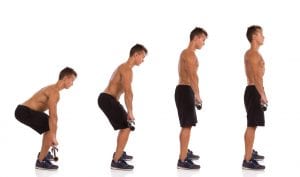
a men showing 4 different stages of deadlift


The deadlift is one of the most useful strength exercises because it trains a movement we use in everyday life: picking something up from the floor.

It works the hips, legs, back, core and grip, but the goal is not simply to lift the heaviest weight possible. Good deadlifting is about learning how to create tension, hinge through the hips and move a load with control.

What Muscles Does the Deadlift Work?

Deadlifts are a compound exercise, which means several muscle groups contribute at the same time.

Depending on the variation, they can challenge:

  • glutes
  • hamstrings
  • quadriceps
  • spinal erectors
  • upper back
  • core
  • forearms and grip

They are especially useful for developing the posterior chain: the muscles along the back of the body.

Why Deadlifts Are Useful

Deadlifts can help build:

  • overall strength
  • hip-hinge control
  • grip strength
  • confidence lifting objects from the floor
  • lower-body and posterior-chain strength

They can also transfer well to everyday tasks such as lifting boxes, groceries or equipment.

Deadlifts and Posture

Deadlifts can strengthen the muscles that help support the trunk and hips, but they do not automatically “fix posture.”

Posture is dynamic and influenced by many factors.

A better goal is to build enough strength and control that you can move and lift comfortably in different positions.

Deadlifts and Back Health

A well-chosen deadlift variation can be appropriate for many people, including some people with a history of back pain.

But deadlifts are not a treatment for every back problem, and they do not guarantee that pain or injury will be prevented.

If you have persistent or significant back pain, work with an appropriate healthcare or rehabilitation professional.

You can also read Strengthening Your Back to Support Better Posture and Reduce Back Pain for a broader approach to back strength.

Learn the Hip Hinge First

Before adding heavy load, practice the hip hinge.

Stand with the feet in a comfortable position.

Push the hips back while keeping the spine relatively neutral and the knees softly bent.

Think of closing a car door with your hips.

You should feel the hamstrings load as the hips move backward.

Basic Deadlift Setup

A conventional deadlift setup may look slightly different from person to person, but a few general principles are useful:

  • place the feet in a comfortable stance
  • position the load close to the body
  • bend the knees enough to reach the weight
  • create tension through the trunk
  • keep the shoulders organized
  • push through the floor as you stand

Do not obsess over forcing everyone into the same exact position.

Body proportions matter.

Keep the Load Close

Whether you are using a barbell, dumbbells or kettlebells, keeping the load close to the body usually makes the movement more efficient.

With a barbell deadlift, the bar typically travels close to the legs.

If the weight drifts far forward, it increases the demand on the back.

Brace Before You Lift

Before lifting, take a breath and create tension through the trunk.

Think of the abdomen becoming firm in all directions rather than simply “sucking in.”

Then maintain that tension as you begin the lift.

You can learn more in Engaging Your Core: Bracing for Strength, Stability and Performance.

Stand Up, Don’t Lean Back

At the top of the deadlift, stand tall and finish by extending the hips.

You do not need to lean backward or aggressively squeeze the glutes.

Think:

hips through, ribs stacked, stand tall.

Lower With Control

To lower the weight, reverse the movement.

Push the hips back first, keep the load close and then bend the knees as needed to return the weight to the floor.

Avoid simply dropping into a squat unless the variation calls for it.

Start With a Variation That Fits You

You do not have to begin with a barbell from the floor.

Useful options include:

  • kettlebell deadlift
  • dumbbell deadlift
  • elevated deadlift
  • Romanian deadlift
  • trap-bar deadlift
  • sumo deadlift

An elevated kettlebell or dumbbell deadlift is often a good starting point because it reduces the range of motion.

Romanian Deadlift

The Romanian deadlift, or RDL, starts from standing.

Push the hips back while keeping the knees softly bent and lower the weight only as far as you can maintain control.

The goal is to feel tension through the hamstrings and glutes, not to reach the floor.

RDLs are especially useful for learning the hip hinge.

How Heavy Should You Lift?

Start with a load that allows you to learn the movement well.

You should be able to maintain control and repeat the technique consistently.

As you improve, gradually increase resistance.

You do not need to max out.

Do You Need a Spotter?

Deadlifts usually do not require a traditional spotter in the way a heavy bench press might.

Instead, make sure you have enough space, use appropriate equipment and know how to safely set the weight down if a rep does not feel right.

If you are learning the lift, coaching or supervision can be more useful than a spotter.

Deadlifts and Calorie Burning

Deadlifts use a lot of muscle and can be demanding, but I would not choose them primarily because they “burn fat” or supposedly keep metabolism elevated for hours.

Their biggest value is strength.

If body composition is one of your goals, strength training can be part of a broader plan that includes nutrition, recovery and overall activity.

Deadlifts and Glute Strength

Deadlifts can be excellent for building the glutes and hamstrings.

If glute development is a goal, you may also benefit from hip thrusts, step-ups, split squats and other lower-body movements.

You can read How to Build Stronger, More Developed Glutes for more.

Progress Gradually

A good deadlift is not about chasing a number.

Progress can mean:

  • better technique
  • more confidence
  • more range of motion
  • more repetitions
  • better control
  • eventually lifting more weight

If you want individualized help learning the hip hinge or progressing your deadlift, explore Personal Training in Nanaimo.

Breath and Body Awareness: A Starting Point for Better Movement

Breath and Body Awareness: A Starting Point for Better Movement

Breath awareness, body awareness, injury prevention, pain management, breathing techniques

Breath awareness can be a useful way to slow down, notice tension and become more aware of how you are moving. It is not a cure for pain or a guarantee against injury, but it can help you pay closer attention to posture, effort and movement habits.

My own interest in this comes from years of working with movement and recovering from significant injuries. Over time, I learned that strength matters, but so does awareness: how you breathe, how you distribute your weight and how you respond when something feels off.

Start With the Breath

A simple place to begin is by noticing your breathing without trying to change it right away.

Then, if it feels comfortable, allow the breath to become slower and fuller.

You might notice:

  • the lower ribs expanding
  • the belly moving gently
  • the chest moving slightly
  • the exhale softening the body

The goal is not to force a huge breath or pull the abdomen in aggressively. It is simply to become more aware of how the breath moves through the body.

Why Breath Awareness Can Help

Breathing gives you something immediate to pay attention to.

That attention can make it easier to notice when you are bracing unnecessarily, holding your breath, rushing through movement or creating more tension than you need.

It can also help you pause before pushing through discomfort.

That makes breath awareness useful as a movement tool, even without making bigger claims about healing.

Posture Is Not One Perfect Position

I used to think about posture more in terms of correcting the body into the “right” alignment.

I now prefer a more flexible approach.

Posture is dynamic. The body is meant to shift, move and change positions throughout the day.

Instead of trying to hold yourself perfectly upright all the time, ask:

  • Can I move comfortably?
  • Can I change position easily?
  • Am I spending too long in one position?
  • Do I feel strong and supported here?

Variation is often more useful than perfection.

Notice Where Your Weight Is

One of the simplest awareness practices is noticing how you distribute your weight.

Do you always stand more on one leg?

Do you shift into one hip?

Do you sit in the same position for long periods?

These habits are not automatically harmful, but noticing them gives you more options.

The goal is not to eliminate asymmetry. It is to become less stuck in one pattern.

Breath During Exercise

People often hold their breath when an exercise becomes difficult.

Sometimes bracing is useful during strength training, but in many everyday movements, simply continuing to breathe can help you stay more relaxed and controlled.

If you notice yourself gripping, clenching or rushing, slow down and see whether a steadier breath changes the movement.

Awareness and Pain

Pain is complex.

It can be influenced by injury, tissue sensitivity, stress, sleep, workload, previous experiences and many other factors.

Body awareness can help you notice patterns, but it should not be used to blame yourself for pain or assume that poor posture caused everything.

Persistent, worsening or unexplained pain deserves appropriate medical or rehabilitation support.

Build Strength Alongside Awareness

Awareness alone is not enough.

Strength training, mobility, balance and gradual exposure to movement are all important parts of building a capable body.

I like combining awareness with practical movement because the two support each other.

You can explore Strengthening Your Back to Support Better Posture and Reduce Back Pain and Mobility vs. Flexibility: What’s the Difference and Why Does It Matter? for more.

A Simple Practice

Try this for a minute or two:

Stand or sit comfortably.

Notice your feet or sitting bones.

Take one slow breath in.

Notice the ribs expand.

Exhale and let the shoulders soften.

Shift your weight slightly left and right.

Return to centre.

That is enough.

You do not need a complicated routine to begin building awareness.

Awareness Creates More Options

The goal is not to control every movement perfectly.

It is to notice more, respond earlier and have more choices.

Breath, posture and body awareness can all help with that, especially when combined with strength, mobility and sensible progression.

If you want individualized support, learn more about Personal Training in Nanaimo or explore Yoga & Mobility Classes in Nanaimo.

For a deeper perspective on breath, stress and the nervous system, you can also read Breathwork, the Nervous System, and Epigenetic Trauma.

Mobility vs. Stability: How They Work Together

Mobility vs. Stability: How They Work Together

Stability, joints systems, hinge joints, ball and socket joints, range of motion, dynamic movement, self-myofascial releaseAre you feeling like your body is not moving the way it used to? Are you unsure of which exercises are beneficial for you and whether you need to strengthen or stretch your different muscles? Understanding the difference between mobility and stability can help you better understand how your body works and how to improve your overall health and fitness.
Mobility and stability are both important for moving well. Mobility is your ability to move through a useful range of motion, while stability is your ability to control and support that movement.

The two are not opposites, and joints are not simply “mobility joints” or “stability joints.” Most areas of the body need some combination of both.

What Is Mobility?

Mobility is more than flexibility.

It includes your available range of motion plus the strength and control to use that range.

For example, you may be able to stretch your hip into a certain position passively, but if you cannot control your leg there on your own, that range is not fully usable.

What Is Stability?

Stability is your ability to control position and movement.

It does not mean being rigid or trying to stop a joint from moving.

Good stability means you can create enough control for the task in front of you, whether that is balancing on one leg, pressing a weight overhead or changing direction quickly.

Hinge Joints

The knees and elbows are often described as hinge joints because flexion and extension are their primary movements.

But they are not perfectly simple hinges.

The knee, for example, also allows some rotation and translation, especially as it bends.

Instead of thinking that these joints only need stability, it is more useful to think about both:

  • enough mobility to move comfortably
  • enough strength and control to manage load

For the knee, that may include strength through the quadriceps, hamstrings, calves and hips.

For the elbow, it may include the biceps, triceps, forearms and shoulder muscles.

Ball-and-Socket Joints

The hips and shoulders are ball-and-socket joints and can move through many directions.

That does not mean they only need mobility.

They also require strength and control.

A very mobile shoulder without enough stability can still feel uncomfortable or unreliable. A hip can have good flexibility but poor control during a squat or single-leg movement.

Mobility and stability have to work together.

Why the Hips Need Both

The hips need enough range for walking, squatting, lunging, rotating and bending.

They also need enough strength to control the pelvis and leg during those movements.

Useful hip work can include:

  • 90-90 rotations
  • split squats
  • step-ups
  • single-leg deadlifts
  • lateral lunges
  • hip CARs
  • glute strengthening

You can read Why I Don’t Just Stretch My Hips — I Strengthen Them for a more detailed look at this idea.

Why the Shoulders Need Both

The shoulder has a large range of motion, but that mobility depends on coordinated movement through the shoulder blade, rib cage and upper back.

Useful shoulder training might include:

  • controlled arm circles
  • rows
  • presses
  • carries
  • scapular push-ups
  • wall slides
  • thoracic rotation

The goal is not maximum flexibility. It is usable motion with control.

The Spine Also Needs Mobility and Stability

The spine is another good example of why the mobility-versus-stability model can become too simplistic.

Different areas of the spine move differently, but the body also needs the ability to create stiffness when lifting and movement when bending, rotating or reaching.

Sometimes you need mobility.

Sometimes you need stability.

Often you need both at the same time.

Mobility Problems Are Not Always Tightness

Feeling “tight” does not automatically mean you need more stretching.

Sometimes the body feels restricted because:

  • a range is unfamiliar
  • strength is limited
  • coordination is lacking
  • the nervous system is protecting an area
  • you are simply fatigued

That is why adding strength through a range can sometimes feel more helpful than stretching alone.

Stability Problems Are Not Always Weakness

Feeling unstable does not necessarily mean one muscle is weak.

Balance, coordination, fatigue, pain, previous injury and movement experience can all affect stability.

Training can include balance drills, strength work and gradually exposing the body to more challenging positions.

What About Foam Rolling and Myofascial Release?

Foam rolling and other self-massage techniques can temporarily change how an area feels and may make movement more comfortable.

They can be useful tools, but they do not permanently “release fascia” or fix mobility by themselves.

If you enjoy them, use them as part of a larger plan that includes movement and strength.

A Simple Way to Think About It

Instead of asking:

“Does this joint need mobility or stability?”

Try asking:

“Do I have enough range for what I want to do, and can I control that range?”

That question is usually more useful.

Train Both

A balanced movement routine can include:

  • active mobility
  • strength training
  • balance work
  • controlled stretching
  • coordination
  • gradual progression

You do not need to choose between mobility and stability.

You need enough of both for the activities that matter to you.

For more, read Mobility vs. Flexibility: What’s the Difference and Why Does It Matter? and Best Mobility and Strengthening Exercises for Better Movement.

If you want individualized support, explore Personal Training in Nanaimo or Yoga & Mobility Classes in Nanaimo.

Best Mobility and Strengthening Exercises for Better Movement

Best Mobility and Strengthening Exercises for Better Movement

Strengthening exercises, mobility exercises, videos guides, biomechanicsMobility and strength work well together. Mobility is not only about being flexible, and strength is not only about lifting heavy weights. The goal is to have enough range of motion to move comfortably and enough control and strength to use that range.
Over the years, my own experience with injuries and recovery has shaped the way I teach movement. I now focus less on “perfect biomechanics” and more on helping people understand their bodies, build capacity and move with more confidence.

What Is Mobility?

Mobility is your ability to move a joint through a useful range of motion with control.

It is influenced by:

  • joint structure
  • flexibility
  • strength
  • coordination
  • previous injury
  • activity level

That is why stretching alone is not always enough. If you gain range but cannot control it, the new range may not be very useful.

Why Strength Matters for Mobility

Strength helps you own your range of motion.

For example, being able to lift your leg higher because someone stretches it for you is different from being able to lift it there under your own control.

Mobility training often works best when it includes both stretching and strengthening.

You can read Mobility vs. Flexibility: What’s the Difference and Why Does It Matter? for a deeper explanation.

10 Mobility Exercises to Explore

1. Cat-Cow

Move slowly between spinal flexion and extension.

Focus on creating movement through the whole spine rather than pushing to the largest possible range.

2. 90-90 Hip Rotations

Sit with the hips and knees bent and rotate the legs from side to side.

This is a great way to explore hip rotation.

Keep the hands on the floor if you need support.

3. Hip CARs

Controlled Articular Rotations, or CARs, involve moving the hip slowly through a large circle.

The goal is not speed.

Move with control and stay within a comfortable range.

4. Ankle Rocking

Stand facing a wall and gently move the knee forward over the toes while keeping the heel down.

This helps explore ankle dorsiflexion.

5. Thoracic Rotation

From hands and knees or a side-lying position, rotate through the upper back.

Try to keep the pelvis relatively quiet.

6. Shoulder CARs

Move the arm slowly through a large circle.

Keep the ribs controlled and notice where the movement becomes difficult.

7. Deep Squat Hold

Come into a comfortable squat and use support if needed.

Hold onto a pole, door frame or suspension trainer if that helps you stay relaxed.

8. World’s Greatest Stretch

Step into a long lunge and add a gentle rotation through the upper body.

This combines hip, hamstring and thoracic movement.

9. Cossack Squat

Shift side to side in a wide stance.

Keep one leg bent and the other longer.

Use a smaller range at first.

10. Spinal Undulation

Use gentle wave-like movement through the spine.

This can be done standing, kneeling or on hands and knees.

You can explore Spine Undulation: A Gentle Way to Explore Spinal Mobility and Body Awareness for more.

Strength Exercises That Support Mobility

Mobility tends to improve when you also strengthen the muscles around the joints.

Useful examples include:

  • split squats
  • single-leg deadlifts
  • step-ups
  • calf raises
  • rows
  • presses
  • carries
  • side planks
  • glute bridges
  • controlled squats

The exact exercise matters less than choosing movements you can progress safely.

Single-Leg Strength

Single-leg exercises are especially useful because they challenge balance, hip control and coordination.

Try:

  • assisted split squats
  • reverse lunges
  • step-ups
  • single-leg deadlifts
  • supported pistol squat progressions

You can read Pistol Squat Progressions: How to Build Strength, Mobility and Control for more ideas.

Core Strength and Bracing

A strong trunk does not mean keeping the abs tight all day.

It means being able to create tension when you need it and relax when you do not.

Core work can include:

  • dead bugs
  • planks
  • side planks
  • carries
  • Pallof presses
  • controlled rotation

Good core training supports movement without making the spine rigid.

Mobility Does Not Prevent Every Injury

Mobility and strength can improve capacity and confidence, but no exercise program can guarantee injury prevention.

Injuries are influenced by many things, including workload, fatigue, previous injury, sport demands and sometimes simple bad luck.

A better goal is to build a body that is strong, adaptable and able to tolerate the activities you want to do.

Progress Gradually

Mobility and strength work should feel challenging but manageable.

Increase difficulty slowly by changing:

  • range of motion
  • resistance
  • tempo
  • balance demands
  • repetitions
  • time under tension

You do not need to chase the deepest stretch or hardest variation.

Use Video as a Guide, Not a Diagnosis

Exercise videos can be helpful for learning movement ideas, but they cannot tell you exactly why something hurts or whether a specific exercise is right for you.

If you have persistent pain, weakness, numbness or an injury that is not improving, get assessed by an appropriate healthcare professional.

Build Confidence Through Practice

One of the biggest benefits of mobility and strength training is learning that your body can adapt.

As you gain more control, strength and movement options, everyday activities can feel easier and more predictable.

If you want individualized support, learn more about Personal Training in Nanaimo or explore Yoga & Mobility Classes in Nanaimo.

10 Best Strengthening Stretches


10 Favourite Stretches