Kids Yoga Lesson Plan: Going to the Zoo and the Farm

Kids Yoga Lesson Plan: Going to the Zoo and the Farm
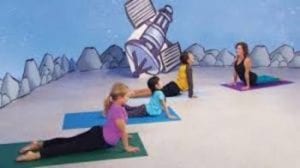
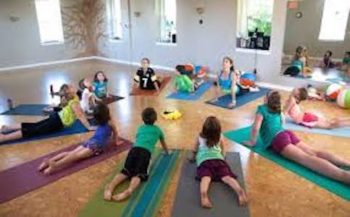
Farm theme, zoo theme, yoga poses for kids, yoga games for kids, yoga lesson plans kids​A zoo and farm theme is a playful way to introduce children to yoga through animals, sounds, imagination and movement. This type of class works especially well for toddlers and younger children because familiar animals make the poses easy to understand and fun to remember.

This lesson can be adapted for parents, teachers, yoga instructors or group leaders. Aim for about 45 minutes, but shorten or expand it depending on the age and attention span of the group.

Theme and Value: Helpfulness

Begin by talking briefly about what it means to be helpful.

You might ask children:

  • How do you help at home?
  • How can you help a friend?
  • What does it feel like when someone helps you?

Keep the conversation simple and let the children share their own examples.

Welcome Circle

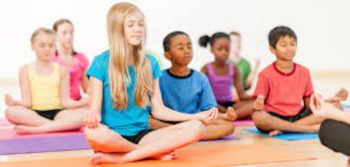
Sit together in a circle and use a familiar hello song or movement song to help everyone settle in.

You can then introduce the theme by asking:

What animals might we see on a farm? What animals might we see at the zoo?

Let the children help build the adventure.

Farm Yoga Poses

Scarecrow

Stand tall like Mountain Pose with the arms out wide.

Pretend you are watching over the garden and fields.

Tree

Balance on one leg in Tree Pose and imagine standing beside the barn.

A parent or partner can offer a hand for support.

Horse

Take a wide stance and bend the knees into a comfortable plié squat.

Pretend to trot or gently bounce like a horse.

Barn

Move into Triangle Pose and imagine making the shape of a barn roof with the body.

Farmer Driving a Tractor

Sit into Chair Pose and hold an imaginary steering wheel.

Turn the wheel from side to side as you drive through the field.

Duck

Come into a comfortable squat and waddle gently while saying “quack, quack.”

Dog

Move into Downward-Facing Dog.

Wag your tail or walk your feet gently.

Donkey

Instead of kicking into a handstand, keep this safer for younger children by staying on hands and knees and lifting one leg at a time behind you.

Add a playful “hee-haw.”

Goose

Try a comfortable seated or kneeling pose and flap the arms like wings.

You can also use a gentle pigeon-style shape if appropriate for the group.

Mouse

Curl into Child’s Pose and make yourself very small.

Take a few quiet breaths and add a tiny “squeak.”

Cat and Cow

Move between Cat and Cow on hands and knees.

Add “meow” and “moo” sounds to keep it playful.

Pig

Lie on your back and hug the knees toward the chest.

Rock gently from side to side like a pig rolling in the mud.

Zoo Yoga Poses

Brown Bear

Take a wide stance and move slowly like a bear.

You can reach down toward the floor as if catching fish.

Flamingo

Stand on one leg and flap your arms like wings.

Use a wall, parent or partner for balance if needed.

Lion

Sit or kneel comfortably, breathe in, then open the mouth and make a playful lion roar as you breathe out.

Keep it fun rather than forcing a particular breathing technique.

Elephant

Stand with the feet wide and clasp the hands together to make a trunk.

Swing gently from side to side.

Crocodile

Lie on the belly or hold a simple plank variation.

Pretend to move slowly through the water.

Tiger

Come onto hands and knees and move through a Cat-style shape.

You can add a growl or reach one arm and the opposite leg away if the child is ready for more balance.

Animal Movement Game

Call out an animal and let the children decide how it moves.

For example:

  • Horse — trot
  • Duck — waddle
  • Elephant — stomp
  • Flamingo — balance
  • Bear — crawl
  • Tiger — prowl
  • Frog — hop
  • Snake — slither

You can also let the children take turns choosing the next animal.

Add Music and Storytelling

Songs such as Old MacDonald Had a Farm or other animal-themed children’s music can work well for transitions and movement games.

You can also read an animal-themed book and pause to turn different animals into yoga poses.

If you use recorded music in a public class, make sure your setting has appropriate music licensing.

Zoo and Farm Relaxation

Finish by inviting the children to lie or sit comfortably.

Guide a short visualization:

“Imagine all the animals are getting ready to rest. The horses are quiet, the birds are settling into their nests, and the zoo is becoming peaceful. Take a slow breath and let your body become still too.”

Keep the relaxation brief and simple.

Keep Kids Yoga Playful

Children do not need perfect yoga poses. The goal is to move, imagine, make sounds, cooperate and have fun.

Animal themes are especially useful because children can understand the movement without needing complicated instructions.

For more themed classes, try Kids Yoga Lesson Plan: In the Garden, Kids Yoga Lesson Plan: Going Into Space or Kids Yoga Lesson Plan: Beach & Ocean Theme.

If you enjoy leading creative movement with children, you may also be interested in the Circus Arts Leader Certification.

Protein Supplements for Women: What to Look For and How Much You Need

Protein Supplements for Women: What to Look For and How Much You Need

Best protein supplements for women, protein shakes, gym supplement, weight loss supplements, nutrition supplements, protein intake, BV value, whey protein

Protein supplements can be convenient, but they are not something every woman needs. They are simply an easy way to increase protein intake when food alone is not practical or when your needs are higher because of strength training, activity level or appetite.

The best protein supplement is not necessarily the one marketed specifically to women. What matters more is the amount and quality of protein, how well you tolerate it, and whether it fits your overall diet.

Why Protein Matters

Protein helps support muscle repair, recovery and maintenance. It is especially important if you are strength training, trying to maintain muscle as you age or simply want meals and snacks that feel more satisfying.

Many women can meet their needs through food alone, using sources such as eggs, Greek yogurt, cottage cheese, tofu, tempeh, beans, lentils, fish, poultry, meat, nuts and seeds.

A protein powder is just a convenient option when that is not enough or not practical.

Do Protein Supplements Help With Weight Loss?

Protein can help with fullness, which may make it easier to manage appetite.

That does not mean protein powder is a weight-loss supplement.

A shake can be useful if it helps you get enough protein or replaces a less satisfying snack, but it does not directly cause fat loss on its own.

Protein and Strength Training

If you are strength training, getting enough protein can support muscle repair and growth.

The most important factor is your total protein intake over the day, not whether you drink a shake immediately after your workout.

You do not need to rush to consume protein within a tiny “anabolic window.” A balanced meal or snack within a few hours is usually fine for most people.

You can read How Muscle Mass Affects Metabolism and Why Strength Training Matters for more on why maintaining muscle matters.

How Much Protein Do You Need?

Protein needs vary depending on body size, age, activity level and goals.

The basic adult requirement is lower than what many active people may benefit from. People who strength train or are trying to maintain or build muscle often do well with a higher intake spread throughout the day.

A practical target for many active adults is roughly 1.2 to 1.6 grams of protein per kilogram of body weight per day, although individual needs vary.

For example, someone who weighs 70 kg might aim for roughly 84 to 112 grams per day.

There is no need to automatically eat one gram per pound of body weight.

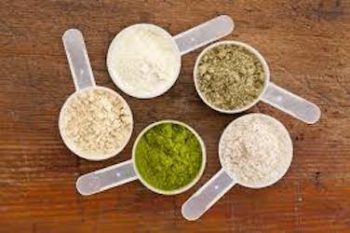
Whey Protein

Whey is a popular option because it contains all essential amino acids and is rich in leucine, an amino acid involved in stimulating muscle protein synthesis.

It also tends to mix easily and is widely available.

Whey concentrate usually contains a little more lactose, while whey isolate contains less. If dairy bothers you, isolate may be easier to tolerate.

Plant-Based Protein

Plant-based protein powders can also work well.

Common options include:

  • pea protein
  • soy protein
  • rice protein
  • hemp protein
  • blended plant proteins

Blends can be useful because different plant proteins have different amino acid profiles.

Soy protein is also a complete protein and can be a strong option for people who prefer a plant-based supplement.

What to Look for in a Protein Powder

A good protein powder does not need a long list of health claims.

Look for something that:

  • provides a meaningful amount of protein per serving
  • tastes good enough that you will actually use it
  • digests comfortably
  • fits your dietary preferences
  • has ingredients you are comfortable with
  • comes from a reputable manufacturer

You do not need to choose the lowest-carb or lowest-fat powder unless that specifically matters for your diet.

Do You Need Artificial Sweetener-Free Protein?

Not necessarily.

Some people prefer unsweetened products or specific sweeteners because of taste or digestion, but artificial sweeteners are not automatically harmful in the amounts typically used in protein powders.

Choose the product you tolerate and enjoy.

When Is Protein Powder Most Useful?

Protein powder can be especially convenient:

  • after a workout when you do not have time for a meal
  • blended into a smoothie
  • added to oatmeal or yogurt
  • while travelling
  • when appetite is low
  • when a meal otherwise contains little protein

It should support your diet, not replace a varied diet.

For more ideas around workout nutrition, read What to Eat Before and After a Workout for Energy and Recovery.

Do Women Need Special Protein Powders?

Usually not.

Products marketed as “for women” often differ more in branding than in meaningful nutrition.

Women generally need the same high-quality protein sources as anyone else. The important question is whether the product helps you meet your individual protein needs.

Food First, Supplement When Useful

Protein powders can be practical, but they are optional.

If your meals already provide enough protein and you feel good, you may not need one at all.

If you want help building realistic nutrition and movement habits, you can learn more about Health & Lifestyle Coaching.

Kids Yoga Lesson Plan: Going Into Space

Kids Yoga Lesson Plan: Going Into Space

Parent participation, Rainbow kids yoga, going in space yoga, yoga lesson plan space theme​​

Yoga for children works best when it feels playful, imaginative and interactive. A themed class can help children explore movement, balance, coordination, breathing and creativity without making the experience feel too structured.

This Going Into Space lesson plan is designed for a parent-participation class of about 45 minutes, but you can shorten or expand it depending on the age and attention span of the group.

Start With Simple Expectations

Before beginning, keep the group expectations short and positive. For example: keep hands to yourself, use kind words, take turns, listen when someone else is speaking and, most importantly, have fun.

With younger children, it usually works better to keep reminders simple rather than giving too many rules at once.

Theme: Going Into Space

The idea behind this class is teamwork. Astronauts need to cooperate, help each other and share space, so the theme naturally creates opportunities to talk about working together.

You might ask:

What is more fun to do together than alone?

Let the children answer and build the theme from their ideas.

Hello Name Game

Sit in a circle and create a simple rhythm by tapping your thighs.

Sing:

Hello, [name], hello, [name], hello, [name] — it’s nice to see you here.

Repeat for each child.

This is a simple way to help everyone feel seen and included before the movement begins.

Sun Salutation

Move through a simple child-friendly Sun Salutation.

You can connect it to the space theme by talking about the sun and asking children what the sun gives us, such as light and warmth.

Keep the movements playful rather than worrying about perfect alignment.

Read a Space Book

Choose a short book about planets, astronauts or space that fits the age group.

This creates a natural transition from sitting and listening into imaginative movement.

Get Ready for Space

Pretend everyone is putting on a spacesuit.

You can use movements such as:

  • Forward fold — put on space pants
  • Cat-Cow — put on gloves and boots
  • Reach overhead — put on your helmet
  • Reach behind — attach your oxygen backpack
  • March slowly — walk toward the rocket

Encourage the children to invent their own movements too.

Moon Walk

Lie on your back and slowly reach the opposite arm and leg away from each other.

Then stand up and repeat the idea while moving very slowly around the room, pretending gravity is much lighter on the moon.

Ask the children how they imagine walking in space might feel.

Space-Themed Yoga Poses

Try a few poses connected to the theme:

  • Crescent Moon
  • Crescent Lunge
  • Five-Pointed Star
  • Half Moon
  • Shooting Star
  • Warrior poses for astronauts
  • Tree Pose as a tall space antenna

You do not need every child to make the same shape. Let them experiment with their own version.

Add Music and Movement

Music can help keep the class fun and energetic.

Choose age-appropriate songs about stars, rockets, planets or movement. You can also use a simple freeze-dance game: move around like astronauts while the music plays and freeze when it stops.

If you use recorded music in a public class, make sure your setting has the appropriate music licensing.

Earth and Moon Game

Have the child pretend to be Earth by slowly spinning in place while the parent or partner moves around them as the Moon.

Switch roles.

This is a fun way to practice coordination while introducing the basic idea that the Moon travels around Earth.

Keep enough space between pairs so nobody bumps into another group.

Create Your Own Galaxy

Pair children with a parent or another child and ask them to choose a planet.

Then have them invent a yoga pose or movement that represents that planet.

For example:

  • Mars — Warrior II
  • Saturn — Tree Pose with arms forming rings
  • Jupiter — a very big, wide pose
  • Mercury — a quick movement
  • Neptune — flowing wave-like movement

Then let each pair show the group what they created.

Relaxation: Floating Through Space

At the end of class, invite everyone to lie down comfortably.

Guide a short visualization:

Imagine you are floating gently through space. Your body feels light and supported. You can see tiny stars around you and colourful planets far away. There is nowhere you need to go and nothing you need to do. Just breathe slowly and enjoy floating.

Leave a little quiet time before inviting them to wiggle their fingers and toes and slowly sit up.

You can finish with a simple thank-you to the group or with Namaste if that is part of how you teach yoga.

Keep Kids Yoga Playful

Children do not need perfect yoga poses. They need opportunities to move, imagine, cooperate and enjoy being in their bodies.

A themed lesson like this can combine movement, storytelling, creativity and relaxation while keeping the class accessible and fun.

If you enjoy teaching movement to children, you may also be interested in the Circus Arts Leader Certification, which includes games, juggling, hula hooping, poi and adaptable activities for groups.

You can also explore Yoga & Mobility Classes in Nanaimo for more about my current yoga and movement teaching.

Kids Yoga Lesson Plan: In the Garden

Kids Yoga Lesson Plan: In the Garden

Fun yoga for kids, in the garden yoga

A garden theme is a fun way to introduce children to yoga through imagination, nature and movement. It works especially well with toddlers and younger children because the poses can become seeds, trees, butterflies, frogs and other familiar parts of the natural world.

This lesson can be adapted for parents, teachers, yoga instructors or group leaders. Keep it playful, flexible and short enough to match the children’s attention span.

Theme: Patience

A garden is a natural way to explore patience because plants need time to grow.

You might ask children:

  • What do you have to wait for?
  • What is something that took you a long time to learn?
  • What happens after you plant a seed?
  • Can we make a flower grow instantly?

Keep the conversation simple and let the children share their own ideas.

Start With a Welcome Song

Begin with a familiar hello or movement song to help everyone settle into the group.

You can also introduce a simple sound such as “Om” if that is part of your teaching style. Rather than giving it a complicated explanation, invite the children to notice the vibration and sound together.

The goal is simply to create a calm transition into the class.

Mountain Pose

Stand tall with the feet grounded and arms relaxed.

Invite the children to imagine they are mountains beside the garden.

They can reach their arms overhead, sway slightly like trees in the wind or stand very still and strong.

Seed to Tree

Start curled up in Child’s Pose like a tiny seed under the soil.

Slowly begin to grow:

  1. Lift the head.
  2. Come onto the knees.
  3. Rise to standing.
  4. Reach the arms toward the sun.
  5. Finish in Tree Pose.

For young children, a parent or partner can offer a hand for balance.

Snake Pose

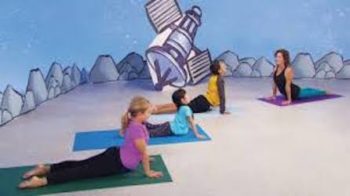
Lie on the belly and gently lift the chest into a small Cobra Pose.

Pretend to be a snake moving through the garden.

Children can make a soft “ssssss” sound as they breathe out.

Keep the movement small and comfortable rather than asking them to lift as high as possible.

Butterfly Pose

Sit with the soles of the feet together and knees open.

Flap the knees gently like butterfly wings.

Ask the children where their butterfly is flying.

Maybe it lands on a flower, a tree or another part of the garden.

Frog Pose

Come into a comfortable squat or use a wide-legged position.

Children can pretend to be frogs sitting beside a pond.

Add small hops if the group has enough space and the children can land safely.

Cat and Cow

Come onto hands and knees.

Move slowly between a rounded back and a gently extended spine.

You can make animal sounds or turn it into a story about a cat wandering through the garden.

Downward-Facing Dog

Lift the hips into Downward-Facing Dog.

Pretend to be a dog exploring the garden.

Children can bend one knee and then the other, wag their “tail” or make dog sounds.

Upward-Facing Dog or Cobra

Lower back to the belly and lift the chest gently.

For younger children, Cobra is often an easier option than a full Upward-Facing Dog.

Ask them what their dog can see in the garden.

Flower Pose

Sit and create a flower shape with the body.

You can bring the feet together in Butterfly and lift the arms like petals, or invent your own flower pose as a group.

Let each child choose what colour their flower is.

Bee Breath

Sit comfortably and take a gentle breath in through the nose.

As you breathe out, make a soft humming sound like a bee.

Repeat a few times.

Keep it playful rather than focusing on doing the breathing technique perfectly.

Garden Movement Game

Call out different things found in a garden and let the children create movements for each one.

For example:

  • Seed — curl into a ball
  • Tree — stand tall
  • Butterfly — flap wings
  • Frog — squat or hop
  • Bee — buzz and move around
  • Snake — slither low
  • Rain — wiggle fingers downward
  • Sun — reach arms overhead

You can gradually speed up or let the children take turns calling out the next movement.

Planting a Pretend Garden

Pretend to dig the soil, plant seeds, cover them, water them and wait for them to grow.

Children can act out the whole process with their bodies.

This is a nice way to combine imaginative play with squatting, reaching, kneeling and standing.

Garden Relaxation

Finish by inviting everyone to lie down comfortably.

You might guide a short visualization:

“Imagine you are lying in a warm garden. You can feel the sun, hear the birds and smell the flowers. Your body is quiet and still, like a seed resting in the earth.”

Keep the relaxation brief for young children.

Keep Kids Yoga Playful

The goal is not perfect poses.

Kids yoga is most effective when children are free to imagine, move, explore and participate at their own level.

A garden theme can support movement, creativity and simple ideas like patience without turning the class into a lecture.

For another themed lesson, try Kids Yoga Lesson Plan: Going Into Space or Kids Yoga Lesson Plan: Beach & Ocean Theme.

If you enjoy leading creative movement with children, you may also be interested in the Circus Arts Leader Certification.
Kids Yoga Lesson Plan: In the Garden

Kids Yoga Lesson Plan: In the Garden

Parenting, kids yoga, teaching kids, toddler yoga, interactive yoga, educational yoga, kid-friendly yoga, yoga lesson, yoga lesson plans, themed yoga classes, yoga games​After completing my Rainbow Kids Yoga training in Vancouver, I spent a lot of time creating themed yoga classes for toddlers and young children. I loved combining movement, imagination, music, stories and simple values so the class felt more like an adventure than a formal yoga practice.
One of my favourite themes was In the Garden, which naturally lends itself to conversations about patience, growth and caring for the world around us. This lesson can be adapted for parents, teachers, yoga instructors or anyone leading movement activities with young children.

Theme and Value: Patience

Gardens give children an easy way to understand patience. A seed does not become a flower immediately. It needs soil, water, sunlight and time.

You can begin by asking simple questions such as: What do you have to wait for? What is something that took you a long time to learn? What does a seed need before it can grow?

Keep the conversation short and allow children to share their own ideas.

Begin With a Welcome Circle

Sit together in a circle and introduce everyone. You can use a name game and ask each child something simple, such as their favourite colour or favourite flower.

If using the sound Om is part of your teaching style, you can introduce it simply as a sound everyone makes together. Invite the children to notice how the vibration feels rather than giving them a complicated explanation.

Warm Up With the Sun

Begin moving by pretending the sun is rising over the garden. Reach upward, fold down toward the earth, move onto hands and knees and gradually return to standing.

You can use a child-friendly Sun Salutation or create your own sequence. With younger children, keep the movements simple and let imagination guide the class.

Garden Yoga Poses

Mountain Pose

Stand tall like a mountain overlooking the garden. Reach toward the sky or stay very still and strong.

Seed to Tree

Curl into Child’s Pose and imagine being a tiny seed underground. Slowly begin to grow, eventually standing and reaching upward before trying Tree Pose.

A parent or partner can offer a hand for balance.

Snake

Lie on the belly and gently lift the chest into Cobra. Make a quiet “ssssss” sound as the snake moves through the garden.

Butterfly

Sit with the soles of the feet together and gently flap the knees like butterfly wings. Pretend to fly from one flower to another.

Frog

Come into a comfortable squat and pretend to sit beside a pond. If appropriate for the group, add small frog jumps with plenty of space between children.

Cat and Cow

Come onto hands and knees and slowly move the spine between Cat and Cow. Add animal sounds if the children enjoy them.

Downward-Facing Dog

Lift the hips and become a dog exploring the garden. Wag your tail or walk the feet gently.

Flower Pose

Let each child invent a flower shape. They might sit in Butterfly with the arms reaching overhead, balance on one leg or create a completely new pose.

There is no need for everyone’s flower to look the same.

1-2-3 Yoga Tree

Turn Tree Pose into a simple balance game. Children can move around the room and, when you call “1-2-3 Yoga Tree!”, everyone freezes in their own version of Tree Pose.

Make it cooperative rather than eliminating anyone who loses their balance. Falling and trying again is part of the game.

Sing and Move

Songs can make transitions easier and help younger children stay involved. Familiar movement songs such as If You’re Happy and You Know It can easily be adapted with garden movements: flap like a butterfly, hop like a frog, buzz like a bee or grow like a tree.

If you use recorded music in a public class, make sure your setting has appropriate music licensing.

Add a Story

A short book about gardens, butterflies, insects or plants can create a quiet transition between active parts of the class.

You can pause during the story and ask children to turn different animals or plants into yoga poses.

Cocoon Relaxation

Finish with a short relaxation inspired by a butterfly’s transformation. Children can lie comfortably on their mats and imagine resting inside a cocoon.

Rather than wrapping children tightly in mats, simply invite them to curl up or cover themselves loosely with a blanket if appropriate.

After a short rest, slowly “open the cocoon,” stretch the arms like wings and become butterflies flying through the garden.

Kids Yoga Is About Exploration

Children do not need perfect yoga poses. The most important part is giving them a chance to move, imagine, play and experience their bodies in a positive way.

A garden theme can gently introduce ideas like patience and growth while also developing coordination, balance and body awareness.

For another themed class, try Kids Yoga Lesson Plan: Going Into Space or Kids Yoga Lesson Plan: Beach & Ocean Theme.

If you work with children and enjoy creative movement, you may also be interested in the Circus Arts Leader Certification, which includes games and adaptable movement activities for groups.