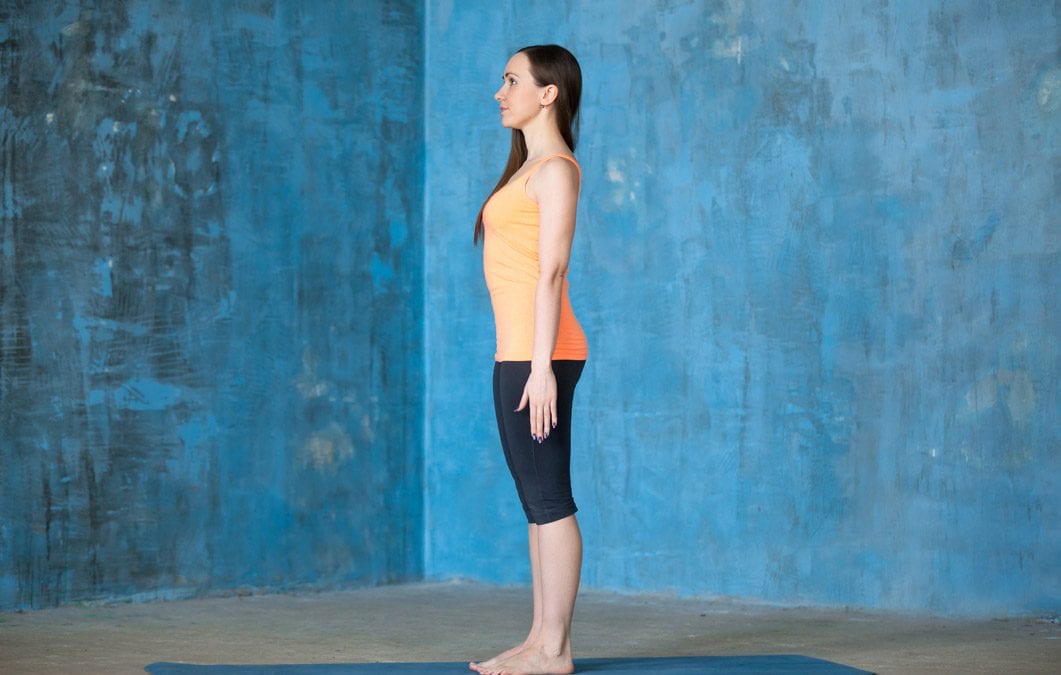
How to Check Your Posture: A Simple Guide to Better Alignment

How to Check Your Posture: A Simple Guide to Better Alignment
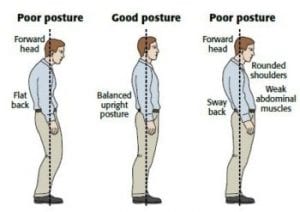
Posture check, perfect posture, bone stacking, spine health, muscular foundation, body alignment, weight distribution, knee alignment, pelvis position, neutral spine, upper chest opening, head placement

Posture is not about holding yourself in one “perfect” position all day. Your body is designed to move, and healthy posture is more about having options, changing positions regularly and using enough strength and mobility to feel comfortable in different positions.

That said, a simple posture check can help you notice where you tend to hold tension, how your weight is distributed and whether certain areas are doing more work than they need to.

Start From the Ground Up

Stand with your feet about hip-width apart and notice how your weight is distributed. Try to feel contact through three points of each foot: the base of the big toe, the base of the little toe and the heel.

You can gently shift your weight forward, backward and side to side, then come back to a place that feels balanced. The goal is not to freeze yourself into position; it is to notice where your body feels most supported.

Check Your Knees

Notice whether your knees are locked or whether you can keep them comfortably relaxed. You do not need to force a bend, but avoiding unnecessary tension can make standing feel more natural.

As you squat, walk or move, allow your knees to track in a direction that feels comfortable and coordinated with your feet rather than trying to hold them in one rigid “perfect” line.

Find a Comfortable Pelvis Position

Your pelvis does not need to be permanently tucked or held in one exact neutral position. Instead, gently explore tipping the pelvis forward and backward, then settle somewhere in the middle that feels comfortable.

Notice whether you are gripping your glutes, bracing your abdomen excessively or pushing your ribs forward. Let your breathing stay relaxed and allow your rib cage to expand in different directions.

Let Your Rib Cage and Shoulders Relax

Rather than constantly pulling your shoulders “back and down,” allow them to rest naturally.

You can roll the shoulders forward, up, back and down a few times to explore the available movement, then let them settle. A comfortable posture should not feel like you are holding a military stance.

Strength through the upper back, shoulders and trunk can support posture without requiring constant tension.

If you want to build more strength in this area, you can also read Strengthening Your Back to Support Better Posture and Reduce Back Pain.

Posture check, perfect posture, bone stacking, spine health, muscular foundation, body alignment, weight distribution, knee alignment, pelvis position, neutral spine, upper chest opening, head placement

Check Your Head and Neck

Many of us spend a lot of time looking down at phones or screens, so it is common to notice the head drifting forward.

Instead of forcing your chin hard backward, think about gently lengthening through the back of your neck and bringing your head into a position that feels more balanced over your shoulders.

Small adjustments are usually enough. If you feel tension increasing, back off.

Posture Is Dynamic

One of the most important things to remember is that there is no single posture you need to maintain all day.

Even a “good” posture can become uncomfortable if you stay in it for too long. Changing positions, standing up, walking, stretching, strengthening and moving in different directions are often more useful than constantly trying to hold yourself perfectly.

A practical posture check might simply ask:

  • Am I comfortable?
  • Am I holding unnecessary tension?
  • Am I breathing normally?
  • Have I been in this position too long?
  • Would changing position or moving help?
Strength and Mobility Matter

Posture is influenced by many things, including habits, work setup, strength, mobility, fatigue, pain and even mood.

Exercises such as rows, carries, squats, deadlift variations, mobility work and core training can all help you become more comfortable and adaptable in different positions.

For more ideas, you may also like Spine Undulation: A Gentle Way to Explore Spinal Mobility and Body Awareness or Yoga & Mobility Classes in Nanaimo.

If you would like personalized help with strength, mobility and movement habits, learn more about Personal Training in Nanaimo.

Focus on Comfort, Not Perfection

A useful posture is one you can move in and out of comfortably.

Rather than trying to create one ideal alignment, focus on building strength, mobility and awareness so your body can adapt to different positions throughout the day.
Yoga for Strength, Mobility and Mental Well-Being

Yoga for Strength, Mobility and Mental Well-Being

Mind-body-spirit, core strength, mental clarity, stress relief, physical therapy

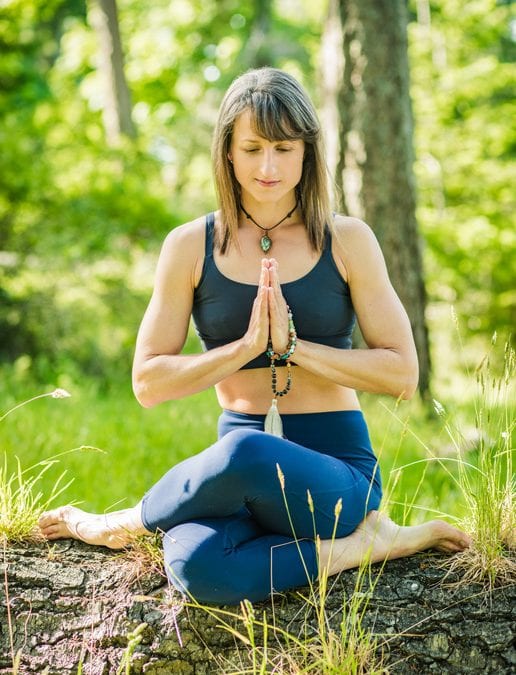
Yoga is more than a workout. It combines movement, breathing and attention in a way that can support strength, mobility, balance and body awareness while also creating space to slow down and reconnect with yourself.

There are many different styles of yoga, and the experience can range from physically challenging Vinyasa classes to slower Yin or restorative practices. The best style is the one that fits your body, your goals and what you enjoy.

Benefits of Yoga for the Body

Yoga can help develop strength, mobility, balance and coordination through a wide variety of positions and movement patterns. Depending on the style, a class may include standing poses, lunges, balance work, core exercises, spinal movement, hip mobility and upper-body strength.

Yoga can also complement other forms of exercise. Strength training builds the ability to produce force, while yoga and mobility work can help you explore range of motion, control and body awareness. You do not have to choose one or the other.

If you want to explore yoga alongside functional movement and mobility, learn more about Yoga & Mobility Classes in Nanaimo.

Yoga, Breathing and the Mind

Yoga usually encourages you to pay attention to your breath and what is happening in your body while you move. That focus can provide a break from the constant stimulation of everyday life and may help you feel calmer and more grounded.

Slower breathing, mindful movement and periods of stillness can all support relaxation and stress management. Yoga is not a substitute for mental-health treatment when someone needs additional support, but it can be one useful practice for supporting overall well-being.

For a deeper exploration of breathing and the nervous system, you can also read Breathwork, the Nervous System, and Epigenetic Trauma on Vancouver Island Holistic Counselling.

Yoga and Self-Awareness

One of the things I value most about yoga is the opportunity to notice what is happening rather than simply pushing through an exercise.

Some days your body may feel strong and open. Other days you may need to move more slowly or modify a pose. Learning to notice those differences can build greater awareness of your body and help you make choices based on what you actually need.

For some people, yoga also has a spiritual dimension. For others, it is simply movement, breathing and time to slow down. There is room for both approaches.

Finding the Right Yoga Style

Different yoga styles offer very different experiences. Vinyasa or Flow yoga links poses together through movement and breath and can provide a combination of strength, mobility and balance. Yin Yoga is slower and involves staying in positions for longer periods, while mobility-focused classes may use yoga-inspired movements alongside other techniques to explore range of motion and joint control.

If you are new to yoga, you do not necessarily need to find a class labelled “beginner.” Look instead for a teacher who offers modifications and encourages you to work at your own level.

Yoga Does Not Need to Look Perfect

Yoga is not about achieving the deepest stretch, touching your toes or creating an impressive pose. Bodies are built differently, and factors such as bone structure, previous injuries, experience and mobility can all affect how a posture looks.

A useful practice allows you to explore movement without forcing yourself into positions that do not feel appropriate for your body.

If you want to explore yoga alignment in more detail, you may enjoy Chaturanga Dandasana: Alignment, Strength and Modifications or Spine Undulation: A Gentle Way to Explore Spinal Mobility and Body Awareness.

Yoga in Nanaimo

I have been teaching yoga and movement for many years, and my approach has evolved to combine traditional yoga with strength, mobility, functional movement and body awareness.

I currently teach yoga and mobility as part of my group fitness offerings in Nanaimo. My classes are designed to be welcoming and adaptable, whether you have practiced yoga for years or are simply curious about moving your body in a different way.

You can explore Yoga & Mobility Classes in Nanaimo or see my Group Fitness Classes in Nanaimo for current options.

Move, Breathe and Explore

Yoga can be a useful way to build strength, improve mobility, slow down and become more aware of how your body moves. You do not need to practice perfectly or adopt a particular philosophy to benefit.

Find a style that feels good, work at your own level and let your practice evolve with you.

HIIT Workouts: A Time-Efficient Way to Build Fitness

HIIT Workouts: A Time-Efficient Way to Build Fitness

High Intensity Interval Training, Tabata, timer, tabata timing​High-Intensity Interval Training, or HIIT, is a training style that alternates harder efforts with periods of rest or easier movement. One of the reasons it became so popular is simple: it can create a challenging workout in a relatively short amount of time.

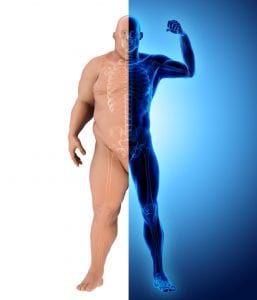
As a busy mom, I started using more interval training because I did not always have long stretches of time for exercise. I liked being able to focus on the movement in front of me, use a timer instead of constantly counting repetitions, and get a lot of work done in a shorter session.

What Is HIIT?

HIIT usually involves short periods of higher-intensity exercise followed by rest or lower-intensity recovery. The exact work-to-rest ratio can vary depending on the exercise, your fitness level and the goal of the workout.

HIIT can be used with cardio, bodyweight exercises, kettlebells, rowing, cycling or strength-based circuits. It can help improve cardiovascular fitness and conditioning, but it does not need to be performed at absolute maximum effort every time to be effective.

Why HIIT Can Work Well for Busy People

HIIT can be useful when time is limited because the workout structure is focused and efficient. A session can be 10 to 20 minutes and still feel challenging.

That does not mean HIIT is automatically better than every other type of exercise. Walking, strength training, mobility work, yoga and longer steady-state cardio all have value too. HIIT is simply one useful tool you can add to a balanced routine.

1. 30 Seconds Work / 10 Seconds Rest

Choose four exercises, for example:

  • squats
  • push-ups
  • reverse lunges
  • plank or dead bug

Set a timer for 30 seconds of work and 10 seconds of rest. Move through the four exercises in a circuit and repeat for four rounds.

This gives you a short full-body workout without needing to count every repetition.

2. Tabata: 20 Seconds Work / 10 Seconds Rest

Traditional Tabata uses 20 seconds of hard work followed by 10 seconds of rest for eight rounds, for a total of four minutes.

You can use one exercise for all eight rounds or alternate between two exercises. Examples include squats, cycling, rowing, mountain climbers, kettlebell swings or step-ups.

Choose an intensity you can maintain with good form. You do not need to treat every interval like an all-out sprint.

3. 12 Seconds Moderate / 8 Seconds Harder

This variation uses two different intensity levels without a full rest.

For example, you might perform bodyweight squats for 12 seconds, then move into a faster squat variation for 8 seconds. Repeat the sequence three times for a total of one minute.

You can also use lower-impact combinations, such as marching for 12 seconds followed by faster high-knee marching for 8 seconds.

This type of interval can become intense quickly, so use it selectively rather than making every exercise a maximum-effort drill.

4. 45 Seconds Work / 15 Seconds Rest

Choose one or two exercises and work for 45 seconds, then rest for 15 seconds.

For example, with step-ups, you could work one side for 45 seconds, rest for 15 seconds, then switch sides. Repeat for several rounds.

Use a stable step or bench rather than a chair if possible, and choose a height that allows you to move with control.

HIIT With Strength Training

Interval training can also be combined with resistance exercises. You might alternate rows, squats, presses, lunges or kettlebell movements with short rest periods.

However, strength training and HIIT are not exactly the same thing. If your goal is to build maximum strength, longer rest periods are often useful because they allow you to use more resistance and maintain better technique.

HIIT works especially well when your goal is conditioning, variety or a time-efficient workout.

How Hard Should HIIT Feel?

HIIT should feel challenging, but “hard” is relative.

A beginner might use brisk walking, bodyweight squats and wall push-ups. A more experienced person might use running, rowing, kettlebell swings or more demanding bodyweight exercises.

You should still be able to maintain control and recover between intervals. If your form breaks down or you feel dizzy, unusually short of breath or unwell, stop and recover.

How Often Should You Do HIIT?

For many people, one or two HIIT sessions per week is enough, especially if you are also strength training and doing other forms of activity.

More HIIT is not always better. Recovery, sleep and the rest of your training week matter too.

If you want more interval ideas, you can also try 5 HIIT Workouts Under 20 Minutes.

If you enjoy training with other people, explore Group Fitness Classes in Nanaimo. If you want a program tailored to your goals and fitness level, learn more about Personal Training in Nanaimo.

Keep HIIT as One Tool in Your Fitness Routine

HIIT can be fun, challenging and efficient, especially when you are short on time. But it does not need to replace strength training, mobility work or lower-intensity movement.

Use it when it fits your goals, start at an intensity appropriate for you, and give yourself enough recovery to keep progressing.

Belly Fat: Common Mistakes That Can Get in the Way of Progress

Belly Fat: Common Mistakes That Can Get in the Way of Progress

Belly fat is a common concern, but it is important to know that you cannot choose exactly where your body loses fat. Genetics, hormones, age, sleep, stress, nutrition, activity level and overall body composition can all influence where fat is stored. The most helpful approach is usually to focus on sustainable habits that support overall health and body composition rather than chasing a single body area.

1. Doing Only Cardio

Cardiovascular exercise is valuable for heart health, endurance and overall fitness, but it does not need to be the only form of exercise you do. Adding strength training can help you build and maintain muscle, improve physical capacity and support long-term health.

A balanced routine might include walking, cycling, swimming or other cardio alongside resistance training. If you want to learn more about why strength work matters, read 10 Benefits of Strength Training.

2. Thinking More Time at the Gym Is Always Better

Longer workouts are not automatically more effective. A focused 30- to 60-minute session can be very productive when the exercises, intensity and rest periods match your goals.

Circuit training, supersets and interval-style workouts can be useful when you are short on time, but you also do not need to rush every workout. Some strength exercises benefit from longer rest periods, especially when you are lifting heavier loads.

3. Never Progressing Your Workouts

Your body adapts to what you repeatedly ask it to do. If you always use the same resistance, repetitions and intensity, your progress may eventually slow.

Gradual progression might mean increasing the weight, doing more repetitions, improving range of motion, adding another set or choosing a more challenging variation. The goal is not to push as hard as possible every workout. It is to create enough challenge to keep adapting.

4. Relying on Exercise While Ignoring Everyday Eating Habits

Exercise is important, but it cannot completely compensate for eating habits that do not support your goals. At the same time, you do not need to follow a rigid “clean eating” diet or eliminate entire categories of food.

Focus on a sustainable pattern that includes enough protein, fruits and vegetables, high-fiber foods and meals you actually enjoy. If you want broader support with habits around movement and nutrition, you can explore Health & Lifestyle Coaching.

5. Setting Unrealistic Goals

Body composition changes usually take time. Very aggressive goals can create frustration and make it harder to maintain healthy habits.

Instead of focusing only on body weight, consider tracking other forms of progress such as strength, waist measurements, energy, consistency, fitness level and how you feel in daily life. You can also read SMART Goal Setting for Health & Fitness for a more practical way to set goals.

6. Doing Only Ab Exercises

Abdominal exercises can make your core stronger, but they do not selectively remove fat from your stomach. This idea is often called “spot reduction,” and it is not how fat loss works.

Core exercises are still useful for strength and stability, but pair them with whole-body strength training, cardiovascular exercise and sustainable nutrition habits.

7. Not Eating Enough Protein

Protein helps support muscle repair and maintenance and can also contribute to fullness after meals. Your needs depend on your body, activity level, goals and overall eating pattern.

Protein can come from foods such as eggs, dairy, fish, poultry, meat, tofu, tempeh, lentils, beans, nuts and seeds. You do not need an extreme high-protein diet, but including a source of protein regularly can be helpful.

8. Eating Mostly Highly Processed Foods

Processed food is not automatically unhealthy, and there is no need to fear individual foods. The bigger issue is when highly processed, energy-dense foods make up most of the diet and leave little room for foods that provide fiber, protein, vitamins and minerals.

A flexible approach might include mostly minimally processed foods while still allowing room for convenience foods, treats and meals you enjoy.

9. Not Getting Enough Sleep

Sleep can influence appetite, energy, recovery and how motivated you feel to move. Short sleep over time can also make healthy habits harder to maintain.

Instead of treating sleep as a magic fat-loss tool, think of it as one part of the bigger picture. A consistent sleep routine, enough time in bed and good recovery can support your overall health and fitness goals.

Focus on the Bigger Picture

If your goal is to reduce body fat, there is no single exercise, food or trick that targets the belly. The most effective approach is usually a combination of strength training, regular movement, balanced nutrition, adequate sleep and realistic goals.

It can also help to shift the focus from “How do I get rid of belly fat?” to “How do I build a stronger, healthier body and habits I can maintain?”

If you would like individualized support with strength, fitness and body-composition goals, learn more about Personal Training in Nanaimo.

Spine Undulation: A Gentle Way to Explore Spinal Mobility and Body Awareness

Spine Undulation: A Gentle Way to Explore Spinal Mobility and Body Awareness

Release back tension, spine undulation, spine movement, Sholin Monk, nerve influx, kundalini energy, Brazilian rotation, deep core muscles

Spinal undulation is a wave-like movement that travels through the spine. It can be used in dance, yoga and mobility practice to explore how different parts of the spine move together.

Rather than thinking of it as a way to “fix” the spine or release every kind of back tension, I prefer to think of it as a movement practice that can help improve body awareness, coordination and comfort with spinal motion.

What Is Spine Undulation?

Spine undulation involves creating a smooth wave through the body by moving through flexion and extension in a controlled way. Depending on the variation, the movement may begin in the pelvis, rib cage, chest or head and then travel through the rest of the spine.

This kind of movement can help you explore areas that may feel stiff or unfamiliar and can be a useful complement to strength training, yoga, dance and mobility work.

Why Practice Spinal Waves?

The spine is designed to move in several directions, including flexion, extension, rotation and side bending. Many of us spend a lot of time in a limited number of positions, especially when sitting for long periods.

Practicing gentle spinal waves can support:

  • body awareness
  • coordination
  • spinal mobility
  • rib cage movement
  • breathing awareness
  • smoother transitions between positions

The goal is not to force a larger range of motion. Move within a range that feels comfortable and controlled.

Spine Undulation in Yoga and Movement

Spinal undulation can show up in many movement practices. In yoga, you may recognize a similar wave-like pattern in Cat-Cow or in transitions between Downward Dog and Upward-Facing Dog.

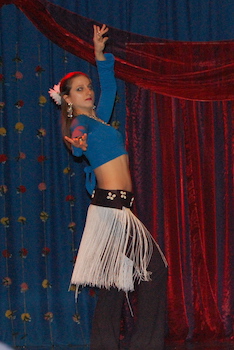
In dance, body waves often use coordinated movement through the chest, ribs, pelvis and spine. The exact shape may look different depending on the style, but the principle is similar: learning to move one part of the body while staying connected to the whole movement.

If you enjoy this kind of work, you may also like Yoga & Mobility Classes in Nanaimo.

How to Practice a Simple Standing Spine Undulation

Stand with your feet about hip-width apart and keep your knees soft. Begin by gently shifting the pelvis, then allow the movement to travel upward through the rib cage and chest before returning to neutral.

Try to keep the movement smooth rather than large. You may notice some parts of the spine move easily while others feel less familiar.

Go slowly and focus on control, breathing and awareness rather than trying to create a dramatic wave.

Brazilian Rotation

Brazilian rotation is another movement that can help you explore coordination between the hips and rib cage.

Stand with your feet comfortably apart. Begin by rotating the pelvis gently to one side and allow the rib cage to follow. Return to center and repeat to the other side.

Keep the movement relaxed and controlled. You do not need to force a large twist.

This kind of rotational work can be especially useful if most of your training happens in straight-ahead patterns.

A Note About Back Pain

Spinal movement can feel good for some people, but it is not appropriate for every type of back pain.

If a movement causes sharp, radiating or increasing pain, stop and choose a different option. If you have persistent or unexplained back pain, it is a good idea to seek guidance from an appropriate healthcare professional.

For more strength-based ideas, you can also read Strengthening Your Back to Support Better Posture and Reduce Back Pain.

Watch the Body Wave Tutorial

Keep your existing Body Wave / Ondulation Tutorial video here.

Brazilian Rotation Tutorial

Keep your existing Brazilian Rotation Tutorial video here.

Explore Movement, Not Perfection

Spinal undulation is less about achieving a specific shape and more about learning how your body moves. Small, controlled waves can be just as useful as larger ones.

If you would like support combining mobility, strength and movement practice, learn more about Personal Training in Nanaimo.

Brazilian Rotation tutorial